

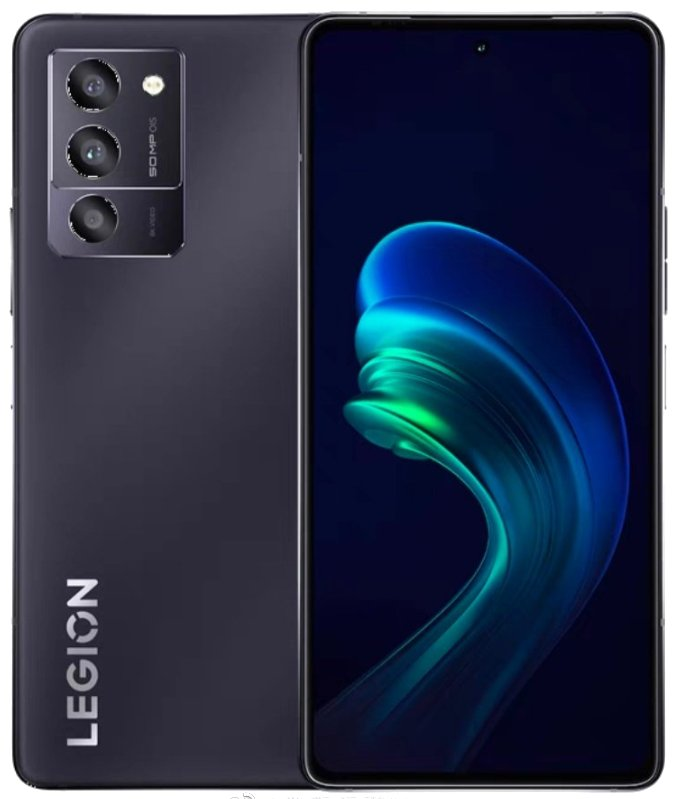
More Lenovo Legion Y70 2026 Specs Revealed Ahead of Launch
Lenovo’s smartphone comeback is beginning to look more serious than a routine product refresh. The company has confirmed that the Lenovo Legion Y70 (2026) will launch in China on May 19, marking its return to the gaming-focused phone space with a device built around three clear priorities: sustained performance, battery endurance, and a high-spec display.
The latest wave of specifications gives the upcoming Legion Y70 a more complete identity. Rather than presenting the phone only as a benchmark-focused gaming handset, Lenovo appears to be positioning it as a powerful all-round Android device with gaming DNA: a Snapdragon 8 Gen 5 chipset, a massive 8,000mAh battery, advanced cooling, a bright 144Hz display, and strong durability ratings.
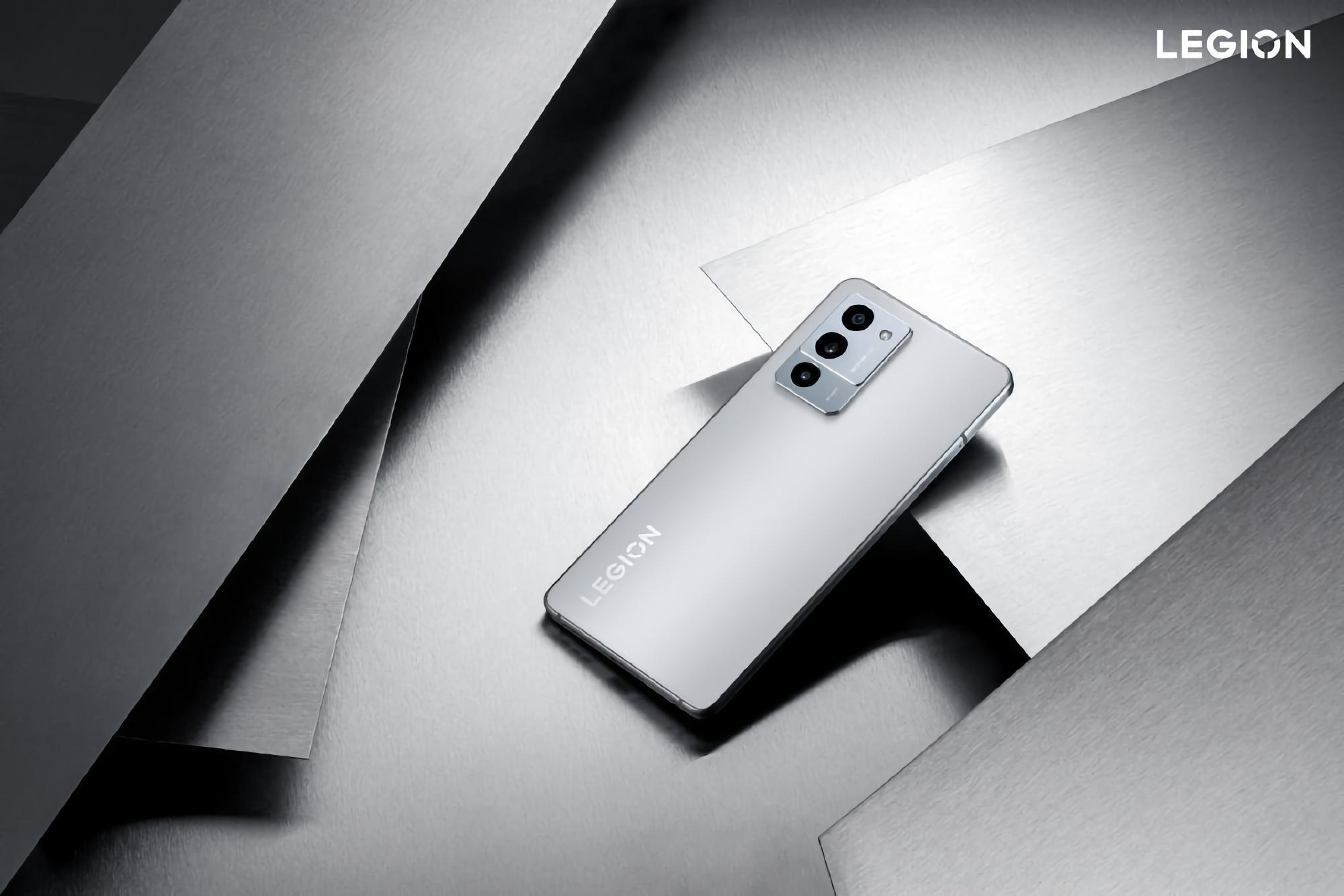
Lenovo’s Gaming Phone Comeback Looks More Aggressive Than Expected
The Legion Y70 name carries weight among mobile gaming enthusiasts, but Lenovo has been quiet in the smartphone gaming segment for the last few years. That makes the 2026 model more than just another Android launch. It is a signal that Lenovo may be ready to re-enter a competitive field currently shaped by performance-first phones, gaming tablets, and mainstream flagships with advanced cooling systems.
The Legion Y70 (2026) is scheduled to debut on May 19 in China, and customers there can already pre-reserve the device. The phone will be offered in Carbon Black and Ice Soul White, also translated in some listings as Soul White.
Snapdragon 8 Gen 5, Fast Memory, and Serious Cooling
At the center of the Lenovo Legion Y70 (2026) is Qualcomm’s Snapdragon 8 Gen 5 chipset. Notably, this is not described as the Elite version, but it still places the phone firmly in premium performance territory.
The processor will be paired with LPDDR5X Ultra RAM and UFS 4.1 storage, two specifications that matter for gaming and heavy multitasking. Faster RAM helps with app switching and game responsiveness, while UFS 4.1 storage should improve loading times and large file handling.
Cooling is another major part of Lenovo’s pitch. The phone is confirmed to feature a 5,500mm² vapor chamber, and additional details mention 10W high thermal conductivity gel and 12W liquid metal for thermal management during demanding gaming sessions.
That cooling setup matters because gaming phones are judged not only by their peak performance, but by how long they can maintain that performance before throttling. A large vapor chamber and advanced thermal materials suggest Lenovo is targeting sustained gameplay rather than short bursts of speed.
A Bright 144Hz Display Built for Gaming and Media
The Legion Y70 (2026) will feature a BOE Q10 AMOLED LTPO display with a 144Hz refresh rate. The panel is also listed with Dolby Vision support, full DC dimming, a 360Hz touch sampling rate, and up to 7,000 nits peak brightness.
There is some variation in the pre-launch information around resolution: some details describe the display as 2K, while another specification roundup lists it as 3K with 509ppi pixel density. Either way, Lenovo is clearly emphasizing a high-resolution OLED display with gaming-friendly responsiveness and strong media credentials.
The LTPO technology is especially relevant because it allows the screen to dynamically adjust refresh rate depending on the task. That can help balance smooth gameplay with battery efficiency, particularly on a phone carrying such a large battery.
The 8,000mAh Battery Could Be the Headline Feature
For many buyers, the biggest specification will not be the chipset. It will be the battery.
The Lenovo Legion Y70 (2026) is confirmed to pack an 8,000mAh battery, an unusually large capacity for a smartphone and especially notable in a gaming-focused device. Lenovo claims the battery can deliver up to 19.3 hours of gaming and over 57 hours of regular use, though real-world endurance will depend heavily on brightness, game settings, connectivity, and thermal behavior.
Charging is handled by 90W wired fast charging. The phone will also support bypass charging, a feature particularly valuable for gamers. Bypass charging can power the device while reducing direct battery stress and heat buildup during long plugged-in sessions.
That combination — large battery, fast charging, and bypass charging — suggests Lenovo understands one of the biggest pain points for gaming phones: heat and battery degradation during extended play.
Cameras: Practical Rather Than Experimental
Gaming phones often compromise on cameras, but Lenovo has confirmed a fairly capable setup for the Legion Y70 (2026). The handset will feature a 50MP Sony LYT-710 primary sensor with optical image stabilization. That main camera will be joined by an 8MP ultrawide camera and a 2-in-1 auxiliary sensor.
For selfies and video calls, the phone will include a 32MP front-facing camera.
This setup does not appear to be chasing flagship camera-phone territory, but it looks practical enough for daily photography, social media, video calls, and casual content creation. The inclusion of OIS on the main camera is important because it should help with sharper images and more stable video capture.
Durability and Connectivity Add to the Premium Push
Lenovo is also giving the Legion Y70 (2026) stronger environmental protection than many gaming-focused phones. The device is confirmed to carry IP66, IP68, and IP69 ratings for dust and water resistance. That is an unusually robust combination and may help the phone appeal beyond the narrow gaming audience.
The handset will also include enhanced Wi-Fi and cellular connectivity, dual eSIM support, and gaming-focused network optimizations. Some details mention a dedicated antenna setup designed to reduce latency and improve connection stability during online gaming.
For mobile gamers, network reliability can be just as important as raw frame rates. A phone that keeps a stable connection during competitive gaming has a practical advantage over one that only performs well in offline benchmarks.
Price Expectations and Market Position
Pricing is expected to start around CNY 3,999, roughly $588 based on the provided information. If that pricing holds, the Legion Y70 (2026) could become a highly competitive gaming phone in China, especially given the combination of Snapdragon 8 Gen 5 performance, 8,000mAh battery capacity, 90W charging, and premium display features.
The bigger question is whether Lenovo will give the phone a wider release. Reader interest is already focused on the possibility of a global launch, and some speculation has centered on whether the device could eventually appear under a Motorola-branded model in some markets. For now, however, the confirmed launch is in China.
Why the Legion Y70 2026 Matters
The Lenovo Legion Y70 (2026) matters because it reflects a broader shift in gaming phones. The category is no longer only about flashy designs, RGB lighting, and benchmark dominance. Buyers increasingly expect gaming phones to work as long-lasting daily drivers, with strong displays, large batteries, good thermal management, reliable cameras, and real durability.
Lenovo appears to be responding to that shift. The Legion Y70 (2026) is not just a phone with a fast chip; it is a device built around the full gaming experience — sustained performance, heat control, touch response, battery life, charging behavior, and connectivity.
What to Watch on May 19
When Lenovo officially launches the Legion Y70 (2026), the most important missing details will be final pricing, full RAM and storage variants, software support commitments, availability outside China, and any gaming-specific hardware features that have not yet been confirmed.
The early specifications already make the phone one of the more interesting Android gaming devices on the horizon. If Lenovo pairs the hardware with competitive pricing and reliable software support, the Legion Y70 (2026) could mark a meaningful return to the gaming phone market.
For now, the device is shaping up as a performance-heavy, battery-focused Android phone with enough premium extras to attract gamers and power users alike.


