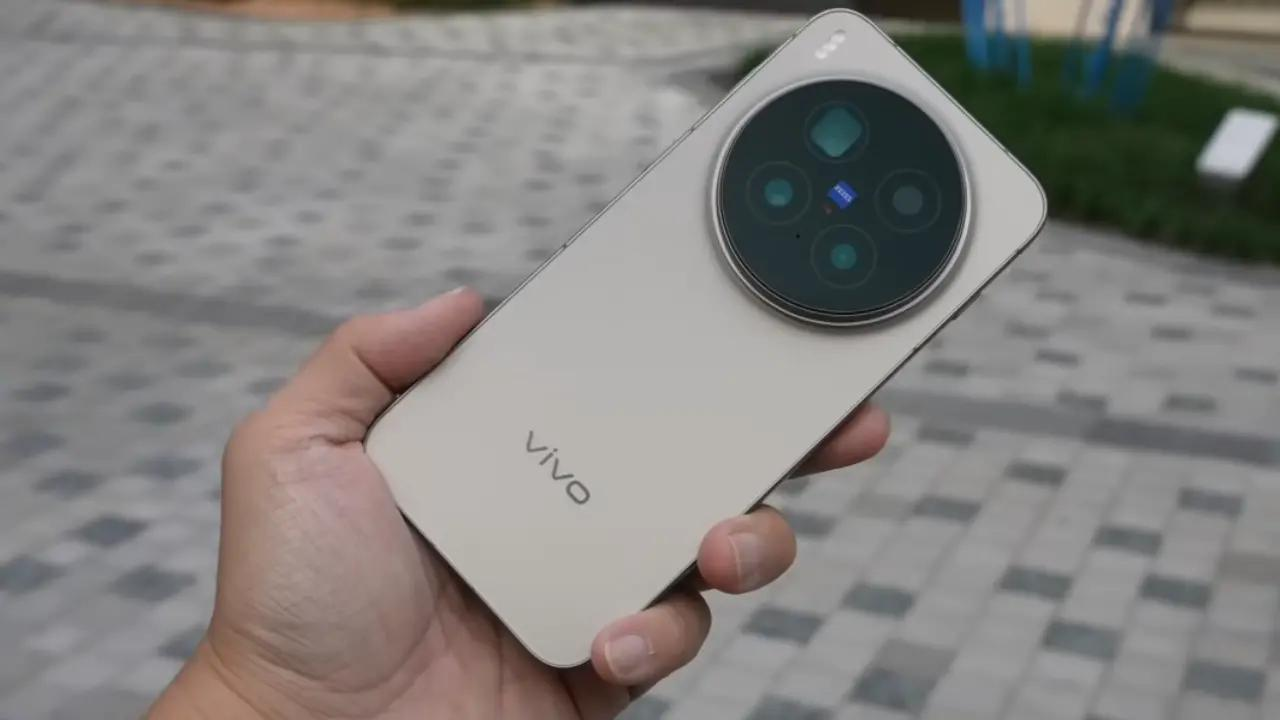
vivo X300 FE Review: The Compact Flagship That Refuses to Compromise
The smartphone industry has spent the last few years chasing bigger screens, larger camera islands, and increasingly massive devices. Yet amid this race toward oversized flagships, vivo is taking a surprisingly different direction with the vivo X300 FE — a premium compact smartphone that aims to deliver flagship-grade performance, photography, and battery life without becoming difficult to hold in one hand.
That strategy makes the vivo X300 FE one of the most intriguing Android phones of 2026.
Positioned alongside the vivo X300, X300 Pro, and X300 Ultra, the X300 FE enters the market with an ambitious promise: combine flagship-level hardware with portability and endurance. The result is a device that packs a Snapdragon 8 Gen 5 chipset, ZEISS-backed cameras, a massive 6,500mAh battery, wireless charging, and a 120Hz LTPO AMOLED display into a compact 6.31-inch form factor.
But while the hardware impresses, the phone also arrives with controversy surrounding its pricing. In several regions, the X300 FE launched at a higher price than the standard X300 — creating an unusual situation where the “FE” edition actually costs more than the flagship model it sits beneath.
So is the vivo X300 FE truly the compact king of 2026, or is it a great phone undermined by questionable pricing? Here’s a complete look at what makes this device stand out.

vivo’s New Direction for Compact Flagships
The X300 FE feels different from most phones in the X300 family immediately.
Where the X300 Ultra and X300 Pro emphasize giant circular camera modules and extreme imaging hardware, the X300 FE adopts a more restrained design philosophy. The rear camera bar stretches horizontally across the back, giving the device a cleaner appearance reminiscent of Google’s Pixel lineup while still maintaining a distinct identity.
This redesign is not merely cosmetic.
The compact dimensions — 150.8 x 71.8 x 8.2mm — and weight of roughly 190 grams make the phone dramatically easier to use with one hand compared to most modern flagships.
Reviewers consistently highlighted the comfort factor. The flat sides with beveled edges, matte glass finish, and aluminum frame create a premium feel without sacrificing grip.
Durability is another major focus.
The device carries both IP68 and IP69 certifications, meaning it is protected against dust, water immersion, and even high-pressure water jets. vivo also uses SCHOTT Xensation Core glass for added drop and scratch resistance.
In an era where many premium phones still force buyers to choose between portability and battery capacity, the X300 FE attempts to eliminate that compromise entirely.
A Display That Feels Truly Flagship
The front of the device is dominated by a 6.31-inch LTPO AMOLED panel with a resolution of 2640 x 1216 pixels and support for adaptive refresh rates from 1Hz to 120Hz.
On paper, the specifications are impressive:
- 120Hz LTPO refresh rate
- HDR10+ support
- Peak brightness up to 5,000 nits
- 2160Hz/4320Hz PWM dimming
- 1.07 billion colors
- ZEISS Master Color Display tuning
In practical use, the display excels in nearly every environment. Outdoor visibility is excellent, colors are vibrant without appearing oversaturated, and the adaptive refresh rate helps maintain smooth animations while conserving power.
The inclusion of advanced eye-protection features and high-frequency PWM dimming also makes the screen more comfortable during extended nighttime use.
Unlike many compact phones that feel like scaled-down compromises, the X300 FE’s display delivers a genuine flagship experience.
Snapdragon 8 Gen 5 Brings Serious Performance
One of the most important upgrades in the X300 FE is the switch to Qualcomm’s Snapdragon 8 Gen 5 chipset.
Last year’s FE model used MediaTek silicon, but vivo has now moved to a 3nm Snapdragon platform featuring:
- 2x Oryon V3 Phoenix L cores at 3.8GHz
- 6x Oryon V3 Phoenix M cores at 3.32GHz
- Adreno 829 GPU
The phone is paired with 12GB LPDDR5X RAM and UFS 4.1 storage in either 256GB or 512GB configurations.
Benchmark and gaming performance place the device comfortably among today’s top Android flagships. Titles like Genshin Impact, Call of Duty Mobile, and BGMI run smoothly without significant frame drops, aided by a large vapor chamber cooling system.
The Snapdragon transition also appears to improve thermal management compared to the previous generation, with better sustained performance under stress.
For most users, the X300 FE offers more power than they are likely to need over the next several years.
The Battery Might Be the Phone’s Biggest Achievement
If there is one area where the X300 FE truly separates itself from competitors, it is battery life.
Despite its compact size, vivo managed to fit a massive 6,500mAh silicon-carbon battery inside the device.
That figure is extraordinary for a phone in this size category.
In fact, reviewers repeatedly described it as one of the largest batteries ever included in a 6.3-inch flagship smartphone.
Real-world performance appears equally impressive:
- Easily lasts a full day and a half
- Heavy users can often reach two days
- More than six hours of screen-on time reported
- Excellent standby efficiency
Charging speeds are equally competitive.
The phone supports:
- 90W wired charging
- 40W wireless charging
- Reverse wired charging
- Reverse wireless charging
- USB PD charging support
vivo claims the battery can reach 100% in roughly 55 minutes using wired charging.
For many buyers, the battery alone may justify serious consideration of the X300 FE.
ZEISS Cameras Deliver Strong Photography — With One Weak Spot
The vivo X300 FE continues vivo’s partnership with ZEISS, and photography remains central to the device’s identity.
The rear camera setup includes:
- 50MP main Sony sensor with OIS
- 50MP 3x telephoto camera with OIS
- 8MP ultrawide camera
- 50MP autofocus selfie camera
The telephoto system is particularly important here.
vivo includes support for an optional ZEISS Professional Kit featuring a 200mm external telephoto extender lens that mounts directly onto the phone using a dedicated case.
In normal photography, the main and telephoto cameras produce strong results with excellent detail, solid HDR processing, and pleasing color science. Portrait photography also benefits from ZEISS portrait styles and accurate edge detection.
Low-light performance is another strength, thanks to optical image stabilization and vivo’s night processing algorithms.
The weak point is the ultrawide camera.
Both reviewers and enthusiasts criticized vivo for including only an 8MP ultrawide sensor on a device priced near flagship territory.
While usable, it does not match the quality level of the primary and telephoto sensors, creating an imbalance in an otherwise premium camera system.
Still, for users focused mainly on portrait photography, zoom shots, and everyday imaging, the X300 FE performs exceptionally well.
OriginOS 6 Pushes vivo’s Software Ambitions Forward
The X300 FE ships with Android 16 and OriginOS 6 out of the box.
This marks one of vivo’s most ambitious software releases yet.
Key software features include:
- Origin Smooth Engine
- Dynamic animations and transitions
- AI photo editing tools
- Live status updates via Origin Island
- Smart Call Assistant
- Cross-device productivity tools
- AI Search and AI Retouch features
vivo also promises:
- 5 years of Android OS updates
- 7 years of security patches
That long-term software commitment significantly improves the phone’s value proposition and aligns vivo more closely with Samsung and Google in the flagship support race.
The Pricing Problem That Could Hurt the X300 FE
Despite all its strengths, pricing remains the biggest issue surrounding the X300 FE.
Launch pricing includes:
- €999 in Europe for the 512GB version
- ₹79,999 for the 256GB variant in India
- ₹89,999 for the 512GB variant
The problem is that the standard vivo X300 is already selling for less in several regions due to discounts.
That creates a difficult situation for buyers.
The standard X300 offers superior camera hardware, yet often costs less than the FE model. For many consumers, that undermines the logic behind choosing the X300 FE unless battery life and compact ergonomics are top priorities.
This has become the dominant criticism surrounding the device.
Several commentators described the pricing as difficult to justify given the compromises in the ultrawide camera and the FE branding itself.
If vivo reduces pricing over the coming months, however, the X300 FE could become one of the most compelling Android phones in its segment.
Final Verdict: A Brilliant Compact Phone Held Back by Its Price
The vivo X300 FE succeeds at something very few Android manufacturers currently attempt: building a compact phone that feels genuinely uncompromising.
It combines:
- flagship-level performance,
- excellent battery life,
- premium build quality,
- strong cameras,
- long software support,
- and wireless charging
inside a device that remains comfortable to use daily.
That alone makes it stand out in a market increasingly dominated by oversized phones.
The biggest challenge is value.
At its current launch price, the X300 FE competes directly against stronger camera-focused flagships — including vivo’s own X300. But if pricing becomes more aggressive over time, the device could evolve into one of the best compact Android phones available in 2026.
For users who prioritize portability without sacrificing endurance or flagship performance, the vivo X300 FE may already be exactly what they have been waiting for.