


Apple’s F1 Ambitions Hit a European Roadblock as Sky Locks Down UK and Italy Rights
Apple’s push into Formula 1 broadcasting has quickly become one of the most closely watched stories in sports media. After securing U.S. Formula 1 rights from the 2026 season through Apple TV+, the company appeared positioned to test whether one of the world’s most valuable technology ecosystems could reshape how global motorsport is watched.
But in two of Formula 1’s most important European markets, that road has now been blocked for years.
Sky has renewed its Formula 1 broadcast agreements in the UK, Ireland, and Italy, keeping the sport under its control through 2034 in the UK and Ireland and through 2032 in Italy. That means Apple will not be able to acquire F1 rights in the UK and Italy for at least six years, unless the market changes in a way not currently indicated by the new agreements.
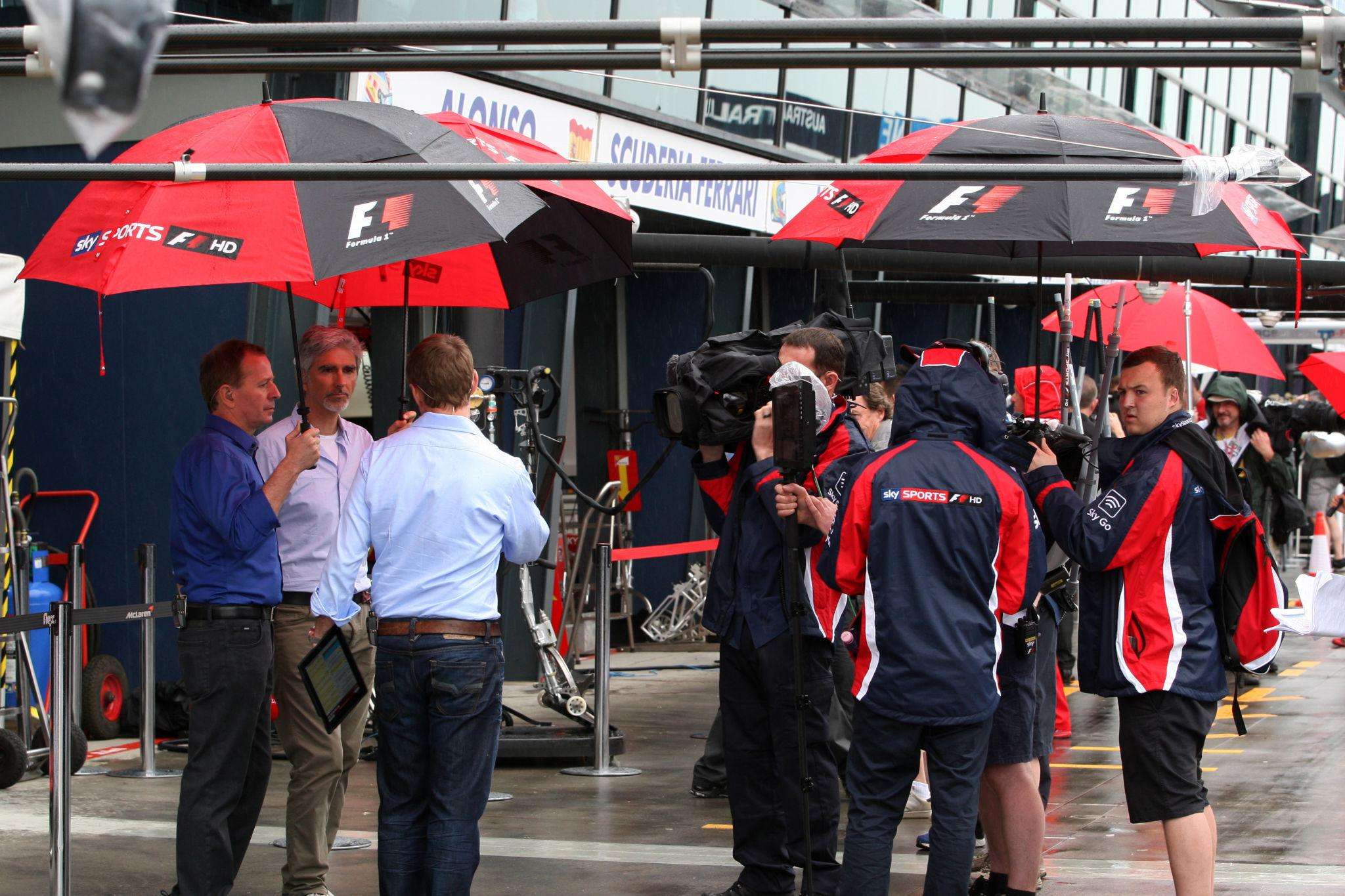
A Strategic Win for Sky, Not Just a Rights Renewal
This is more than a routine contract extension. Sky already held Formula 1 rights in these markets, but the timing of the renewal is crucial. The broadcaster moved before the previous deal expired, effectively avoiding an open bidding war that could have drawn Apple or another deep-pocketed technology company into the process.
The UK and Ireland contract extension is reportedly worth about $270 million each year, or roughly $1.35 billion over the full life of the agreement. Other reports placed the wider UK extension around £200 million per season, amounting to approximately £1 billion over five years.
For Sky, Formula 1 remains premium sports inventory: live, global, high-status, and capable of anchoring subscription packages. For Formula 1, Sky offers something Apple cannot yet provide in these territories: a long-established broadcast infrastructure, local editorial presence, and a familiar viewing relationship with fans.
Why Apple Was Seen as a Serious Threat
Apple’s Formula 1 move began in the United States. Starting with the 2026 season, Apple became the U.S. broadcast rights holder, offering F1 through Apple TV+. That deal immediately triggered speculation over whether Apple would eventually try to expand internationally.
Apple has not officially announced a plan to acquire F1 rights in the UK or Italy, but the logic was easy to understand. The company has already used sports as a way to strengthen Apple TV+, deepen engagement across its services, and bring live events into its ecosystem. Formula 1 also fits neatly with Apple’s global brand: premium, technology-driven, design-conscious, and increasingly popular with younger audiences.
Apple SVP Eddy Cue added fuel to the speculation when he discussed the company’s wider Formula 1 ambitions, saying: “Starting in the United States, which represents a huge market for us, and building from there, is undoubtedly the best strategy,” and “I hope we can develop in other markets.”
Those remarks mattered because Formula 1 rights are sold market by market. Apple does not need to win the entire world at once. It can enter one territory, build a model, and then compete as other rights become available. Sky’s renewal prevents that path from opening soon in the UK, Ireland, and Italy.
The Markets Apple Cannot Touch for Now
The UK is one of Formula 1’s most important broadcast territories. It has a deep motorsport culture, multiple British drivers on the grid, major team operations based in the country, and a long history of television interest in the sport. Italy is equally significant for cultural reasons, not least because of Ferrari’s central role in Formula 1’s identity.
Sky’s new deals keep the UK and Ireland locked until 2034, while Italy remains with Sky until 2032. That creates a long runway for Sky and a long wait for Apple.
In Italy, the extension arrives at a time of heightened interest. The 2026 season reportedly opened with a 25% rise in viewership, helped by 19-year-old Kimi Antonelli. His first Grand Prix victory at the Chinese Grand Prix drew 1.2 million viewers live on Sky and another 1.4 million on TV8.
What Sky Will Continue to Offer
Under the renewed agreements, Sky will continue to show every practice session, qualifying session, sprint race, and Grand Prix live across its platforms. The British Grand Prix will remain free-to-air, and highlights of every other Grand Prix will also continue to be available.
That package is important because Formula 1 is no longer just a Sunday race product. Modern F1 coverage stretches across an entire weekend, with practice, qualifying, sprint formats, race build-up, technical analysis, and post-race reaction all forming part of the value proposition.
Formula 1 CEO Stefano Domenicali defended the continuation of the Sky relationship, saying: “Their world-leading approach to live broadcasting, content creation, and behind-the-scenes analysis led by a truly amazing group of on-screen talent has made the difference in continuing to grow our sport in the UK, Ireland, and Italy.”
Sky Group chief executive Dana Strong also framed the deal around momentum, saying: “This new agreement secures Sky as the home of Formula 1 for years to come, as the sport enters an exciting era with more British talent on the grid and rising stars like Kimi Antonelli.”
Why Formula 1 Chose Certainty Over a Bidding War
At first glance, avoiding a bidding war might seem counterintuitive. Apple has vast financial resources, and an open auction could have pushed the price higher. But sports rights are not decided only by headline money.
Formula 1 appears to have chosen certainty, continuity, and proven distribution in major European markets. Sky gives the sport predictable revenue, established production, and a broadcaster with a long-term incentive to promote F1 heavily. In Europe, traditional broadcasters still play a central role in how major sports reach mass audiences.
Apple, by contrast, represents a more disruptive model. It can integrate Formula 1 across Apple TV, Apple Music, Apple News, Apple Maps, Apple Sports, and Live Activities. That makes Apple powerful, but also different. Its value is not only in subscription broadcasting; it is in ecosystem engagement.
For Formula 1, the ideal outcome may not be a rapid shift to one global streaming partner. Instead, the sport appears comfortable with a hybrid strategy: Apple in the fast-growing U.S. market, Sky in major European strongholds, and other broadcasters retaining regional rights elsewhere.
The Fan Debate: Access, Cost, and Choice
The commercial logic of the Sky renewal is clear. The fan reaction is more complicated.
Some viewers see Sky as a reliable home for comprehensive coverage. Others argue that the deal limits choice, especially for fans who would prefer a standalone streaming option instead of a broader sports package. Reader comments in the provided material reflect frustration over cost, bundling, commentary preferences, delayed on-demand access, and the inability to access preferred F1TV-style coverage in certain markets.
This is where Apple’s potential appeal becomes obvious. A direct streaming model could feel cleaner to viewers who only want Formula 1 and do not want to pay for a wider sports bundle. Apple’s U.S. model may also appeal to fans already embedded in its ecosystem.
But the Sky deal shows that Formula 1 is not yet ready to abandon the traditional broadcast economics that have underpinned its European growth.
Apple Still Has a Major F1 Platform
Apple has not lost Formula 1. It has simply been blocked from some of the sport’s most valuable European rights markets for the foreseeable future.
The company still controls the U.S. rights from the 2026 season, one of Formula 1’s fastest-growing territories. Its broader F1 push also benefits from the cultural momentum around Apple’s F1 film activity and its ability to promote the sport across multiple services.
That gives Apple a strong position, even if it cannot yet become the global home of Formula 1. The U.S. market gives Apple a testing ground for production, pricing, user experience, and cross-platform integration. If that model succeeds, Apple may remain a serious contender whenever other international rights become available.
A Signal About the Future of Sports Broadcasting
The Sky-Apple Formula 1 story is part of a larger battle over sports media. Technology companies want live rights because sport remains one of the few entertainment categories that audiences still watch in real time. Traditional broadcasters want to keep those rights because premium sport protects subscriptions and brand relevance.
Formula 1 now sits directly in the middle of that contest.
Sky’s renewal does not end Apple’s ambitions. It delays them in the UK, Ireland, and Italy. It also confirms that even a company as powerful as Apple cannot simply buy its way into every major sports market whenever it wants. Rights cycles, existing relationships, regional strategies, and long-term guarantees still matter.
Conclusion: Sky Holds Europe, Apple Builds in America
Apple’s Formula 1 expansion has hit a clear European barrier. With Sky retaining UK and Ireland rights until 2034 and Italian rights until 2032, Apple will have to wait years before it can realistically challenge for those markets.
The result preserves Formula 1’s current balance: Apple as the sport’s ambitious new U.S. streaming partner, and Sky as the entrenched broadcaster in some of F1’s most historically important European territories.
For fans, the deal means continuity, but not necessarily more choice. For Apple, it means patience. For Formula 1, it is a reminder that the future of sports broadcasting may be digital, but it will not arrive everywhere at the same speed.


