Ramaphosa News: Phala Phala Scandal Returns to Shake South African Politics
South African President Cyril Ramaphosa is facing one of the most politically volatile moments of his presidency as the long-running Phala Phala scandal surges back into the national spotlight. Fresh allegations, renewed legal action, and a Constitutional Court ruling have reignited scrutiny over the controversial theft of foreign currency from Ramaphosa’s Limpopo game farm in 2020.
- Why the Phala Phala Scandal Matters Again
- The Constitutional Court Judgment Changes the Political Equation
- Ramaphosa Refuses to Resign
- What Exactly Happened at Phala Phala?
- Opposition Parties Smell Political Opportunity
- Can Ramaphosa Actually Be Removed?
- Ramaphosa Frames the Battle as Institutional Renewal
- What Happens Next?
- A Presidency Under Intensifying Pressure
The controversy, often referred to as “Farmgate” by local media, has evolved from an embarrassing political scandal into a broader constitutional and governance battle that could influence South Africa’s political future ahead of upcoming municipal elections.
At the center of the storm are new claims that the amount stolen from the President’s farm was significantly larger than initially disclosed, alongside mounting pressure from opposition parties demanding accountability.


Why the Phala Phala Scandal Matters Again
The issue resurfaced dramatically after South Africa’s Constitutional Court ruled that Parliament’s earlier process shielding Ramaphosa from impeachment scrutiny was unconstitutional.
That ruling effectively reopened investigations into the scandal and created new momentum for opposition parties eager to challenge the President’s leadership.


ActionSA announced that it would formally lay criminal charges against Ramaphosa, accusing him of failing to disclose the true amount of money stolen from his Phala Phala farm in February 2020. According to the party, the theft involved at least R15 million, significantly higher than the previously reported $580,000, which was valued at roughly R8.75 million at the time.
The opposition party stated that the charges would include alleged violations of the Prevention and Combating of Corrupt Activities Act, No 12 of 2004, as well as accusations of fraud and perjury linked to statements made regarding the stolen funds.
ActionSA national chairperson Michael Beaumont, Parliamentary Chief Whip Lerato Ngobeni, and Limpopo provincial chairperson Victor Mothemela are expected to lead the formal laying of charges.
The Constitutional Court Judgment Changes the Political Equation
The Constitutional Court’s ruling last week became a turning point in the controversy.


Back in 2022, Parliament voted against moving forward with an impeachment inquiry after an independent panel examined allegations related to the Phala Phala incident. The African National Congress (ANC), which then held stronger parliamentary power, blocked the process.
The Constitutional Court has now overturned that parliamentary vote, ruling that aspects of the Section 89 impeachment procedure were inconsistent with the Constitution. Parliament’s impeachment committee is therefore expected to revisit the matter.
This judgment dramatically altered the political landscape because the ANC no longer holds an outright parliamentary majority after the 2024 elections. Opposition parties now see an opportunity to intensify pressure on Ramaphosa and challenge the ANC’s political dominance.
Ramaphosa Refuses to Resign
Despite growing political pressure, President Ramaphosa has firmly rejected calls for his resignation.
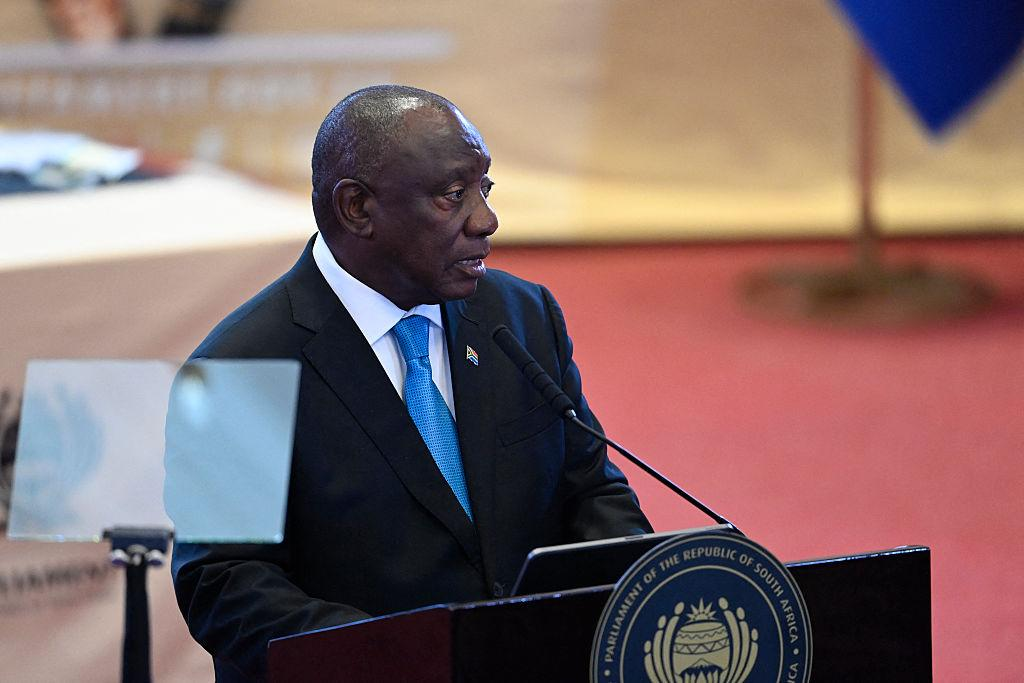
In a televised national address, he stated clearly:
“I therefore, respectfully want to make it clear that I will not resign.”
The President argued that nothing in the Constitutional Court judgment legally compels him to step down and warned that resigning would undermine constitutional processes and broader institutional reforms underway in South Africa.
Ramaphosa insisted that he remains committed to serving the country and completing his mandate, emphasizing that the court did not make findings regarding his personal conduct or determine that he committed wrongdoing.
He also announced plans to seek a judicial review of the independent panel’s report, describing it as flawed both legally and factually.
What Exactly Happened at Phala Phala?
The scandal dates back to February 2020, when thieves allegedly broke into Ramaphosa’s Phala Phala game farm in Limpopo and stole large amounts of foreign currency reportedly hidden inside furniture.
Questions quickly emerged after the incident became public in 2022:
- Why was so much foreign cash allegedly stored at the farm?
- Why was the money hidden in furniture instead of deposited in a bank?
- Was the money properly declared to authorities?
- Did the President comply with financial and exchange control regulations?
Ramaphosa has consistently maintained that the money came from the legitimate sale of buffaloes to a foreign buyer.
A South African central bank investigation previously concluded that the President had not violated exchange control regulations. However, critics argue that several unanswered questions remain regarding the handling of the cash and the subsequent investigation into the theft.
Complicating matters further are conflicting claims about the total amount stolen. While Ramaphosa said thieves took $580,000, former intelligence official Arthur Fraser and other critics alleged that the real amount may have exceeded $4 million.
Opposition Parties Smell Political Opportunity
For opposition groups, the scandal presents a rare opportunity to weaken Ramaphosa politically at a critical time.
ActionSA has vowed to use “all available constitutional mechanisms” to ensure accountability, while former President Jacob Zuma’s uMkhonto weSizwe (MK) party has already pushed for a parliamentary vote of no confidence.
Political analysts believe the timing could not be worse for the ANC.
Independent political analyst Daniel Silke noted that the scandal comes just months before municipal elections in November, where the ANC already faces declining public support.
The party’s internal divisions could deepen further if public frustration over corruption allegations intensifies.
Can Ramaphosa Actually Be Removed?
Despite the escalating controversy, removing Ramaphosa from office remains politically difficult.
An impeachment vote would require a two-thirds majority in Parliament. Although the ANC lost its outright majority in the 2024 elections, it still controls roughly 40% of National Assembly seats and retains significant influence.
Analysts also believe key coalition partners, including the Democratic Alliance, are unlikely to support a no-confidence motion at this stage.
That means Ramaphosa could survive politically even if investigations continue for months or years.
Still, survival in office does not necessarily mean political stability.
The scandal threatens to damage the reformist image Ramaphosa cultivated since taking office in 2018 on promises to combat corruption and rebuild institutions after the Jacob Zuma era.
Ramaphosa Frames the Battle as Institutional Renewal
In his national address, Ramaphosa attempted to present the crisis as part of a broader struggle to rebuild democratic institutions and fight corruption.
He argued that resigning would hand victory to forces attempting to derail institutional reforms.
The President pointed to efforts to implement recommendations from the State Capture Commission and ongoing investigations into organized crime and corruption within law enforcement and security structures.
He said:
“To resign now would be to give in to those who seek to reverse the renewal of our society, the rebuilding of our institutions and the prosecution of corruption.”
This framing signals that Ramaphosa intends to transform the scandal into a political and constitutional battle over governance, accountability, and the future direction of South Africa.
What Happens Next?
Several developments are likely in the coming weeks:
Criminal Charges
ActionSA is expected to formally submit criminal charges, potentially triggering further investigations by prosecuting authorities.
Parliamentary Impeachment Process
Parliament’s impeachment committee may reopen proceedings following the Constitutional Court judgment.
Judicial Review
Ramaphosa plans to challenge the independent panel report through the courts.
Political Fallout
The ANC’s National Executive Committee is expected to discuss the scandal and its implications for the party’s electoral prospects.
Election Pressure
Municipal elections later this year could become a referendum on Ramaphosa’s leadership and the ANC’s credibility.
A Presidency Under Intensifying Pressure
The Phala Phala scandal has transformed from a single controversy into a defining political crisis for Cyril Ramaphosa’s presidency.
What began as questions about stolen foreign currency hidden in furniture has evolved into a wider national debate about accountability, constitutional oversight, corruption, and political legitimacy in South Africa.
For supporters, Ramaphosa remains a reform-minded leader attempting to stabilize institutions after years of state capture scandals. For critics, the Phala Phala controversy undermines the very anti-corruption principles on which he built his presidency.
The coming months could determine not only Ramaphosa’s political future, but also the balance of power inside South African politics as opposition parties intensify their challenge to the ANC’s long-standing dominance.