Ramaphosa Address: A Presidency Tests the Limits of Law, Politics and Public Trust
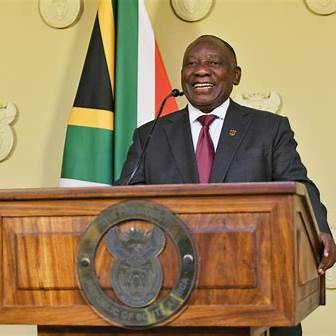
South African President Cyril Ramaphosa’s latest address to the nation was not simply another televised statement from the Union Buildings. It was a carefully framed political and constitutional intervention at a moment when his presidency is again under pressure from the unresolved fallout of the Phala Phala scandal, the Constitutional Court’s ruling on Parliament’s impeachment process, and renewed calls for him to resign.
- A Court Judgment Reopens an Old Political Wound
- The Phala Phala Shadow
- Ramaphosa’s Defence: Process Before Politics
- A Review Application Becomes the Next Battleground
- Why He Says He Will Not Resign
- The ANC Faces a Strategic Dilemma
- No-Confidence Pressure and Opposition Strategy
- The Bigger Question: Accountability Without Destabilisation
- What Happens Next?
- Conclusion: A Defining Test for Ramaphosa’s Presidency
Speaking on Monday, 11 May 2026, Ramaphosa told South Africans that he accepted the Constitutional Court’s judgment, respected the rule of law, and would cooperate with the institutions mandated to deal with the matter. But he also made his central position unmistakably clear: “I therefore respectfully want to make it clear that I will not resign.”
The address has placed South Africa at the intersection of legal process, political accountability and national stability. For Ramaphosa, it was an attempt to draw a line between a court ruling about parliamentary procedure and any finding of personal guilt. For his critics, it has reopened a scandal that has shadowed his presidency since 2022.


A Court Judgment Reopens an Old Political Wound
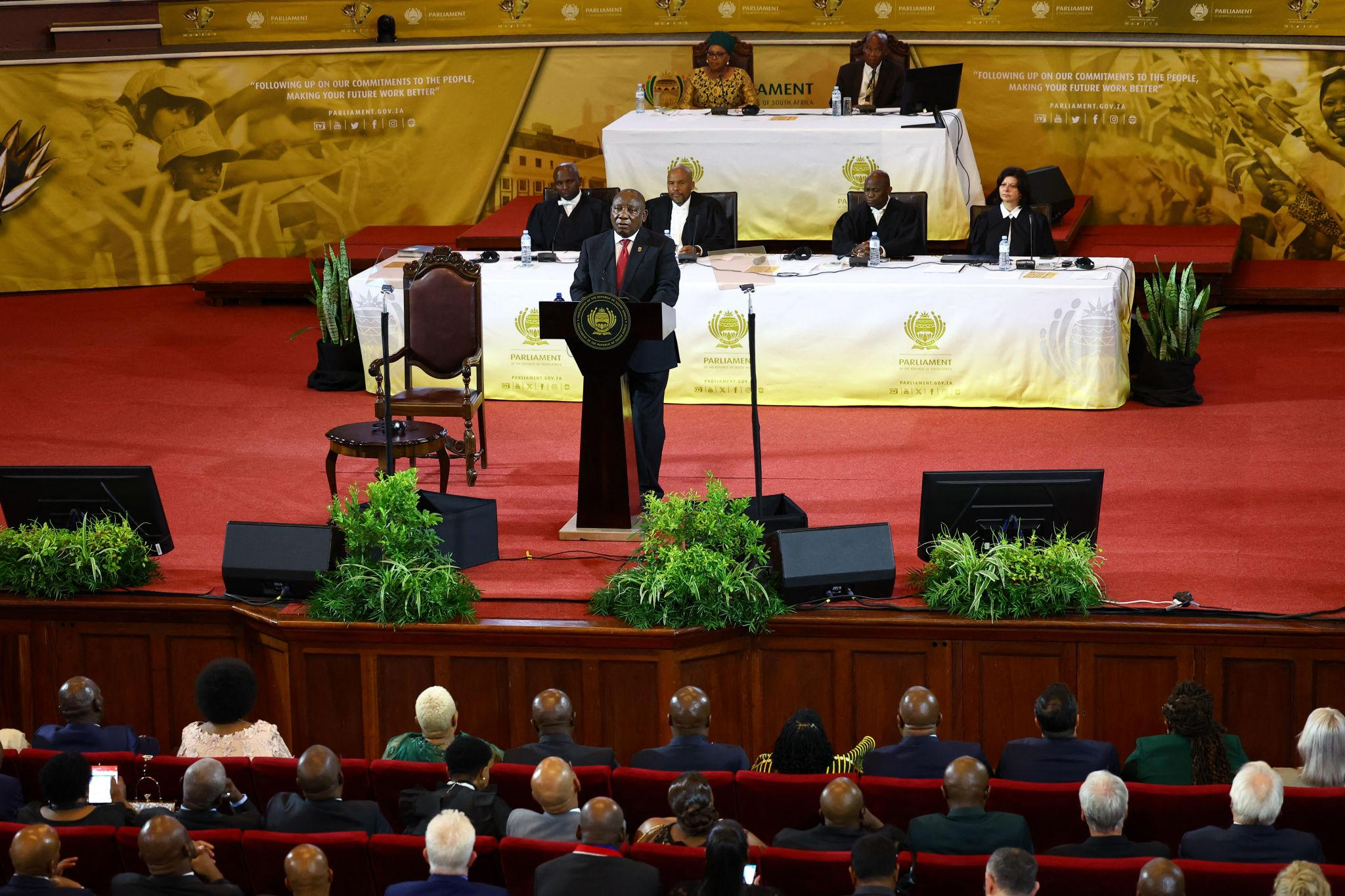
At the heart of the address was the Constitutional Court judgment delivered the previous Friday. According to Ramaphosa, the Court found that aspects of the National Assembly rules governing the removal of a president from office were inconsistent with the Constitution. The ruling effectively revived the parliamentary route for considering allegations linked to the 2020 theft at his Phala Phala farm.


The matter originated from an independent panel appointed by the National Assembly in September 2022 under Section 89 of the Constitution. That panel conducted a preliminary inquiry into allegations against Ramaphosa related to the theft of foreign currency from his farm in February 2020. The panel concluded that the information before it disclosed, prima facie, that the President may have committed serious misconduct and a serious violation of the Constitution.
In December 2022, the National Assembly voted not to refer the panel’s report to an impeachment committee. The Constitutional Court has now ruled that the 2022 vote should be set aside because of the flaw it identified in the Assembly’s rules. The Court ordered that the independent panel’s report be referred to the Impeachment Committee of the National Assembly.
That legal development has transformed a dormant political crisis into an active constitutional process.
The Phala Phala Shadow
The scandal, widely referred to as “Farmgate” in South African media, concerns foreign currency stolen from furniture at Ramaphosa’s Phala Phala game farm in 2020. Reporting based on the provided information says Ramaphosa stated that thieves stole $580,000 from a sofa, while a former intelligence official alleged the amount was at least $4 million.


The controversy has endured because it raises questions beyond the theft itself: how the money was acquired, whether it was properly declared, and why such a large amount of cash was kept in furniture rather than deposited in a bank. Ramaphosa has said the funds came from the sale of buffaloes, and the supplied reporting notes that a central bank investigation found he had not contravened exchange control regulations.
For a president who rose to power promising to fight corruption and restore the image of the African National Congress, the symbolism has been politically damaging. The scandal has provided opponents with a powerful line of attack and has complicated Ramaphosa’s reformist narrative.
Ramaphosa’s Defence: Process Before Politics
Ramaphosa’s address was built around a constitutional argument: the Court did not find him guilty of misconduct. He stressed that the judgment made no finding on whether there was prima facie evidence of misconduct, nor whether the alleged conduct, if established, would justify impeachment and removal from office.
He also repeated his denial of wrongdoing, saying that since a criminal complaint was laid against him in June 2022, he had consistently maintained that he had not stolen public money, committed any crime or violated his oath of office.
The President said he had cooperated with investigations and inquiries and would continue to do so. But he also made clear that he disagreed with the independent panel’s findings and its reasoning. In his submission to the panel, he said: “The complaints against me are based on hearsay allegations. No evidence, let alone sufficient evidence, has been presented to prove that I committed any violation, let alone a serious violation of the Constitution or law, or serious misconduct as set out in the Constitution.”
That quote is central to Ramaphosa’s strategy. He is not merely refusing to resign; he is seeking to challenge the legal foundation of the process that could place him before an impeachment committee.
A Review Application Becomes the Next Battleground
One of the most significant announcements in the address was Ramaphosa’s decision to take the independent panel’s report on review “on an expeditious basis.” He said he was doing so on the advice of his legal team and in line with the Constitutional Court’s statement that the report must be implemented “unless and until the Report is set aside on review.”
This means the immediate political battle is likely to shift into a legal one. Ramaphosa argues that the panel report is flawed and that any parliamentary process based on it should be grounded in findings that are correct in law and fact.
He framed the review not as resistance to Parliament, but as respect for constitutional procedure. “I do so not out of disrespect for Parliament or its processes,” he said, “but to affirm the need for such findings to be correct in law and in fact, especially where Parliament’s work would be based on and informed by a report I believe is flawed.”
Why He Says He Will Not Resign
Ramaphosa’s refusal to step down was the defining line of the address. He argued that resignation would pre-empt a constitutional process, give credence to a report he considers flawed, and amount to abandoning the responsibility he assumed as President.
He went further, casting resignation as a victory for forces opposed to reform. “To resign now would be to give in to those who seek to reverse the renewal of our society, the rebuilding of our institutions and the prosecution of corruption,” he said.
This framing is politically important. Ramaphosa is presenting his survival not only as a personal defence, but as part of a broader reform project: rebuilding institutions, recovering stolen funds, prosecuting alleged perpetrators, fighting organised crime, implementing the recommendations of the State Capture Commission, and confronting corruption through the Madlanga Commission process.
The ANC Faces a Strategic Dilemma
The address also lands at a sensitive moment for the African National Congress. The provided reporting notes that political analysts expected Ramaphosa to fight the misconduct allegations but warned that the timing was difficult for the ANC ahead of municipal elections in November. Independent political analyst Daniel Silke was quoted as saying: “The timing couldn’t really be worse … from an ANC perspective.”
The ANC called a special meeting of its National Executive Committee for Tuesday to discuss its response. That meeting matters because the party must balance several competing pressures: loyalty to its president, public concern about accountability, coalition dynamics, and electoral risk.
The supplied information also notes that while the ANC lost its parliamentary majority in the 2024 election, it still holds about 40% of the seats in the National Assembly. Analysts cited in the material said Ramaphosa would probably survive an impeachment vote because removal would require a two-thirds majority.
That does not mean the political danger is negligible. A prolonged impeachment process could weaken public confidence, distract government, and give opposition parties a sharper campaign issue.
No-Confidence Pressure and Opposition Strategy
Former president Jacob Zuma’s party, uMkhonto weSizwe, wrote to the National Assembly speaker asking her to schedule a vote of no-confidence in Ramaphosa. According to the provided reporting, the speaker had not publicly responded at the time.
A no-confidence motion would require only a simple majority, unlike impeachment. But analysts cited in the supplied material said such a motion was also unlikely to succeed because Ramaphosa would probably be supported by most ANC lawmakers and key coalition partners, including the Democratic Alliance.
The opposition’s strategy, therefore, may be less about immediately removing Ramaphosa and more about sustaining political pressure. The scandal allows critics to challenge the credibility of a president whose political brand rests heavily on institutional renewal and anti-corruption commitments.
The Bigger Question: Accountability Without Destabilisation
Ramaphosa’s address was designed to reassure a country facing what he called “severe difficulties” and a need for stability. He repeatedly returned to the Constitution as the guide through uncertainty and contestation.
That appeal reflects the broader tension in South African politics: how to enforce accountability at the highest level without turning every legal process into a destabilising political crisis. The drafters of the Constitution, Ramaphosa argued, created a process that allows serious allegations to be tested while guarding against “spurious or malicious agendas.”
The public, Parliament and the courts now face a delicate test. If the process is too slow or appears politically managed, it may deepen cynicism. If it is rushed or weaponised, it may undermine constitutional fairness.
What Happens Next?
The next phase will likely unfold on several fronts.
First, Ramaphosa’s legal review of the independent panel’s report will determine whether the foundation of the revived impeachment process can stand. Second, Parliament must respond to the Constitutional Court’s ruling and the referral of the report to the Impeachment Committee. Third, the ANC must decide how publicly and firmly it will defend its president while managing internal divisions and electoral pressures.
Meanwhile, South Africans will continue to weigh two competing claims: Ramaphosa’s insistence that he has not committed a crime or violated his oath, and the demand from critics that the President fully account for the circumstances surrounding the Phala Phala funds.
Conclusion: A Defining Test for Ramaphosa’s Presidency
Ramaphosa’s address was not an end to the controversy. It was the opening of a new phase.
By refusing to resign, accepting the Constitutional Court ruling, and moving to review the independent panel’s report, he has chosen a strategy of constitutional endurance: stay in office, fight the report legally, and insist that due process must run its course.
The political risk is clear. The longer the matter continues, the more it may erode public trust and distract from governance. But the constitutional significance is equally clear. South Africa is once again testing whether its institutions can handle serious allegations against a sitting president through law rather than political rupture.
For Ramaphosa, the address was a declaration that he intends to complete his mandate. For the country, it was a reminder that accountability, stability and constitutional process are now bound together in one of the most consequential political moments of his presidency.