

Fuel Prices in South Africa Surge as Global Conflict and Taxes Tighten the Squeeze
South Africans are once again bracing for a painful rise in fuel costs as global geopolitical tensions, disrupted oil supply routes, and local tax measures combine to push petrol and diesel prices higher. For motorists, transport operators, and households already battling rising living costs, the latest developments signal even tougher months ahead.
The fuel price crisis has become more than just a problem at the petrol station. Analysts warn that sustained increases could ripple through the economy, driving inflation upward, increasing debt burdens, and shrinking household disposable income.
At the center of the latest fuel shock is the ongoing conflict in the Middle East, particularly disruptions around the Strait of Hormuz — one of the world’s most important oil shipping routes. Yet experts say international events are only part of the story. Domestic taxation policies and economic pressures are also contributing heavily to South Africa’s escalating fuel bill.
Global Oil Disruptions Push Prices Higher
The international oil market has been rattled by instability in the Middle East, where conflict has disrupted global petroleum supply chains. According to analysts, the suspension of movement through the Strait of Hormuz has affected roughly 20% of the world’s oil supply.
The Strait of Hormuz is considered one of the most strategically important maritime passages in the world, serving as a key route for petroleum exports from the Gulf region. With reduced movement through the corridor, fears of supply shortages have intensified.
Recent geopolitical tensions between the United States and Iran have further worsened the situation. Negotiations between the two countries reportedly collapsed after Iran rejected a U.S. peace proposal, calling it a demand for “surrender to Trump’s greed.” U.S. President Donald Trump later described Iran’s counterproposal as “totally unacceptable.”
The immediate consequence was renewed volatility in oil markets. Brent crude oil prices, which had briefly dipped to around $94 per barrel, climbed back toward the $100-per-barrel mark after the breakdown in negotiations.
The head of the International Energy Agency has reportedly warned that the world is losing around 14 million barrels of oil per day due to the disruption in the region. This sharp reduction in supply has added significant upward pressure on fuel prices globally.
Petrol and Diesel Reach Painful Levels
The impact is already being felt across South Africa.
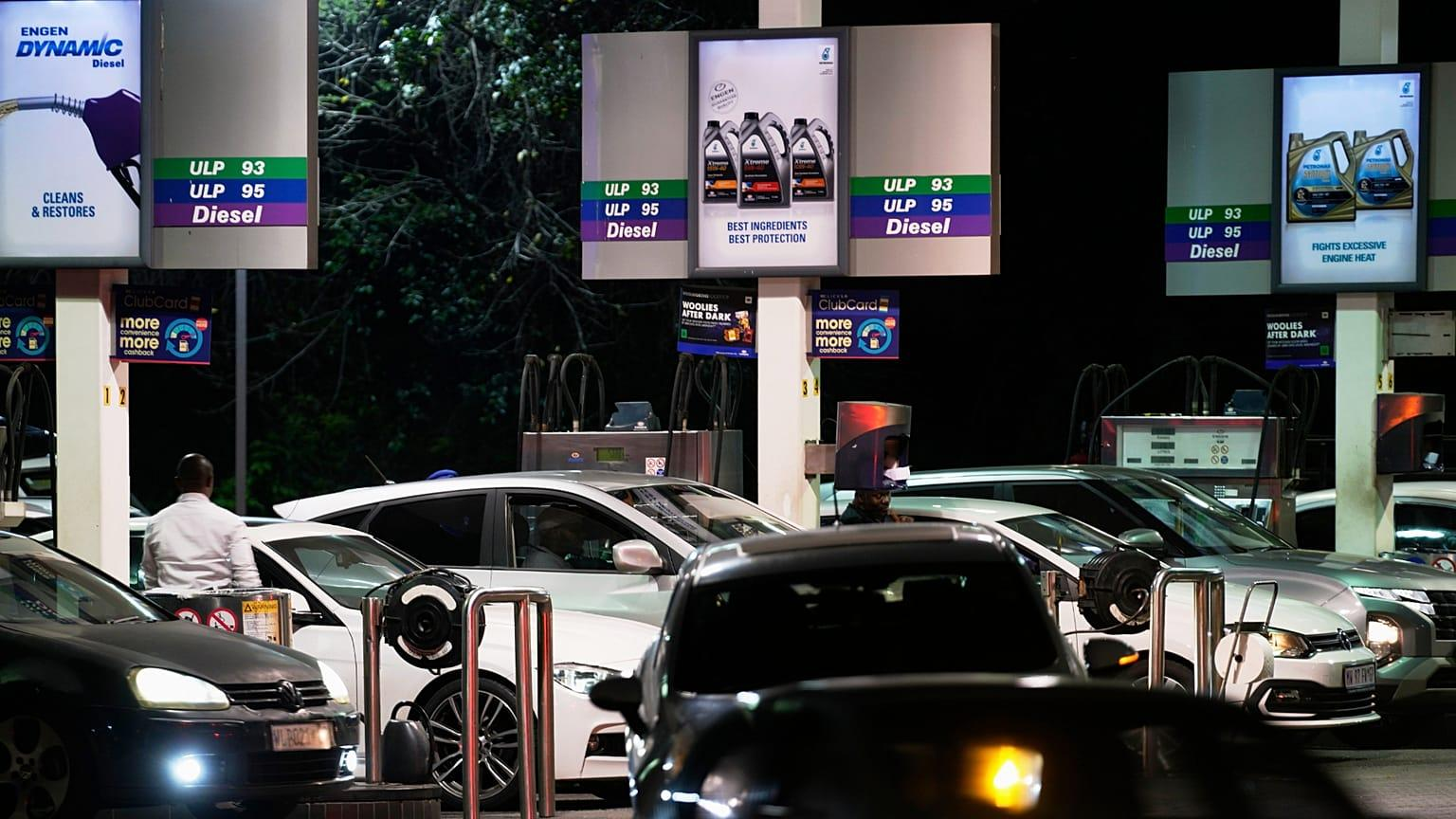
Petrol prices have surged to R26.62 per litre, while diesel prices have crossed the R31-per-litre threshold for the first time. These record-breaking levels are placing immense pressure on consumers and businesses alike.
According to National Debt Advisors’ Dehan Scherman, South Africans should prepare for prolonged financial strain even if geopolitical tensions ease soon.
“Even if the war had to end today, it may take months to recover,” Scherman said.
Current projections from the Central Energy Fund (CEF) suggest that petrol prices are likely to rise further in June 2026. Early May data points to under-recoveries of between 82 and 88 cents per litre for petrol grades, indicating another increase could soon be implemented.
Diesel users may experience partial relief due to temporary over-recoveries, but those benefits are expected to be significantly offset by the return of fuel taxes.
Fuel Levy Returns Create Additional Burden
While international oil prices dominate headlines, local taxation remains one of the most significant contributors to South Africa’s fuel costs.
In recent months, the government temporarily reduced portions of the fuel levy to cushion consumers from soaring global oil prices. However, those tax reductions are now scheduled to be reversed in stages beginning in June.
The General Fuel Levy will reportedly add:
- R1.50 per litre to petrol
- R1.97 per litre to diesel
This means motorists may face far larger increases than the standard monthly fuel price adjustments suggest.
According to projected calculations:
| Fuel Type | Estimated Market Adjustment | Levy Reintroduction | Expected Final Change |
|---|---|---|---|
| Petrol 93 | +R0.84 | +R1.50 | +R2.34 |
| Petrol 95 | +R0.88 | +R1.50 | +R2.38 |
| Diesel 0.05% | -R2.49 | +R1.97 | -R0.52 |
| Diesel 0.005% | -R1.66 | +R1.97 | +R0.31 |
Scherman warned that although the levy freeze provided short-term relief, consumers should expect the government to recover lost revenue eventually.
“When it does come back, however, it is going to hit South Africans where it hurts,” he said.
He also noted that authorities may attempt to recoup funds lost during the levy suspension period, potentially creating additional pressure later.
Inflation Concerns Growing
The consequences of rising fuel prices extend far beyond motorists filling up at service stations.
Fuel is deeply embedded in nearly every aspect of the economy. Higher transport costs affect food distribution, manufacturing, logistics, retail operations, and public transportation. As companies face rising operational costs, those expenses are often passed on to consumers.
Scherman warned that the current trend could accelerate inflationary pressures across the country.
“The increase in prices also drive up inflation,” he explained.
As inflation rises, the South African Reserve Bank could face pressure to increase interest rates to control price growth. That, in turn, would raise the cost of debt repayments for households already struggling financially.
“Inflation leads to interest rate increases, meaning monthly debt repayments may increase,” Scherman said.
The result is a dangerous cycle where households pay more for fuel, more for groceries, and more for debt repayments simultaneously.
South African Consumers Under Pressure
For ordinary South Africans, the fuel crisis is rapidly becoming a broader cost-of-living emergency.
Motorists are already changing behavior to manage expenses. Some are cutting unnecessary travel, consolidating trips, or reducing vehicle use altogether. Businesses that rely heavily on transportation are also facing shrinking margins.
The pressure is especially severe for lower-income households, where transport costs consume a larger share of monthly income. Rising fuel prices also affect taxi fares and public transportation costs, impacting millions who do not own vehicles.
Analysts warn that many households may increasingly rely on credit simply to bridge the gap between earnings and essential expenses.
Scherman believes consumers must prepare for sustained financial pressure in the months ahead.
“Moving forward, the expenditure will not only be on petrol, but also on household goods.”
Rand Stability Offers Limited Relief
One of the few positive developments has been the relative stability of the South African rand against the U.S. dollar.
The currency has traded around R16.49 to the dollar in recent weeks, helping offset some of the impact of higher international oil prices. Since crude oil is purchased globally in dollars, a stronger rand can help moderate local fuel price increases.
However, economists caution that currency stability alone is unlikely to shield South Africa from global oil market turbulence if geopolitical tensions continue.
What Happens Next?
The outlook for South African fuel prices remains uncertain and heavily dependent on international developments.
Key factors that could influence prices in the coming months include:
- The future of the Middle East conflict
- Whether movement through the Strait of Hormuz resumes
- Oil production levels from major exporters
- South Africa’s fuel tax policy
- Inflation and interest rate decisions
- The strength of the rand against the dollar
If global tensions ease and oil supply routes stabilize, fuel prices could gradually recover. However, analysts warn that any recovery is unlikely to happen quickly.
For now, South Africans appear set to endure another period of high fuel costs with widespread consequences for household budgets and the broader economy.
The fuel crisis is no longer just an energy story — it has become a defining economic challenge affecting consumers, businesses, and policymakers across the country.


