
SARS 2026 Tax Season: Key Filing Dates, New Rules, and What South Africans Need to Know
South Africans preparing for the 2026 tax season are being urged to start early as the South African Revenue Service (SARS) tightens compliance measures, expands digital filing systems, and sharpens enforcement against late or non-compliant taxpayers.
The 2026 filing season is shaping up to be one of the most digitally driven tax periods yet, with SARS confirming critical submission deadlines and warning that taxpayers who fail to comply could face steep administrative penalties.
For millions of salaried workers, freelancers, trusts, and provisional taxpayers, understanding the new filing rules may be just as important as knowing the deadlines themselves.
SARS Sends a Clear Warning: “Don’t Leave It Too Late”
SARS has made its message unmistakable ahead of the new tax season: prepare early, file correctly, and avoid unnecessary penalties.
The revenue authority confirmed that most individual taxpayers must submit their income tax returns by 23 October 2026. Meanwhile, provisional taxpayers and trusts will have until 22 January 2027 to file their returns.
Companies will continue to operate under a separate framework, with tax returns due within 12 months after the end of their financial year.
Although SARS has not yet officially announced the opening date of the 2026 filing season, experts expect the process to begin around mid-July, consistent with previous years. Auto-assessment periods are also expected to start earlier, likely about two weeks before the broader filing season opens.
The Major Shift: SARS Goes Fully Digital
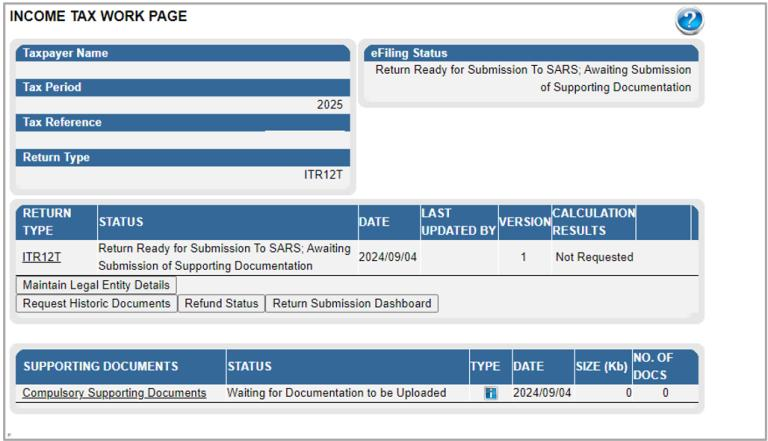
One of the biggest developments for the 2026 tax year is SARS’s aggressive move toward a digital-first tax administration system.
Manual submission channels are steadily being phased out. Taxpayers are now expected to submit returns primarily through:
- SARS eFiling
- Electronic submissions with assistance from SARS officials
- SARS eBooking appointments for in-person support
The previous flexibility that allowed certain institutions and taxpayers to use postal submissions or physical document delivery at SARS branches has largely fallen away.
Tax experts say the change reflects SARS’s broader modernization strategy aimed at improving efficiency, increasing compliance, and strengthening enforcement capabilities.
According to Tax Consulting SA, this transition represents a “significant administrative change” for many taxpayers who previously relied on manual filing systems.
Who Actually Needs to File a Tax Return in 2026?
A major point of confusion every tax season is determining who must file and who qualifies for exemption.
For the 2026 assessment year, some individuals may not need to submit a return at all — but the exemption rules are strict.
You May Not Need to File If:
You earned less than R500,000 from a single employer during the tax year and:
- PAYE was already deducted correctly,
- You had no additional income streams,
- You did not receive special taxable allowances or foreign income.
This exemption applies mainly to straightforward salaried employees.
In addition, taxpayers may also qualify for exemption if their income consisted solely of:
- Limited South African interest income,
- Tax-free investment earnings,
- Certain exempt dividends,
- A single retirement lump sum where tax was already deducted.
However, the exemptions disappear if taxpayers received:
- Travel allowances,
- Vehicle benefits,
- Foreign employment income,
- Additional business or side income.
Who Must File in 2026?
SARS rules make it clear that many categories of taxpayers are still legally obligated to submit returns.
You must file if you:
- Operated a business or side hustle,
- Earned foreign income,
- Held offshore assets exceeding R250,000,
- Received capital gains above R40,000,
- Owned participation rights in controlled foreign companies,
- Earned income from multiple employers,
- Were specifically requested by SARS to submit a return.
Taxpayers exceeding certain income thresholds are also required to file:
- Under 65 years old: income above R95,750
- Age 65–74: income above R148,217
- Age 75 and older: income above R165,689
All South African trusts are also required to submit tax returns.
Automatic Assessments Continue Expanding
SARS is continuing to expand its automatic assessment system, a feature that has become increasingly central to the tax filing process.
Under this system, SARS pre-populates tax assessments using information already available from employers, banks, medical schemes, retirement funds, and other institutions.
If the information matches the taxpayer’s records and no corrections are needed, no additional tax return submission may be necessary.
However, taxpayers are still expected to review their assessments carefully.
If the auto-assessment is incorrect or incomplete, taxpayers must amend or submit a return before the filing deadline.
Penalties Could Become Extremely Expensive
SARS has warned that missing deadlines or ignoring filing obligations may lead to automatic administrative penalties.
Under the Tax Administration Act, penalties can range from:
- R250 per month
to - R16,000 per month
The amount depends on the taxpayer’s taxable income level. Importantly, penalties can continue accumulating for up to 35 months if non-compliance continues.
Tax professionals say many taxpayers underestimate the seriousness of these penalties, especially when SARS systems already show an active tax reference number linked to an outstanding return.
According to Tax Consulting SA:
“Taxpayers should be cautious about assuming they are not required to file. If SARS’ records reflect an outstanding return, administrative penalties may be imposed for non-submission.”
SARS Under Pressure to Collect More Revenue
The stricter enforcement stance comes as SARS intensifies efforts to increase state revenue collections.
After collecting a record R2 trillion during the 2025/26 financial year, SARS is reportedly targeting more than R2.12 trillion in revenue for 2026/27.
At the same time, government finances remain under pressure due to tax relief measures and broader economic challenges.
Compliance enforcement has therefore become one of the most important tools available to the revenue service.
SARS reportedly collected more than R304 billion in compliance revenue during 2024/25 through enforcement and compliance activities alone.
Leadership Changes Could Shape Future Enforcement
The 2026 filing season also arrives during a period of leadership transition at SARS.
Long-serving commissioner Edward Kieswetter is being succeeded by Ngobani Makhubu, with expectations that the new leadership team will continue emphasizing aggressive compliance enforcement and modernization initiatives.
Observers believe the transition is unlikely to soften SARS’s approach toward non-compliance. If anything, experts expect the digital enforcement systems to become more sophisticated over time.
What Taxpayers Should Do Right Now
Financial and tax experts are encouraging South Africans not to wait until the last minute.
Early preparation can help taxpayers:
- Confirm whether they are required to file,
- Gather supporting documents,
- Review possible deductions,
- Resolve outstanding SARS queries,
- Correct inaccurate personal information,
- Prepare for auto-assessments.
Taxpayers are also being advised to verify their SARS eFiling access details well before the filing season begins.
For those who need assistance, returns can still be completed with help from SARS officials through booked appointments using SARS eBooking.
The Bigger Picture for South African Taxpayers
The 2026 tax season reflects a broader transformation underway inside South Africa’s tax administration system.
SARS is no longer operating as a paper-heavy bureaucracy. Instead, it is evolving into a data-driven digital compliance authority that relies increasingly on automation, third-party reporting, and integrated financial records.
For compliant taxpayers, the changes could eventually simplify the filing process.
For non-compliant taxpayers, however, the environment is becoming significantly more difficult — and potentially far more expensive.
As filing season approaches, one reality is becoming increasingly clear: taxpayers who stay organized, understand the rules, and act early will likely avoid much of the stress and financial risk associated with South Africa’s evolving tax system.


