South Africa’s Fuel Station Crisis Deepens as Record Prices Hit Consumers and Businesses
South Africa’s fuel crisis is no longer just about motorists paying more at the pump. What began as another round of painful petrol and diesel price hikes has evolved into a broader economic and operational emergency affecting fuel stations, transport operators, households, retailers, and even critical logistics operations across the country.
- Petrol Stations Under Severe Financial Pressure
- Consumers Are Changing Their Fuel Buying Habits
- Why Fuel Prices in South Africa Have Become So Expensive
- The Road Accident Fund Crisis Adds More Pressure
- Low-Income Households Hit Hardest
- Businesses Are Searching for Survival Strategies
- Global Tensions Continue to Threaten Stability
- What Comes Next for South Africa?
As inland petrol prices climbed to R26.63 per litre and diesel breached R30 per litre in some areas, the financial pressure has intensified throughout the economy. Fuel retailers say they are struggling to survive, consumers are cutting back on travel and spending, and economists warn that the ripple effects could continue pushing up inflation, food prices, and household debt.
The crisis has exposed deep structural problems in South Africa’s fuel pricing system, including regulated retail margins, heavy fuel taxation, dependence on imported fuel, and mounting government liabilities tied to levies collected at the pump.
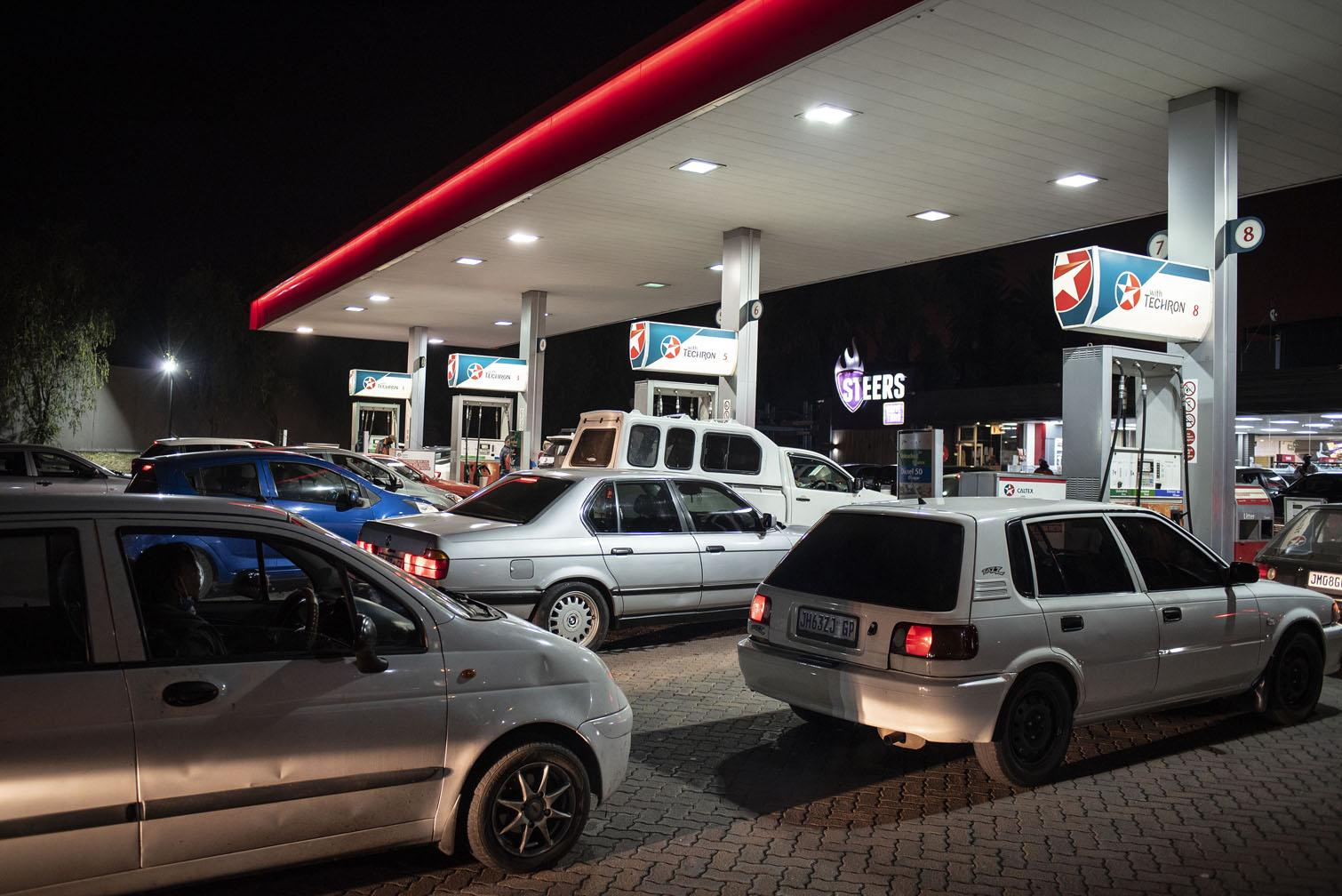


Petrol Stations Under Severe Financial Pressure
Many South Africans assume petrol stations benefit directly when fuel prices rise. According to the South African Petroleum Retailers Association (SAPRA), the reality is the exact opposite.
SAPRA national vice-chair Lebo Ramolahloane warned that service stations across the country are under immense financial strain as operating costs surge while retail margins remain tightly regulated.


Speaking about the dramatic increase in fuel prices, Ramolahloane explained that the cost of filling a station’s underground tanks has effectively doubled within a short period.
“Practically overnight, we had to find money in order to fill up our tanks because the margins stay the same and it’s regulated,” he said.
According to SAPRA:
- Filling station tanks previously cost around R1 million
- That cost has now jumped to between R2 million and R2.5 million
- Retailers operate on margins of roughly R3.15 per litre
- Many stations only generate net profits between 1% and 5%
At the same time, operators are dealing with higher wages, salary pressures, and Eskom tariff increases, creating a dangerous squeeze on profitability.


The organisation argues that South Africa’s fuel retail pricing model is outdated and no longer suited to the current economic environment.
“The formula itself is actually outdated, and it needs to be updated to the current market and to the current market environment,” Ramolahloane said.
Consumers Are Changing Their Fuel Buying Habits
The impact of rising fuel prices is becoming visible in everyday consumer behaviour.
Fuel retailers say motorists are increasingly abandoning full tank refills and instead purchasing fixed rand amounts of fuel simply to survive the month. This has caused fuel volumes sold to decline, even as overall turnover values rise because of higher prices.
The financial pressure is also changing broader spending patterns.
Discovery reported that fuel spending dropped by 35% in April, while transactions at filling stations declined by 28% as consumers reduced unnecessary travel and cut back wherever possible.
Meanwhile, transport operators are beginning to pass costs directly onto commuters. Taxi associations have already warned about fare increases as fuel prices continue to climb.
Why Fuel Prices in South Africa Have Become So Expensive
Although global oil prices and tensions in the Middle East remain major drivers, analysts say South Africa’s fuel price crisis goes far beyond international conflict.
National Debt Advisors CEO Sebastien Alexanderson argued that motorists are paying for years of government debt, failing infrastructure, and financial mismanagement every time they fill up their vehicles.
According to Alexanderson, a substantial portion of every litre purchased goes directly toward levies and taxes before the fuel even reaches consumers.
These include:
- The General Fuel Levy
- Road Accident Fund levy
- Carbon taxes
- Transport and storage margins
- The recently increased Slate Levy
“At the full unsubsidised rate returning in July, a 50-litre tank will send R317.50 to government before the car has even moved,” Alexanderson warned.
One of the most controversial additions is the R1.23-per-litre Slate Levy, introduced to recover a R14.173 billion shortfall in South Africa’s fuel pricing system.
Alexanderson described it bluntly:
“It is not an oil-price increase, but debt collection through the pump.”
The Road Accident Fund Crisis Adds More Pressure
Another major concern is the worsening financial position of the Road Accident Fund (RAF), which continues to consume billions through fuel levies.
Treasury projections show the RAF’s liabilities could rise from R387 billion to R426 billion by the 2028/29 financial year, despite collecting around R45 billion annually through fuel levies. Parliament’s Standing Committee on Public Accounts has reportedly described the fund as effectively insolvent.
Motorists currently contribute R2.25 per litre toward the RAF while the claims backlog exceeds 440,000 cases.
Economists warn that these structural weaknesses are amplifying the country’s broader cost-of-living crisis.
“When fuel goes up, it costs you at the pump, at the till, in your taxi fare, and in your interest repayments when inflation forces rate hikes. This is not just a fuel price crisis. It is a cost-of-living catastrophe,” Alexanderson said.
Low-Income Households Hit Hardest
Critics argue that South Africa’s emergency fuel tax relief measures have failed to protect the country’s poorest households.
Policy experts Bathandwa Vazi and Richard Bridle noted that while government temporarily reduced the fuel levy by R3 per litre for petrol and diesel, no similar relief was introduced for illuminating paraffin or LPG, which are heavily used by low-income families for cooking and heating.
The increases have been severe:
- Petrol rose by R3.06 per litre in April 2026
- Diesel increased by as much as R7.51 per litre
- Illuminating paraffin jumped by R11.67 per litre at wholesale level
For May, additional increases followed, including another R2.04 increase for petrol and R4.96 increase for diesel.
Analysts argue that broad fuel tax cuts disproportionately benefit wealthier households because higher-income consumers use more fuel overall.
Instead, they recommend:
- Targeted cash transfers
- Subsidies for paraffin and LPG
- Greater investment in cleaner and locally generated energy alternatives
- Accelerated electric vehicle adoption
Businesses Are Searching for Survival Strategies
Fuel stations are increasingly relying on non-fuel revenue to stay afloat.
According to SAPRA, convenience stores, quick-service restaurants, and electric vehicle charging stations are becoming essential for survival.
“The convenience store plays a vital role in our operations because that’s obviously where the bigger margins are,” Ramolahloane explained.
Banks and loyalty programmes are also attempting to soften the blow for consumers.
Standard Bank’s UCount Rewards programme highlighted that members can earn up to R10 back in rewards points per litre at participating fuel stations.
According to the bank:
- UCount members now spend around R2,000 per month on fuel
- That represents a 28.5% increase from 2021 levels
- A 50-litre petrol refill now costs an additional R163.50 after recent hikes
- Diesel users face increases of roughly R263.50 per refill
While loyalty programmes may provide limited relief, analysts say they cannot solve the deeper structural issues driving South Africa’s fuel crisis.
Global Tensions Continue to Threaten Stability
The crisis has also highlighted South Africa’s vulnerability to international supply disruptions.
Fuel supply instability linked to geopolitical tensions has already forced delays to critical operations, including a relief voyage to Marion Island.
South Africa remains heavily dependent on imported liquid fuels, leaving the country exposed to global oil shocks, shipping disruptions, and currency volatility.
Experts say the combination of:
- geopolitical instability,
- rising Brent crude prices,
- weak strategic fuel reserves,
- and local economic vulnerabilities
could continue placing pressure on fuel prices for months ahead.
What Comes Next for South Africa?
The outlook remains uncertain.
Fuel retailers are hoping for stability in Brent crude oil prices and reduced tensions in the Middle East. However, many industry observers believe the current crisis has exposed long-term weaknesses that require structural reform.
SAPRA is already engaged in discussions with the Department of Mineral and Petroleum Resources over possible changes to the regulated fuel retail model.
Meanwhile, economists continue warning that rising transport costs will keep feeding into:
- food inflation,
- logistics expenses,
- higher consumer debt,
- and slower economic growth.
Without broader reforms to fuel taxation, energy policy, and import dependency, South Africans may continue facing recurring fuel crises whenever global markets experience disruption.
For consumers, businesses, and fuel retailers alike, the pressure is becoming increasingly difficult to absorb.