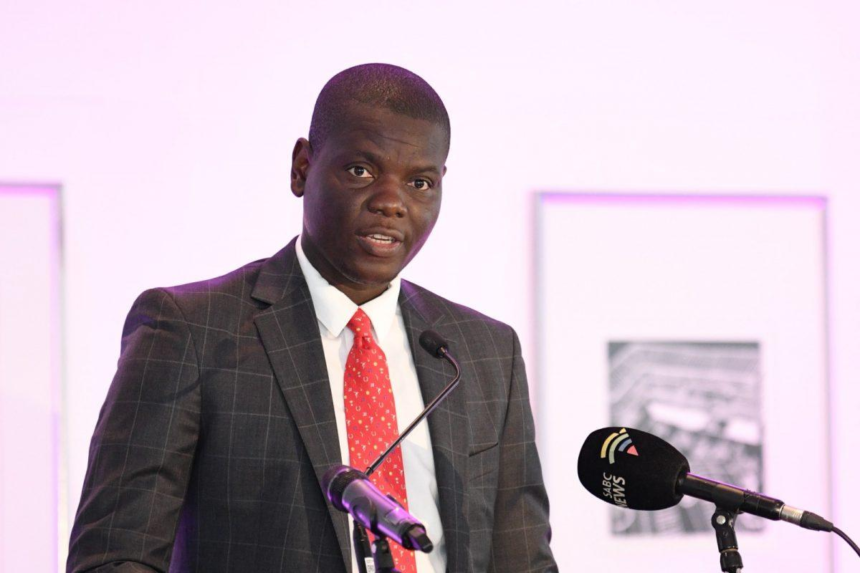
Ronald Lamola: The Diplomat at the Centre of South Africa’s Foreign Policy Test
Ronald Lamola has become one of the most visible figures in South Africa’s foreign policy at a moment when the country is trying to balance diplomacy abroad with constitutional stability at home. As Minister of International Relations and Cooperation, Lamola is tasked with strengthening strategic partnerships, defending South Africa’s regional leadership, and responding to growing international concern over anti-immigrant sentiment inside the country.
- A Foreign Minister Balancing Partnership and Pressure
- Why Japan Matters to South Africa’s Economic Strategy
- The Immigration Crisis Testing South Africa’s Diplomacy
- Regional Fallout and African Diplomatic Concern
- Nigeria’s Evacuation Plan Raises the Stakes
- The Economic Risks Behind the Political Tension
- A Country Seeking Long-Term Migration Solutions
- What Ronald Lamola’s Moment Reveals
- Conclusion: A Defining Test for South Africa’s International Standing
In early May 2026, two developments placed him firmly in the spotlight. On one front, Lamola used a bilateral meeting with Japan’s Foreign Minister, His Excellency Toshimitsu Motegi, to highlight 116 years of South Africa-Japan relations and the promise of deeper trade, investment, defence, and development cooperation. On another, he condemned vigilante actions targeting foreign nationals in South Africa, warning that groups moving “from house to house and identifying foreign nationals” amounted to a “witch hunt” that could not be tolerated in a constitutional democracy.
Together, these issues reveal the dual burden of Lamola’s portfolio: projecting South Africa as a reliable global partner while managing diplomatic fallout from domestic tensions that can quickly spill across borders.
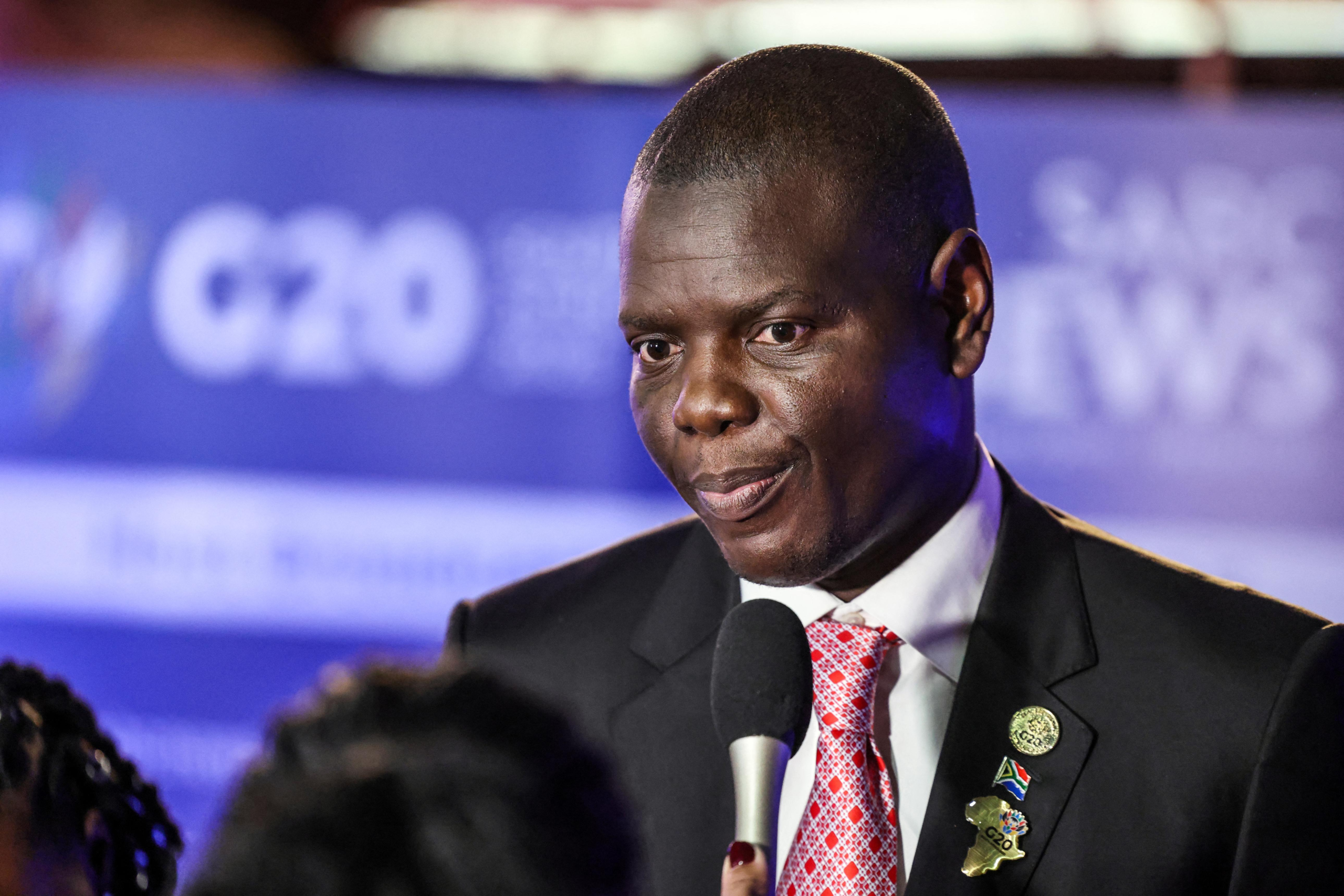


A Foreign Minister Balancing Partnership and Pressure
Lamola’s remarks at the bilateral meeting with Japan on 5 May 2026 were framed around continuity, economic opportunity, and shared development priorities. Addressing Japan’s Foreign Minister Toshimitsu Motegi, Ambassador Fumio Shimizu, South Africa’s Director-General Zane Dangor, and both delegations, Lamola described the relationship between the two countries as one that had expanded “significantly across a wide range of sectors.”
The speech placed South Africa-Japan relations in a long historical arc. “This year marks 116 years of relations between South Africa and Japan,” Lamola said. That anniversary was not presented merely as ceremonial. Instead, it served as a foundation for a wider agenda involving political engagement, trade diversification, regional development, industrial investment, and possible cooperation in new sectors.


Several high-level engagements shaped the context. Deputy President Mashatile visited Japan in March 2025; President Cyril Ramaphosa participated in TICAD 9 in Yokohama; Ramaphosa also met Prime Minister Takaichi in Johannesburg on the margins of the G20 Summit in 2025; and the JICA President visited South Africa in January 2026. Lamola portrayed these exchanges as evidence of a partnership that remains active at both bilateral and multilateral levels.
Why Japan Matters to South Africa’s Economic Strategy
A central theme in Lamola’s Japan remarks was economic diversification. South Africa, he said, continues to prioritise broader trade and investment partnerships, with Asia identified as a key region. In particular, he pointed to “strong potential for expanding access for South African agro-processing and agricultural products to the Japanese and broader Asian markets.”
Japan’s role as an investor also featured prominently. Lamola welcomed Japanese business confidence in South Africa and cited Toyota’s recent R10.4 billion investment pledge at the 6th South African Investment Conference. The pledge, he said, supports the transition to new energy vehicles, an area that has become increasingly important as global automotive markets shift toward cleaner technologies.
The remarks also opened the door to cooperation in defence equipment. Lamola referenced a “very successful engagement” between South African and Japanese companies in September 2025 and said South Africa trusted that the momentum would translate into “tangible cooperation partnerships.”


This language reflects a broader foreign-policy logic: South Africa wants long-standing diplomatic relationships to deliver concrete economic outcomes, particularly in sectors tied to future industrial competitiveness.
The Immigration Crisis Testing South Africa’s Diplomacy
While Lamola was promoting investment and strategic cooperation abroad, he was also forced to respond to rising concern over anti-immigrant actions at home. Reports described growing tensions over immigration in South Africa, frustration over porous borders, and anger directed at foreign nationals.
Lamola’s response was direct. He condemned groups that target foreign nationals and take the law into their own hands, describing such activity as a threat to constitutional values.
“As government, we acknowledge that there is a challenge with regard to the issues related to the implementation of immigration law. And it is for that reason that the BMA was formed and funded and supported,” Lamola said.
“We accept that the money might not be enough, but it is there now, and it is supported.
“The fact that now there are groups that are moving from house to house and identifying foreign nationals is a witch hunt. And that cannot be allowed in any constitutional democracy,”
His comments acknowledged two realities at once. First, South Africa has real administrative and enforcement challenges in implementing immigration law. Second, those failures cannot be used to justify mob action, intimidation, or vigilante enforcement.
Regional Fallout and African Diplomatic Concern
The issue has not remained domestic. South Africa’s foreign ministry has been working to calm concern on the continent, with Lamola holding talks with counterparts in Nigeria and Ghana after authorities in both countries summoned South African envoys over attacks on their citizens. President Cyril Ramaphosa also met Mozambican President Daniel Chapo to discuss the issue.
The diplomatic stakes are high. South Africa currently holds the interim chair of the Southern African Development Community, a 15-nation economic bloc, which increases pressure on Pretoria to demonstrate regional leadership and internal stability.
Lamola rejected violence linked to anti-immigrant marches in unambiguous terms.
“We condemn any violence that comes with these marches,” he told reporters in Pretoria. “It is un-South African to commit violence in the name of enforcing the law. In fact, it’s mob justice, it’s vigilantism.”
The United Nations also condemned xenophobic attacks and the harassment and intimidation of foreign nationals in South Africa, while calling for calm and urging authorities to protect all residents regardless of nationality.
Nigeria’s Evacuation Plan Raises the Stakes
The diplomatic pressure intensified when Nigeria’s Minister of Foreign Affairs, Amb. Bianca Odumegwu-Ojukwu, said the Federal Government was prepared to evacuate Nigerians willing to return from South Africa. She said the decision followed a phone conversation with Lamola, who expressed concern and misgivings about Nigeria’s evacuation plans.
Odumegwu-Ojukwu said she told Lamola: “I maintained that government cannot stand by and watch the systematic harassment and humiliation of our nationals resident in South Africa.
“More so, the extra-judicial killings of our people, and that the evacuation of our citizens who want to return home remains our government’s priority at this time.
“I also highlighted the need for their police and justice systems to take the cases on ground of extra-judicial killings of Nigerians in South Africa more seriously and there should be clear and immediate consequences for such acts.”
She also raised concern over Nigerian children and children born of both Nigerian and South African parents, referred to as “Sougerians,” saying they were being bullied in schools and told to return to their country. She described this as “reprehensible and capable of causing trauma to young minds, for whom such incidents may remain etched in memory.”
According to Odumegwu-Ojukwu, Lamola said South African authorities recognised their responsibility to protect such children and were working through education supervisory bodies to discourage bad practices.
The Economic Risks Behind the Political Tension
The anti-immigrant crisis carries economic implications beyond public order and diplomatic relations. South Africa’s Cross-Border Road Transport Agency warned of possible counter-protest action in Mozambique that could affect movement between the two countries and operations at the Lebombo and Kosi Bay border posts.
The risk is not minor. Maputo is a key export hub for South Africa’s chrome producers and is also used for some coal exports and magnetite. The Lebombo corridor handles almost 1 500 heavy-goods vehicles a day, while an average of 1 000 trucks arrive daily at the port of Maputo from across the border.
This is where Lamola’s diplomatic role intersects with trade, logistics, and regional economics. If domestic anti-migrant unrest triggers retaliatory action or disrupts cross-border transport, the consequences could affect exporters, transport operators, neighbouring states, and regional supply chains.
A Country Seeking Long-Term Migration Solutions
South Africa’s migration debate is shaped by difficult structural pressures. The country has a population of 62-million people and about 2.4-million immigrants, according to census figures cited in the provided material. The Pretoria-based Institute for Security Studies estimates there are about 2-million undocumented migrants in the country. South Africa’s unemployment rate is also cited at 31.4%, one of the world’s highest.
These numbers help explain why immigration has become politically charged. But Lamola’s argument is that enforcement must remain lawful and coordinated, not outsourced to mobs or anti-foreigner movements.
“It becomes very important for South Africa to find a long-lasting solution on the issue of irregular migration, but also for our counterparts across the continent to also share this responsibility with us,” he said.
That statement captures the policy dilemma facing Pretoria. Migration is not only a South African issue; it is a regional and continental challenge shaped by economic inequality, border management, labour markets, security, and social cohesion.
What Ronald Lamola’s Moment Reveals
Ronald Lamola’s current political moment is defined by contrast. In one setting, he is promoting South Africa as a stable partner for Japan, seeking expanded investment, new markets, and cooperation in future-facing sectors such as new energy vehicles and defence equipment. In another, he is working to reassure African governments that South Africa will protect foreign nationals and reject vigilantism.
The significance of this moment lies in the connection between the two. A country’s foreign policy is not built only in summit rooms, bilateral meetings, or investment conferences. It is also shaped by what happens in streets, schools, border posts, transport corridors, and communities.
For Lamola, the task is not simply to condemn xenophobia or celebrate old partnerships. It is to show that South Africa can uphold constitutional values at home while acting as a credible diplomatic and economic partner abroad.
Conclusion: A Defining Test for South Africa’s International Standing
Ronald Lamola’s handling of South Africa’s foreign affairs in May 2026 reflects a broader test for the country’s global identity. The Japan bilateral meeting highlighted South Africa’s ambition to deepen strategic partnerships, attract investment, and align foreign relations with development priorities. The immigration controversy, meanwhile, exposed the fragility of domestic social cohesion and the speed with which local unrest can become a regional diplomatic issue.
Lamola’s message has been clear: immigration law must be enforced, but not through mob justice; South Africa must confront irregular migration, but not by abandoning constitutional democracy; and foreign partnerships must produce tangible benefits, but they also depend on the country’s ability to maintain trust, stability, and regional credibility.
In that sense, Ronald Lamola is not only managing diplomatic relationships. He is helping define how South Africa presents itself to Africa and the wider world at a time when both are watching closely.