Fitbit Air: Google’s Screenless Bet on the Future of Health Tracking
Google’s latest move in consumer health is not a bigger smartwatch, a brighter display, or a more app-heavy wrist device. Instead, the company is going smaller, quieter, and more focused. The Fitbit Air is a screenless fitness tracker built around continuous health monitoring, long battery life, and a new Google Health app that places artificial intelligence at the center of the user experience.
- A Minimalist Tracker for a Screen-Saturated World
- What Fitbit Air Tracks
- Google Health Replaces the Old Fitbit Experience
- Better Sleep Tracking Becomes a Major Selling Point
- Battery Life and Charging
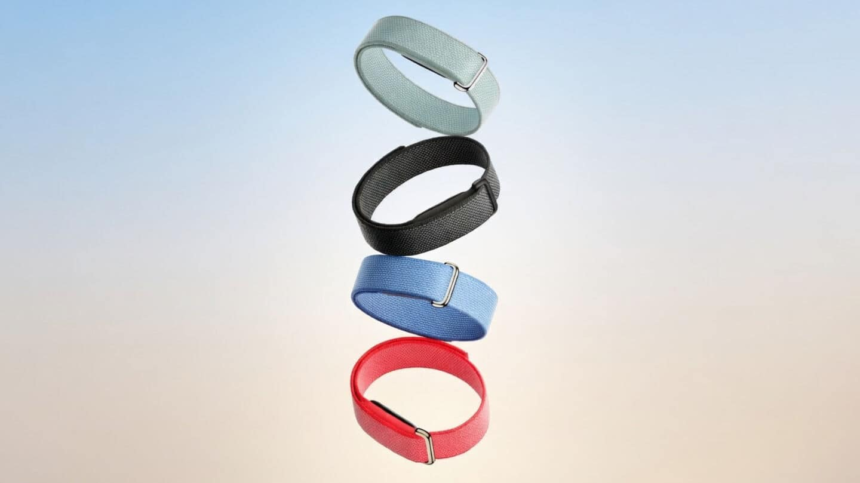
- Design, Colors, and Bands
- A Direct Challenge to Whoop and Budget Fitness Bands
- Availability and the Problem of Regional Access
- What Fitbit Air Says About Google’s Health Strategy
- Conclusion: A Small Device With Big Strategic Meaning
The launch marks a significant shift for both Fitbit and Google. Fitbit, once one of the most recognizable names in fitness wearables, has spent the past few years living under Google’s broader hardware and software strategy. Now, with Fitbit Air and the rebranded Google Health app, Google is signaling that it still sees room for dedicated health-tracking hardware beyond the Pixel Watch. The device is priced at $99.99, available for pre-order, and scheduled to ship on May 26.
A Minimalist Tracker for a Screen-Saturated World
The defining feature of Fitbit Air is what it does not have: a screen.


That design choice places it in a growing category of discreet wearables aimed at people who want health data without another display competing for attention. Instead of showing statistics on the wrist, Fitbit Air sends health and fitness information to the Google Health app. The idea is simple: the wearable collects the data, while the phone provides the interface.
This is not just a cosmetic decision. Removing the screen helps make the device lighter, simpler, and more battery efficient. Fitbit Air weighs 5.2 grams without a band and around 12 grams with one attached, making it far lighter than most smartwatches. It is designed as a small pebble-like tracker that sits inside an interchangeable band, keeping the technology close to the skin while maintaining a low-profile appearance.


For users who find smartwatches distracting, bulky, or uncomfortable during sleep, this could be the main appeal. Fitbit Air is not trying to replace a phone or smartwatch. It is trying to become the tracker people forget they are wearing.
What Fitbit Air Tracks
Despite its minimal design, Fitbit Air includes a broad set of sensors. The device features an optical heart-rate sensor for continuous monitoring, red and infrared sensors for blood oxygen tracking, a skin temperature sensor, a three-axis accelerometer, a gyroscope, and a vibration motor.
The tracked metrics include steps, distance, calories burned, heart-rate variability, cardio load management, sleep data, irregular heart rhythm notifications, and alerts for high and low heart rates. It can also automatically detect activity, reducing the need for users to manually start and stop workouts.
There are limits. Fitbit Air does not include built-in GPS, so location-based workout tracking depends on a paired phone. It also does not include an ECG sensor, which remains available on higher-end devices such as the Fitbit Sense 2 and Pixel Watch.


That trade-off makes the device more of an everyday wellness tracker than a full smartwatch or medical-grade wearable. It is designed for passive, round-the-clock health monitoring rather than active interaction.
Google Health Replaces the Old Fitbit Experience
Fitbit Air is launching alongside a larger software transition. Google is updating the Fitbit app into the Google Health app, positioning it as a central hub for health and fitness data. The app is designed to bring together information from wearable devices, Health Connect, Apple Health, and medical records in one place.
This matters because Fitbit Air depends entirely on the app. Without a screen, the software becomes the main dashboard for workouts, sleep, readiness, trends, and coaching. Google is also using the app to push deeper into AI-assisted wellness through Google Health Coach, a premium tool designed to provide training guidance and health tips.
The premium subscription, Google Health Premium, costs $9.99 per month or $99.99 annually. According to the provided information, that annual price is $20 higher than the previous Fitbit Premium annual cost. Some core Fitbit Air features remain available with a free Google account, while Google Health Coach requires the subscription.
Google is also offering Google Health Premium at no extra cost to Google AI Pro and Google AI Ultra subscribers, connecting the health product more closely to the company’s wider AI subscription strategy.
Better Sleep Tracking Becomes a Major Selling Point
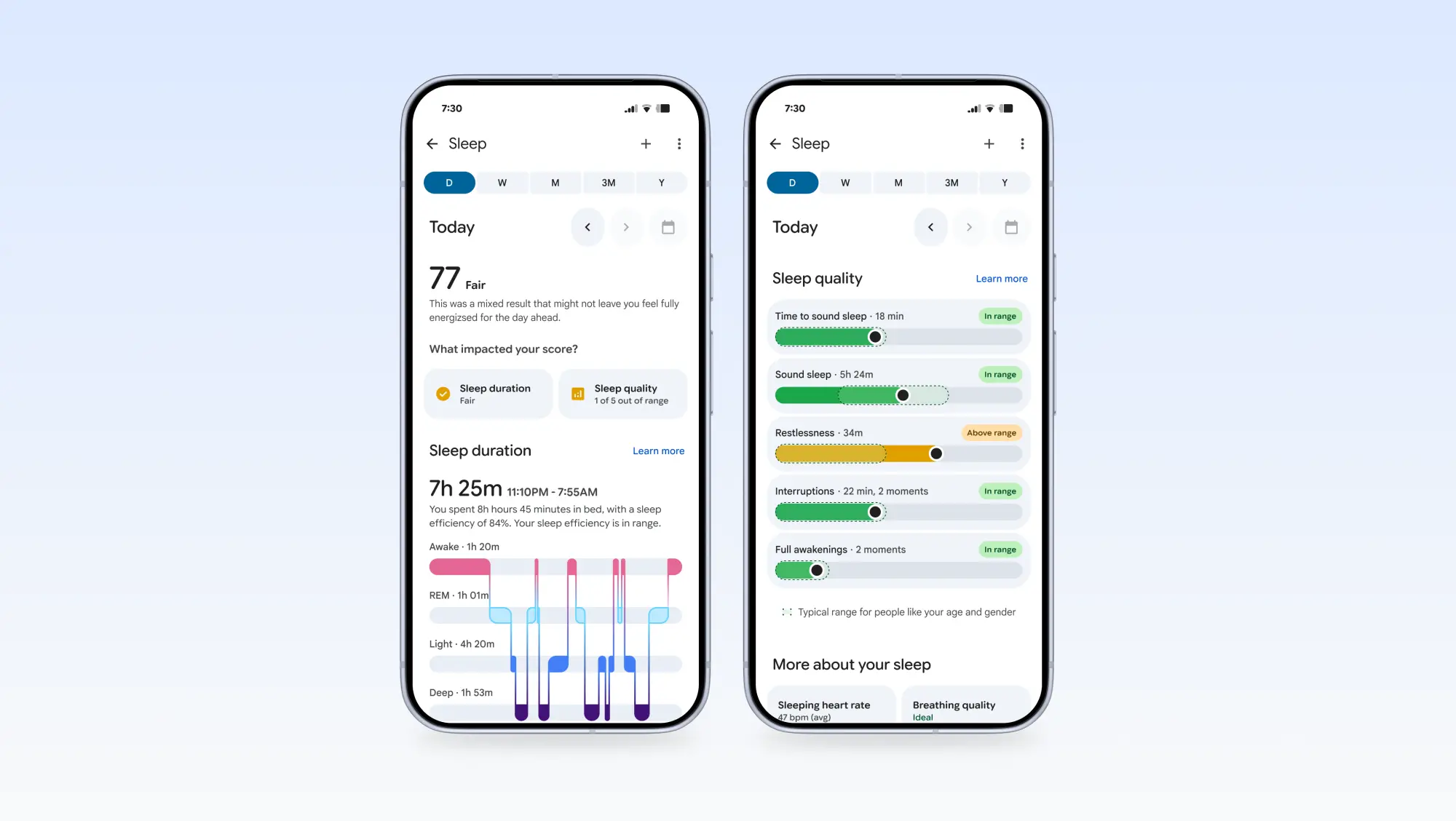
Sleep tracking is one of the key reasons a screenless wearable makes sense. Many people do not want to sleep with a full smartwatch, but they may be willing to wear a lighter band.
Fitbit Air includes a new Sleep Score feature that Google says is 15% more accurate than previous Fitbit sleep tracking thanks to a new machine learning model. It also includes Smart Wake, which uses the vibration motor to wake users at an optimal point in their sleep cycle.
This positions Fitbit Air as a potential companion device even for people who already own a smartwatch. Users could wear a Pixel Watch during the day and switch to Fitbit Air at night for sleep tracking. For the first time, Google Health allows users to pair both a Fitbit Air and a Pixel Watch on the same account, maintaining data continuity across devices.
That multi-device support is strategically important. It suggests Google does not necessarily see Fitbit Air as a Pixel Watch competitor. Instead, it can function as a lighter, cheaper, and more comfortable extension of Google’s health ecosystem.
Battery Life and Charging
Battery life is one of Fitbit Air’s strongest practical advantages. Google estimates about one week of use on a full charge. A five-minute charge can provide roughly one day of use, while a full charge takes around 90 minutes using the included magnetic charger.
For users accustomed to charging smartwatches every day or two, that week-long battery estimate is a major differentiator. It also supports the device’s identity as a passive tracker. The less often it needs attention, the more effectively it can fade into the background.
Design, Colors, and Bands
At launch, Fitbit Air comes in Obsidian, Fog, Lavender, and Berry. The standard package includes a fabric Performance Loop Band, while silicone Active Bands and Modern Bands are sold separately.
There is also a Stephen Curry Special Edition priced at $129.99. According to the provided information, this version includes a water-resistant coating and a racing-stripe interior print designed to improve airflow during workouts.
The emphasis on bands, finishes, and comfort reflects how wearables have moved beyond pure utility. A health tracker is something people may wear all day, during workouts, at work, and while sleeping. The product has to feel acceptable not only as technology but also as an accessory.
A Direct Challenge to Whoop and Budget Fitness Bands
Fitbit Air enters a market shaped by two opposing trends. On one side are advanced smartwatches with screens, apps, payments, calls, and sensors. On the other are discreet trackers like Whoop-style bands, smart rings, and budget fitness bands.
The Fitbit Air is closer to the second category. Its screenless design and health-first positioning make it a direct alternative to subscription-centered fitness trackers. The device costs $99.99 upfront, while Google Health Premium remains optional for users who want AI coaching and deeper guidance.
This is a notable contrast with Whoop, where the hardware model is closely tied to an annual subscription. Fitbit Air may appeal to people who want passive health tracking without committing to a higher recurring cost from the start.
At the same time, Fitbit Air will face pressure from lower-cost rivals. Xiaomi, Huawei, and Oraimo-style fitness bands often include screens, longer battery claims, and lower prices in some markets. The difference is that Fitbit Air leans on Google’s ecosystem, AI coaching, AFib-related notifications, and integrated health software rather than trying to win only on hardware specifications.
Availability and the Problem of Regional Access
One of the biggest practical questions is availability. The provided information states that Google’s launch list covers 21 countries across North America, Europe, Australia, New Zealand, Singapore, and Japan, while Kenya is not included at launch.
That matters because health wearables are not always globally equal. Features such as irregular rhythm notifications, ECG, or medical-record integrations often depend on regulatory approvals, supported partners, and regional software availability. A device may technically work after import, but some features can be limited or unavailable depending on the country.
For buyers outside supported markets, Fitbit Air may therefore be more complicated than its $99.99 price suggests. Import costs, warranty limitations, app availability, clinical integrations, and support coverage all affect the real value of the device.
What Fitbit Air Says About Google’s Health Strategy
Fitbit Air is not just another tracker. It is a signal that Google wants consumer health to become a more unified part of its product ecosystem.
The company is connecting hardware, app design, medical-record support, AI coaching, Pixel Watch compatibility, and subscription services under the Google Health identity. The move gives Google a clearer structure: Pixel Watch for smartwatch users, Fitbit Air for lightweight tracking, and Google Health as the central platform for interpreting personal wellness data.
It also reflects a broader shift in wearables. The next phase may not be defined only by bigger screens or more notifications. Instead, the competition may focus on who can provide the most useful interpretation of long-term health signals. In that world, the device on the wrist is only one part of the experience. The app, algorithms, coaching, privacy controls, and ecosystem integrations become just as important.
Conclusion: A Small Device With Big Strategic Meaning
Fitbit Air is a modest-looking product with large implications. It revives Fitbit-branded hardware in a new form, gives Google a low-cost entry point into screenless health tracking, and introduces Google Health as a more ambitious platform for personal wellness.
Its strengths are clear: light weight, discreet design, week-long battery life, continuous tracking, Pixel Watch compatibility, and a lower upfront price than many advanced wearables. Its weaknesses are equally important: no screen, no built-in GPS, no ECG, regional limitations, and premium AI features behind a subscription.
For users who want a full smartwatch, Fitbit Air will feel too minimal. For users who want quiet, consistent tracking without another screen, it may be exactly the direction wearables needed to go.
The bigger story is not only the tracker itself. It is Google’s attempt to make health data more continuous, more centralized, and more AI-driven. Fitbit Air is the small device carrying that larger strategy onto the wrist.