

Hamilton and Ferrari Under Pressure After Chaotic Miami Grand Prix
The 2026 Formula 1 Miami Grand Prix was supposed to mark another major step forward for Lewis Hamilton and Ferrari. Instead, the weekend exposed growing concerns inside the Scuderia camp, from technical reliability problems to race-day frustration and strategic confusion.
With Ferrari arriving in Miami armed with 11 upgrades and renewed optimism after a long five-week break, expectations were high. Yet by the end of the weekend, Hamilton was left battling damage, overheating issues, inconsistent power delivery, and another difficult race result, while teammate Charles Leclerc suffered a dramatic late-race collapse that transformed Ferrari’s promising afternoon into disappointment.
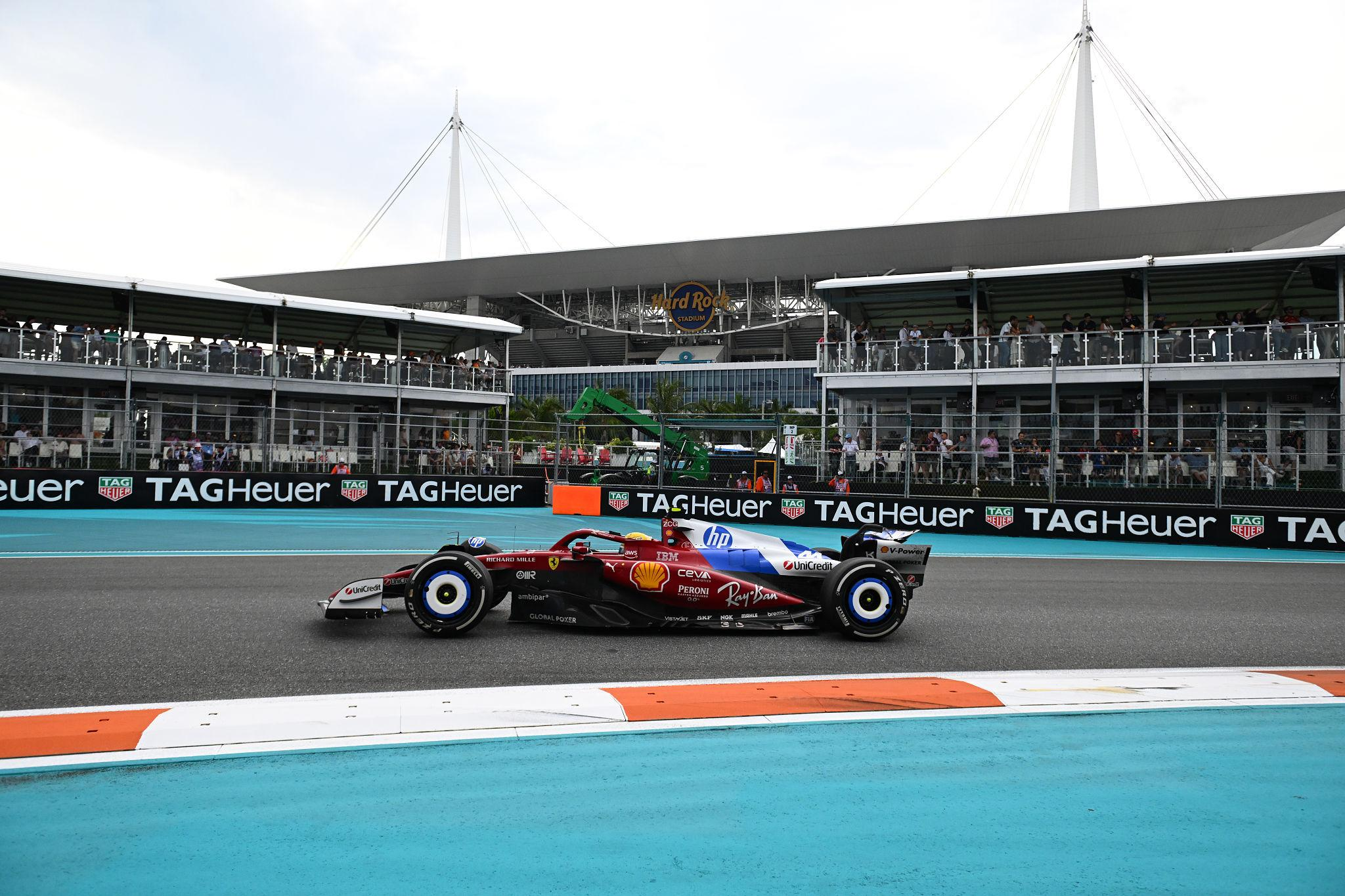
Miami Was Meant to Be Ferrari’s Turning Point
Ferrari entered the Miami Grand Prix believing its latest SF-26 developments could finally close the gap to McLaren and Red Bull. The Italian team had spent the unexpected five-week pause between races refining setups through simulator work and private testing sessions at Fiorano.
Hamilton himself approached the weekend with cautious confidence. The seven-time world champion had already shown improved form in 2026 compared to his difficult 2025 campaign and had even secured a podium earlier in the season. But Miami quickly turned into one of Ferrari’s most frustrating weekends of the year.
The problems started early.
Hamilton struggled to match Charles Leclerc’s pace during qualifying sessions and found himself fighting outside the leading group. Then came first-lap contact with Alpine driver Franco Colapinto, an incident that reportedly damaged the Ferrari floor and winglets, costing Hamilton between 10 and 20 points of downforce.
That damage severely affected the car’s balance in high-speed corners and left Hamilton trapped in what he later described as “no-man’s land” during both the sprint and main race.
Ferrari’s Technical Problems Are Becoming Impossible to Ignore
The deeper concern for Ferrari was not simply race pace. It was the growing evidence that the SF-26 still suffers from fundamental technical inconsistencies.
According to reports following the race, Hamilton repeatedly complained over team radio about erratic energy deployment and a lack of usable electrical power during critical phases of the Grand Prix. These were not new complaints.
The same concerns had already surfaced during the Japanese Grand Prix earlier in the season, where Hamilton struggled to access consistent hybrid energy during wheel-to-wheel battles. In Miami, the issue appeared unresolved despite Ferrari having several weeks to investigate the data.
The problems appear linked to Ferrari’s hybrid system rather than the internal combustion engine itself. Reports suggest the team is still struggling to optimize energy harvesting and deployment under braking and acceleration.
That uncertainty created unpredictable power delivery throughout the race weekend.
Italian media reacted harshly afterward, with La Gazzetta dello Sport describing Hamilton’s Miami weekend as “a weekend of survival rather than racing.” The publication also claimed Ferrari’s power unit suffered from a “chronic lack of power,” especially in Miami’s high temperatures.
Perhaps even more worrying for Ferrari was another criticism raised after the race: the apparent disconnect between simulator performance and real-world track behavior.
Despite extensive simulator preparation during the spring break, Hamilton reportedly failed to find the expected pace once the cars hit the circuit. That has triggered fresh questions about Ferrari’s development correlation process and whether the SF-26’s upgrades are actually functioning as intended.
The Race That Spiraled Out of Control
While Hamilton battled technical and aerodynamic problems, Charles Leclerc initially appeared capable of rescuing Ferrari’s weekend.
The Monegasque driver started aggressively from third on the grid and briefly moved into the lead after early chaos involving Max Verstappen and Kimi Antonelli. Ferrari looked competitive during the opening phase, and Leclerc showed strong traction and pace.
But the race gradually slipped away.
Leclerc lost ground during pit-stop sequences and later came under heavy pressure from Oscar Piastri in the closing stages. Then came the decisive moment: a costly spin and contact with the wall in the first sector while defending position.
The crash damaged the Ferrari badly enough to destroy his race pace.
George Russell and Max Verstappen quickly closed the gap and overtook the wounded Ferrari before the finish. The situation deteriorated further after the FIA launched an investigation into Leclerc for repeated track-limit infringements and continuing to drive in an unsafe condition after barrier contact.
The stewards ultimately handed Leclerc a severe 20-second time penalty, dropping him to eighth place behind Hamilton and Franco Colapinto.
That reshuffling meant Hamilton officially inherited sixth place despite crossing the line seventh on the road. Ferrari, however, left Miami with only 10 points from a weekend that had started with major expectations.
Hamilton’s Frustration Became Visible
Hamilton’s frustration was not limited to team radio messages.
During the race, television cameras caught the Ferrari driver making an angry gesture toward a rival following one of several tense on-track moments. The emotional reaction reflected the pressure building around both Hamilton and Ferrari after another underwhelming weekend.
The Briton has performed better overall in 2026 than he did during much of 2025, but Miami revived uncomfortable comparisons to last season’s struggles.
Hamilton’s qualifying pace remains inconsistent compared to Leclerc, and Ferrari’s inability to consistently challenge McLaren or Red Bull is becoming increasingly difficult to ignore.
Italian newspaper Corriere della Sera criticized Ferrari’s much-publicized upgrade package after the race, arguing that the new SF-26 developments had produced “only the worst result of the season in the main race.”
Overheating and Lift-and-Coast Problems Add More Pressure
Another major issue Ferrari encountered in Miami involved thermal management.
Hamilton was repeatedly instructed by race engineer Carlo Santi to adopt aggressive lift-and-coast procedures in order to manage overheating systems and protect vital components.
The instructions included avoiding lower gears through sections of the circuit and reducing thermal load before braking zones.
These are not the kind of compromises a championship-contending team wants its drivers making during a race.
Although Ferrari reportedly eased the restrictions later in the event, the recurring overheating problems suggest deeper aerodynamic and cooling limitations remain unresolved.
With Formula 1 heading toward hotter summer races, those weaknesses could become even more costly.
Ferrari Faces a Defining Stretch of the Season
The fallout from Miami has intensified scrutiny on Ferrari’s broader project with Hamilton.
The partnership between the sport’s most successful modern driver and Formula 1’s most famous team was expected to produce a genuine championship challenge. Instead, Ferrari now faces growing questions about technical direction, operational execution, and development efficiency.
Hamilton himself appears determined to push for immediate changes.
Reports following the Grand Prix suggested the seven-time champion is already dissatisfied with aspects of Ferrari’s race-weekend preparation and is seeking adjustments ahead of the Canadian Grand Prix later this month.
There is still time for Ferrari to recover.
The SF-26 has shown flashes of competitiveness this season, and Hamilton has already demonstrated stronger race form than during his final years at Mercedes. But Miami exposed how fragile Ferrari’s progress remains.
The combination of hybrid deployment issues, overheating concerns, simulator correlation problems, race incidents, and inconsistent qualifying pace paints a troubling picture for a team that entered 2026 hoping to fight consistently at the front.
For Hamilton, the challenge now is not only adapting to Ferrari but helping lead the team through one of its most technically uncertain periods in recent years.
And after Miami, the pressure is only increasing.


