


Daredevil: Born Again Season 2 Finale Explained: Matt Murdock’s Mask Comes Off, and Marvel Refuses to Turn Back
The finale of Daredevil: Born Again Season 2 does not simply close a chapter. It detonates the central premise that has protected Matt Murdock for years: the idea that he can live as both a lawyer and a masked vigilante without the world forcing those identities into the same room.
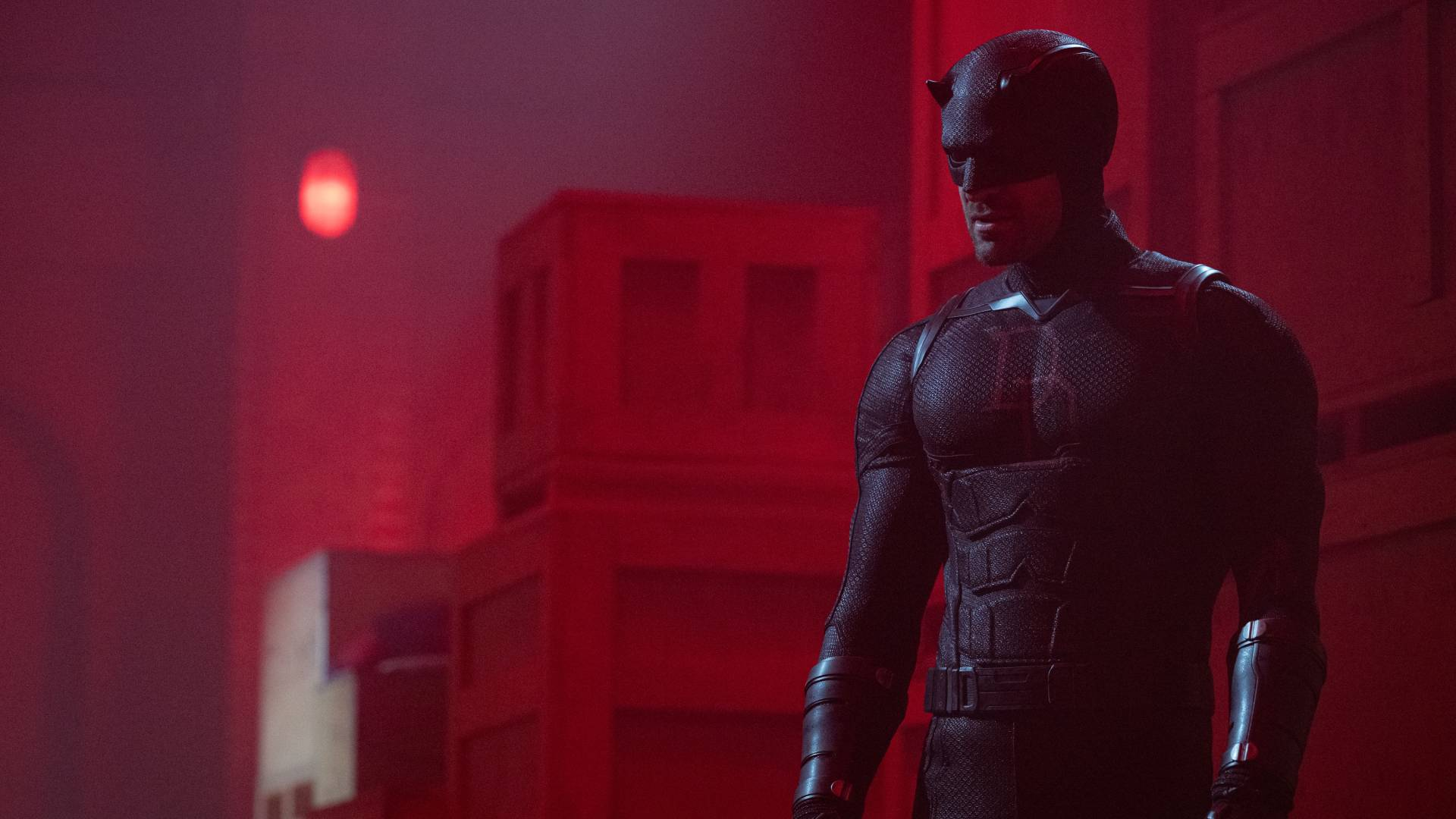
Episode 8, titled “The Southern Cross,” ends with Matt publicly revealing that he is Daredevil, Karen Page walking free, Wilson Fisk losing his political grip but not his danger, and New York entering a new phase of open conflict between power, justice, vigilantism, and public resistance. The result is one of the most consequential Daredevil finales Marvel has staged, because its biggest twist is not being treated as a temporary shock. According to the show’s creative team, Matt Murdock’s public unmasking is meant to stand.
A Finale Built Around One Impossible Choice
At the center of the finale is Karen Page’s trial. Karen, played by Deborah Ann Woll, is trapped inside a legal machine shaped by Wilson Fisk’s influence. Matt Murdock, played by Charlie Cox, enters the episode wounded, delayed, and physically compromised after being shot during the chaos around the courthouse. Jessica Jones helps treat his leg wound, but the emotional wound is larger: Matt knows Fisk’s system cannot be beaten by ordinary courtroom tactics alone.
The hearing begins as a defense of Karen. It quickly becomes something bigger. Fisk’s side tries to frame Karen as unstable and dangerous, with Heather Glenn presenting a psychological evaluation that casts her as combative and drawn to chaos. Matt challenges the testimony, but his real target is not Heather. It is Fisk.
Calling Wilson Fisk to the stand transforms the trial from a criminal proceeding against Karen into a public reckoning with the mayor of New York. Fisk presents himself as a protector, defending the Safer Streets Initiative as a response to vigilante violence. Matt counters by connecting Fisk to the Northern Star, illegal weapons smuggling, and the arming of his private task force.
Then the finale reaches its defining line.
“I am Daredevil”
Matt’s confession lands because it is not treated like a flourish. It is testimony. He uses his own identity as evidence, telling the courtroom: “I am Daredevil.”
That moment saves Karen, but it costs Matt almost everything. By revealing himself, he destroys the wall between Matt Murdock the attorney and Daredevil the vigilante. He proves that Fisk has used the justice system to protect his own criminal agenda, and the judge dismisses Karen’s case with prejudice. But the victory is not clean. Matt’s anonymity is gone, and with it the fragile safety that allowed him to operate in the shadows.
The finale’s central achievement is that it makes Matt’s confession feel both heroic and devastating. He wins in court, but he loses the private life that made his double existence possible. The city now knows. His enemies know. Every person he has ever saved, angered, prosecuted, fought, or failed now has a name to attach to the devil of Hell’s Kitchen.
Marvel Says the Twist Will Not Be Undone
The obvious question after a comic-book identity reveal is whether the story will reverse it. Marvel’s answer, at least for now, is no.
Showrunner Dario Scardapane discussed the decision on the official Daredevil: Born Again podcast and made clear that the creative team is not planning an easy reset. He specifically referenced the comics, where Kilgrave, also known as Purple Man, once reset public knowledge of Matt’s identity through mass brainwashing. Scardapane said: “But we’re probably not going to be doing Purple Man doing mass brainwashing of an entire city to buy it back.” He added: “We’re not doing buybacks. If you’re taking that step, now everyone in the city knows Matt is Daredevil, which changes the storytelling in Season 3 in such a cool way.”
That statement matters. It signals that the finale is not a gimmick. It is a structural reset for the series.
Marvel TV boss Brad Winderbaum also framed the unmasking as a major creative decision that required approval at the highest levels of Marvel, including Kevin Feige and Louis D’Esposito. Winderbaum said Marvel could point to the comics and show “all the stories that are able to be told after the reveal of the identity,” making the argument easier.
In other words, the finale is not only about what Matt sacrifices. It is about the new story engine Marvel has chosen for Season 3.
Fisk Loses in Public, but He Does Not Disappear
Wilson Fisk’s defeat is dramatic, but it is not absolute. After Matt’s testimony, Governor Marge McCaffrey says the Attorney General has filed charges against Fisk for racketeering, corruption, smuggling, and attempted murder. Fisk’s assets are frozen, the Freeport is seized, and resignation becomes the only practical option placed in front of him.
But Fisk has never been a character who accepts humiliation quietly.
The assassination attempt near the courthouse gives him an opening. Bullseye’s shot kills Buck instead, and Fisk uses the chaos to declare New York under siege. He frames the day’s events as proof that vigilantes and their supporters are attacking the city. The move is classic Fisk: turn personal danger into political theater, then use fear to justify control.
The courthouse then becomes a battlefield. Protesters in Daredevil masks flood the streets. Fisk orders that Matt and Karen must not leave alive. Inside and outside the building, the Anti-Vigilante Task Force begins to fracture. Cherry and Brett Mahoney stand with police against Fisk’s forces, while Officer North finally turns on Powell after the lies around Hector Ayala catch up with him.
Fisk’s collapse is not just legal. It is institutional. His machine begins breaking from the inside.
The Mercy That Defines Matt Murdock
The finale’s most important confrontation between Matt and Fisk is not the courtroom exchange. It is the moment when Fisk is surrounded by protesters and Matt reaches him before the mob can finish him.
Matt does not kill Fisk. He does not let the crowd do it. He offers him grace.
That choice reasserts the moral center of Daredevil. Matt can expose corruption, fight brutality, and admit his own crimes, but he refuses to let justice become vengeance. Fisk initially rejects the idea that Matt has any right to offer him mercy. But Matt argues that peace for the city matters more than peace for either of them. Fisk finally surrenders.
It is not redemption. The finale does not pretend Fisk has become good. It simply forces him into a position he cannot dominate. For a man who builds power by controlling fear, surrender is its own kind of punishment.
Matt Saves Karen, Then Pays the Price
After the violence, Matt and Karen briefly sit together in a quiet moment that feels almost impossible after everything the episode has unleashed. They talk like people trying to imagine a life after catastrophe. But the calm does not last.
Matt hears the police arrive before Karen does. He knows what is coming. He kneels, puts his hands behind his head, and allows himself to be arrested. The finale leaves him in prison, wearing orange, waiting.
That ending is crucial because it prevents Matt’s identity reveal from becoming a consequence-free act of heroism. He saved Karen and exposed Fisk, but he also admitted to years of vigilantism. The system he challenged now turns toward him.
Season 3, therefore, is not just about Daredevil fighting crime with his secret exposed. It is about Matt Murdock facing the legal and moral consequences of being Daredevil in a world that can no longer pretend not to know.
The Defenders Are Moving Back Into Place
The finale also expands the show’s future beyond Matt and Fisk. Jessica Jones reunites with Luke Cage at Alias Investigations, confirming Mike Colter’s return to the Marvel Cinematic Universe as the Hero of Harlem. The episode also reveals the family connection around Jessica, Luke, and their daughter Danielle.
That moment is more than fan service. It positions Daredevil: Born Again as a bridge back to the Netflix-era street-level Marvel universe. Charlie Cox’s Daredevil, Krysten Ritter’s Jessica Jones, Jon Bernthal’s Punisher, and now Mike Colter’s Luke Cage have all returned in some form. Finn Jones’ Danny Rand, also known as Iron Fist, remains the major Defender still waiting for full onscreen re-entry, though set reports have pointed toward a broader reunion in Season 3.
The finale’s Luke Cage reveal also strengthens Scardapane’s tease: “Luke Cage is going to be a big part of Season 3.” He added: “If you know these characters’ history, and you know some of the comic book runs, you know what’s happening. We tipped our hand for Season 3 incredibly at the end of Season 2.”
Heather Glenn, Lady Muse, and the Darker Road Ahead
The finale does not stop with Matt’s arrest and Luke Cage’s return. It also plants darker seeds. Heather Glenn dons Muse’s mask, suggesting a transformation that could make her one of the major threats or complications in the next chapter.
This development is especially striking because Heather begins the finale as part of the courtroom machinery used against Karen. By the end, she appears to be moving toward something more dangerous and theatrical. If Season 2 was about Fisk weaponizing institutions, Season 3 may explore what happens when broken individuals begin turning trauma, obsession, and ideology into masked identities of their own.
Bullseye also remains active, reappearing alongside Charles on a plane. That unresolved thread ensures that Matt’s exposed identity will not simply create public pressure; it will invite personal danger from enemies who now know exactly where to aim.
What Happened to Foggy Nelson?
One question hanging over the finale was whether Foggy Nelson would return. He does not appear in Episode 8. His presence in Season 2 is limited to Episode 5, which functions largely as a flashback sequence.
The emotional significance of Foggy’s absence remains central to Matt’s arc. Scardapane has argued that Foggy’s loss must feel real for Matt’s story to work, especially when the season deals with mercy, grief, and the possibility of forgiving the person responsible for taking someone so important from him.
Still, Matt’s arrest has already led fans to speculate about a possible adaptation of The Devil in Cell-Block D, a comic storyline involving Matt in prison and a major twist around Foggy. The series has not confirmed such a direction, but the finale’s prison ending makes the comparison difficult to ignore.
Why the Finale Feels Bigger Than One Show
The Daredevil: Born Again Season 2 finale matters because it changes the rules of Marvel’s street-level storytelling. For years, Matt Murdock’s secret identity allowed the narrative to balance two genres: legal drama and vigilante crime thriller. Now those genres have collided permanently.
The courtroom is no longer separate from the mask. The justice system now has to reckon with Daredevil not as a rumor, but as Matt Murdock. New York can no longer debate vigilantes in the abstract. It has a face, a name, and a legal case.
That shift opens several major questions for Season 3:
Will Matt be tried, imprisoned, or forced into a public role he never wanted? Can Karen remain safe now that her connection to Daredevil is undeniable? Will Fisk rebuild power from exile, or will new enemies fill the vacuum? How will Luke Cage, Jessica Jones, and potentially other Defenders respond to a New York where masked justice has become a public crisis?
Most importantly, can Matt still be Daredevil when everyone knows who he is?
Season 3 Is Already the Real Fallout
Daredevil: Born Again Season 3 has already been confirmed. Reports in the provided material indicate that filming is underway and that the next season is expected to continue directly from the events of the Season 2 finale. Some reports point to a possible March 2027 release window, following the pattern of Season 1 in March 2025 and Season 2 in March 2026, though Marvel has not provided an exact release date in the supplied information.
The creative direction is clear even without a precise date. Season 3 is positioned around consequences: Matt’s public identity, his imprisonment, Fisk’s damaged but persistent influence, Luke Cage’s larger role, Heather Glenn’s apparent transformation, Bullseye’s continued threat, and the possibility of a wider Defenders reunion.
That is why the Season 2 finale succeeds as more than a cliffhanger. It does not merely ask viewers what happens next. It forces the entire series to become something new.
Conclusion: A Finale That Burns the Old Status Quo
The Daredevil: Born Again Season 2 finale is built around sacrifice. Matt sacrifices his secret to save Karen and expose Fisk. Fisk sacrifices any remaining illusion of public virtue in his attempt to cling to power. New York sacrifices its fragile calm as citizens, police, vigilantes, and political forces collide in the open.
But the biggest sacrifice is the show’s old structure. There is no easy return to the familiar rhythm of Matt Murdock by day and Daredevil by night. Marvel has chosen to push the character into a world where the mask no longer protects him, and where the consequences of heroism are legal, political, personal, and public.
By refusing to undo the reveal, Daredevil: Born Again turns its Season 2 finale into a true turning point. Matt Murdock won the day, but he did not walk away free. That is exactly why Season 3 now feels more dangerous, more unpredictable, and more essential.


