

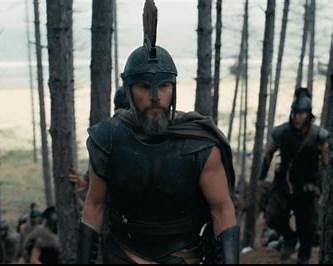
The Odyssey Returns: Inside Christopher Nolan’s Bold Reimagining of a Timeless Epic
A Story Older Than Cinema—Reborn for the IMAX Age
For centuries, The Odyssey has stood as one of humanity’s most enduring narratives—a tale of survival, identity, and the relentless pull of home. Now, one of modern cinema’s most ambitious filmmakers, Christopher Nolan, is bringing Homer’s ancient Greek epic to the big screen in what is shaping up to be one of 2026’s defining blockbusters.
With the release of the film’s first full-length trailer, anticipation has surged across the entertainment industry. The project marks Nolan’s first feature since his Oscar-winning Oppenheimer and represents a striking shift: from historical biopic to mythological epic, from atomic age realism to gods, monsters, and legendary voyages.
Yet beneath the spectacle lies a familiar emotional core—one that continues to resonate across generations.
The Trailer That Set the Stage
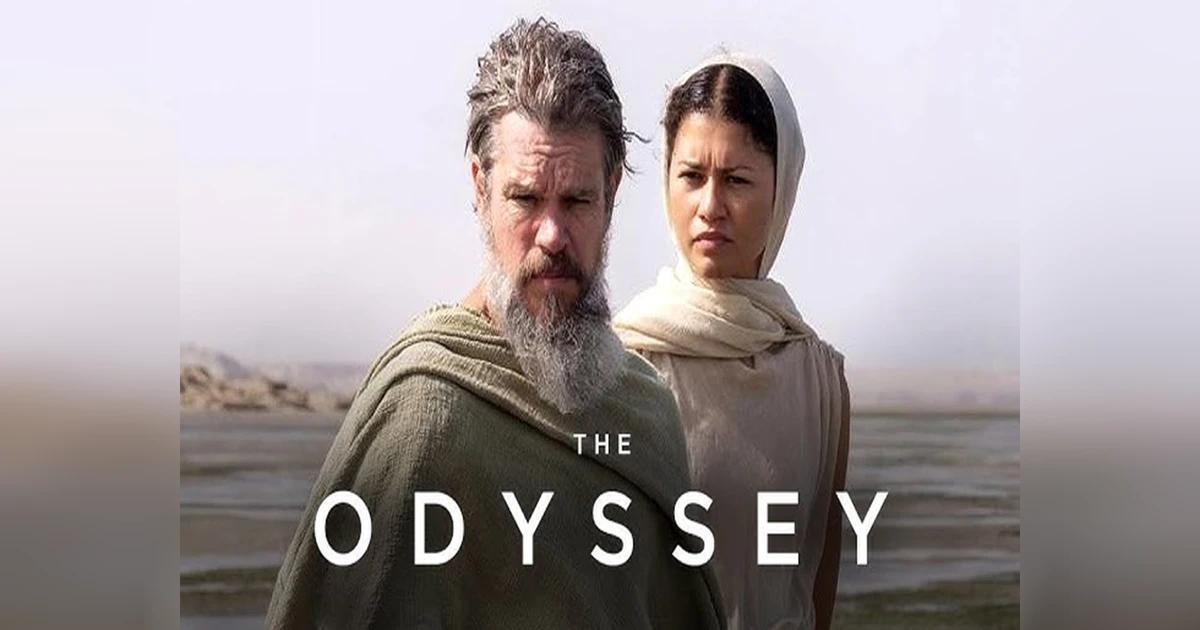
The newly released trailer offers audiences their most detailed glimpse yet into Nolan’s interpretation of The Odyssey. It opens with Matt Damon’s Odysseus recounting his journey—a narrative frame that echoes the original epic poem while grounding the story in character reflection.
The footage captures both the scale and intimacy of the story:
- Massive battle sequences tied to the Trojan War
- Perilous sea voyages across unknown waters
- Encounters with mythological threats, including the Cyclops
- Emotional tension back home in Ithaca
But the trailer’s most compelling thread may not be Odysseus’s journey itself—it’s what’s happening in his absence.
Back in Ithaca, Penelope (Anne Hathaway) and Telemachus (Tom Holland) struggle to maintain order as Antinous (Robert Pattinson) attempts to seize power. The stakes are made explicit in a line that has already become widely discussed:
“My dad is coming home.”
The moment encapsulates the film’s dual narrative: a hero fighting to return, and a family fighting to hold on.
A Cast Built for Epic Scale
Nolan’s The Odyssey features one of the most star-studded ensembles in recent memory, reflecting the sweeping scope of the source material.
Key Cast Members:
- Matt Damon as Odysseus, King of Ithaca
- Anne Hathaway as Penelope
- Tom Holland as Telemachus
- Robert Pattinson as Antinous
- Zendaya as Athena
- Charlize Theron as Calypso
- Jon Bernthal as Menelaus
- Benny Safdie as Agamemnon
- John Leguizamo as Eumaeus
- Himesh Patel as Eurylochus
Additional cast members include Lupita Nyong’o, Elliot Page, and others, underscoring the film’s expansive storytelling canvas.
The project also reunites Nolan with several long-time collaborators, including Hathaway and Damon, while bringing new actors like Holland into his cinematic orbit.
A Director’s Vision: Myth Meets Modern Spectacle
Christopher Nolan is no stranger to large-scale filmmaking, but The Odyssey may represent his most ambitious undertaking yet.
The film was shot entirely using 70mm IMAX cameras—the first production of its kind—capturing over two million feet of film. This technical choice reflects Nolan’s commitment to physical realism, even within a fantastical narrative.
Much of the production took place on open water, a decision Nolan described as both challenging and essential:
“We really wanted to capture how hard those journeys would have been… the leap of faith that was being made in an unmapped, uncharted world.”
The emphasis on realism—on wind, waves, and human endurance—suggests a grounded approach to myth, where spectacle emerges from tangible experience rather than digital abstraction.
The “Original Marvel Movie”?
Perhaps the most striking insight into Nolan’s interpretation comes from his own comparison between The Odyssey and modern superhero storytelling.
During an interview, he argued:
“Even comic book culture… comes directly from the Homeric Epics.”
He went further, describing Homer as:
“the sort of George Lucas of his time.”
This framing positions The Odyssey not just as a historical artifact, but as the foundation of contemporary blockbuster storytelling. Themes of heroism, destiny, divine intervention, and moral struggle—now staples of franchises like Marvel and DC—trace their lineage back to Homer’s narrative.
In this sense, Nolan isn’t simply adapting a classic; he’s reconnecting modern audiences with the origins of cinematic mythmaking.
Balancing Fidelity and Modern Appeal
Adapting a text as revered as The Odyssey inevitably invites scrutiny, and early reactions to the trailer suggest that Nolan’s approach may spark debate.
Some viewers have questioned elements such as:
- Contemporary dialogue choices
- American accents among characters
- Tonal shifts between mythological gravitas and modern accessibility
Critics argue that such decisions risk breaking immersion in a Bronze Age setting.
However, others see these choices as intentional—part of a broader effort to make the story accessible to contemporary audiences without losing its emotional resonance.
Nolan himself has acknowledged the challenge:
“Anyone taking on ‘The Odyssey’ is taking on the hopes and dreams of people for epic movies everywhere.”
The tension between authenticity and accessibility may ultimately define how the film is received.
A Story That Still Speaks to Us
At its core, The Odyssey is not just about monsters and gods—it is about human resilience.
The trailer reinforces this through Odysseus’s determination:
“No-one can stand between me and home. Not even the Gods.”
This central idea—of perseverance against impossible odds—has allowed the story to endure for nearly three millennia.
Modern audiences may encounter it through IMAX screens rather than oral tradition, but the themes remain unchanged:
- The search for identity
- The importance of family
- The struggle against chaos and uncertainty
Release Date and Industry Expectations
The Odyssey is set to arrive in theaters on July 17, 2026, positioning it as a major summer release.
The timing places it in direct competition with other blockbuster franchises, including Spider-Man: Brand New Day, which interestingly also stars Tom Holland.
Given Nolan’s track record and the scale of the production—reportedly around $250 million—industry analysts already view the film as one of the year’s most significant cinematic events.
Conclusion: A Journey Worth Taking
Christopher Nolan’s The Odyssey is more than a film—it is an ambitious attempt to bridge ancient storytelling and modern cinematic language.
By combining a revered source text, cutting-edge filmmaking techniques, and a globally recognized cast, the project aims to reintroduce one of history’s greatest narratives to a new generation.
Whether it leans closer to faithful adaptation or contemporary reinvention, one thing is clear: the journey of Odysseus is far from over.
And for audiences in 2026, the voyage is just beginning.


