


Charlene, Princess of Monaco: From Olympic Waters to Royal Influence
A Life Between Two Worlds
Charlene, Princess of Monaco, has built a life that seamlessly bridges two vastly different worlds—elite international sport and European royalty. Known for her quiet composure, athletic discipline, and evolving public presence, she remains one of the most intriguing figures in modern royal life.
Born in Zimbabwe and raised in South Africa, Charlene’s early years were defined not by palaces, but by pools. Her mother, a swimming instructor, introduced her to the water at a young age, setting the foundation for what would become a world-class career. By the late 1990s, Charlene had already distinguished herself as one of South Africa’s most promising swimmers, collecting national titles and competing internationally. Her breakthrough came in 2000 when she qualified for the Sydney Olympic Games, marking her place on the global sporting stage.
Yet, while the world came to know her as an Olympic swimmer, Charlene’s story extends far beyond the lanes of competitive sport.
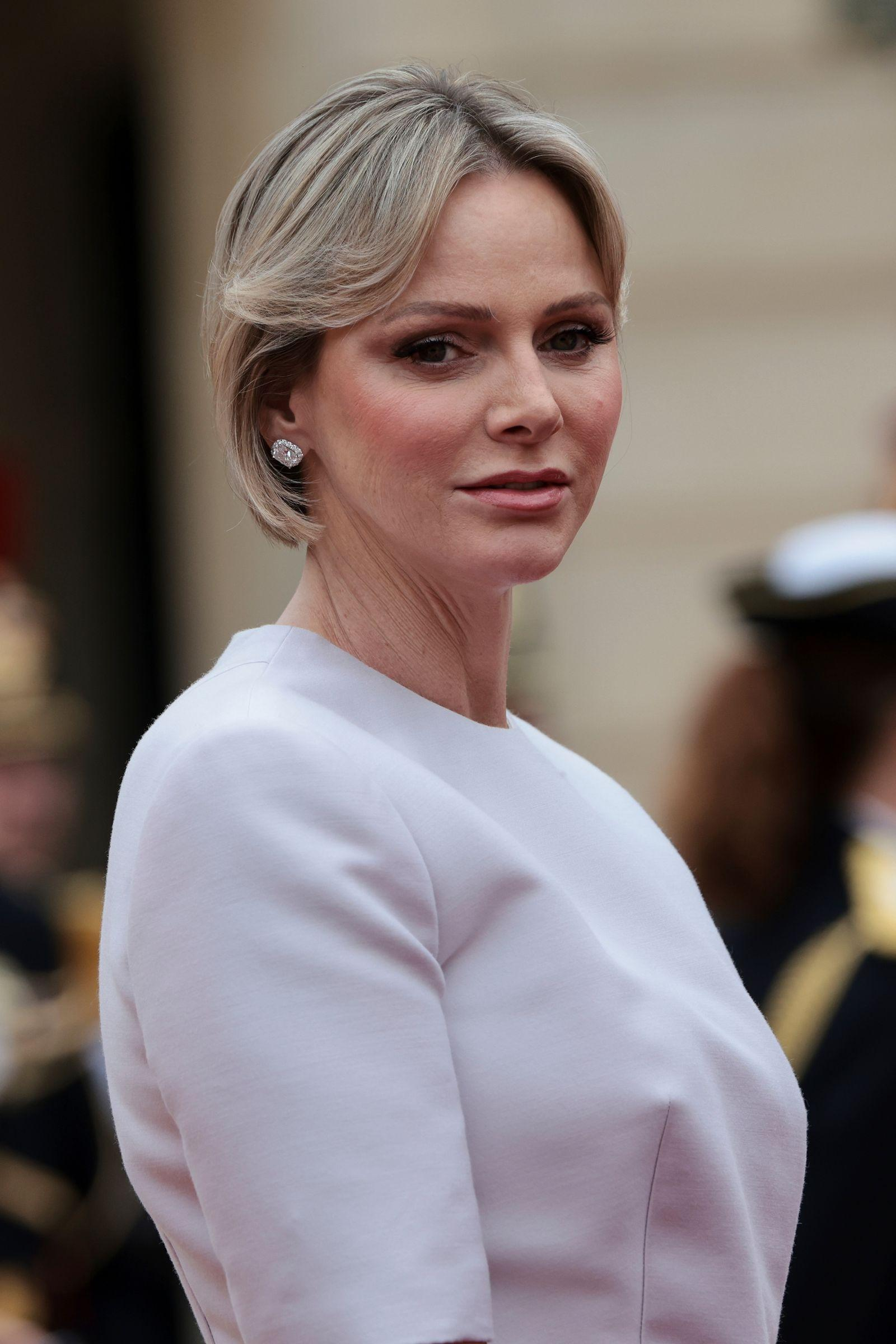
The Royal Chapter Begins
Charlene’s transition into royal life began through her relationship with Prince Albert II of Monaco. Their connection, rooted partly in their shared love of sport, evolved over time into one of Europe’s most closely followed royal unions. Today, the couple represents Monaco on both ceremonial and international stages, often appearing together at events that reflect their shared commitments.
Despite the grandeur associated with royalty, Charlene has maintained a relatively discreet public profile. Observers frequently note her understated elegance and focused approach to public duties, often centered around causes that align with her personal history.
A Lifelong Passion for Sport
Sport has remained a defining thread throughout Charlene’s life. While swimming brought her early recognition, rugby holds a deeply personal significance.
Her father, Michael Kenneth Wittstock, was a rugby player, and Charlene grew up immersed in the sport, attending matches alongside her brothers, Gareth and Sean, who also played. This early exposure cultivated a lifelong connection to rugby—one she has actively integrated into her royal role.
That passion was on full display in May 2026, when she played a central role in launching the first edition of the Monaco Sevens tournament. Held at the Prince Jacques Stadium in Beausoleil, the event marked a significant moment for the principality’s sporting landscape.
As President of the Monegasque Rugby Federation, Princess Charlene performed the ceremonial kick-off for the Elite Men’s tournament alongside Olympic judo champion Antoine Zeghdar.
The tournament brought together sixteen teams from countries including Monaco, Italy, Poland, the United Arab Emirates, and Georgia, competing across men’s and women’s divisions. By the end of the day, Poland claimed victory in the women’s competition, while Seventise triumphed 35–14 in the Elite Men’s final.
For Charlene, however, the event carried deeper meaning. It represented not just a sporting milestone, but a continuation of her commitment to using sport as a unifying and developmental force within Monaco.
Honoring Legacy and Building Community
The Monaco Sevens was also marked by a poignant tribute to Christophe Dominici, the legendary French rugby winger who passed away in November 2020. His daughters, Kiara and Mya, presented awards during the ceremony, adding an emotional dimension to the event.
Moments like these highlight Charlene’s approach to public life—combining sport, community, and remembrance. Her involvement is rarely symbolic; instead, it reflects sustained engagement and long-term vision.
This philosophy extends to her broader initiatives, particularly through the Princess Charlene of Monaco Foundation. One of its flagship efforts, the Water Safety programme, focuses on preventing drownings and teaching children water rescue techniques—an initiative directly tied to her own background in swimming.
Style, Image, and Modern Royal Identity
While Charlene’s work in sport and philanthropy defines much of her legacy, her public image has also evolved in notable ways. In recent appearances, she has drawn attention for her refined yet approachable style, including a transformation in her hairstyle.
Having begun growing out her famously short hair in 2025, she debuted a longer, curly bob in 2026—her longest style since 2019. The look, described as “relaxed, stylish, and very flattering,” reflects a subtle shift toward a more versatile and modern aesthetic.
Her fashion choices similarly balance luxury with accessibility, often pairing high-end pieces with understated styling. This evolving image underscores her role as a contemporary royal—one who navigates tradition while embracing personal expression.
Family at the Center
At the heart of Charlene’s life is her family. Together with Prince Albert II, she is raising their twins, Jacques and Gabriella, who are increasingly visible at public events.
Her close bond with her children is frequently highlighted, reinforcing a more personal and relatable dimension of royal life. Even amid official duties and international engagements, Charlene’s identity as a mother remains central to her public narrative.
Looking Ahead: A Royal Role Shaped by Purpose
Charlene, Princess of Monaco, represents a modern evolution of royal identity—one grounded in authenticity, discipline, and purpose. Her journey from Olympic swimmer to royal figurehead is not merely a change in title, but a transformation in platform.
Through sport, philanthropy, and carefully chosen public engagements, she continues to shape a legacy that reflects both her past and her ambitions for the future. Events like the Monaco Sevens signal a broader vision: positioning Monaco not only as a center of luxury and culture, but also as a hub for sporting excellence and community development.
In a world where royal roles are constantly being redefined, Charlene stands out not for dramatic gestures, but for quiet consistency—a figure whose influence is built steadily, one initiative at a time.


