

Victoria Bay Under Siege as Violent Storms Batter South Africa’s Garden Route
Victoria Bay, one of South Africa’s most picturesque coastal destinations, has found itself at the center of a powerful weather emergency after towering waves, flooding, and severe storm conditions battered the small seaside community near George in the Western Cape.
Known for its surf culture, beachfront guesthouses, and dramatic ocean scenery, the popular holiday destination transformed into a scene of destruction this week as rough seas pushed foam-filled waves across roads, into buildings, and through public infrastructure. Authorities have warned residents and tourists to stay away from affected coastal zones as dangerous weather conditions continue across the Garden Route region.
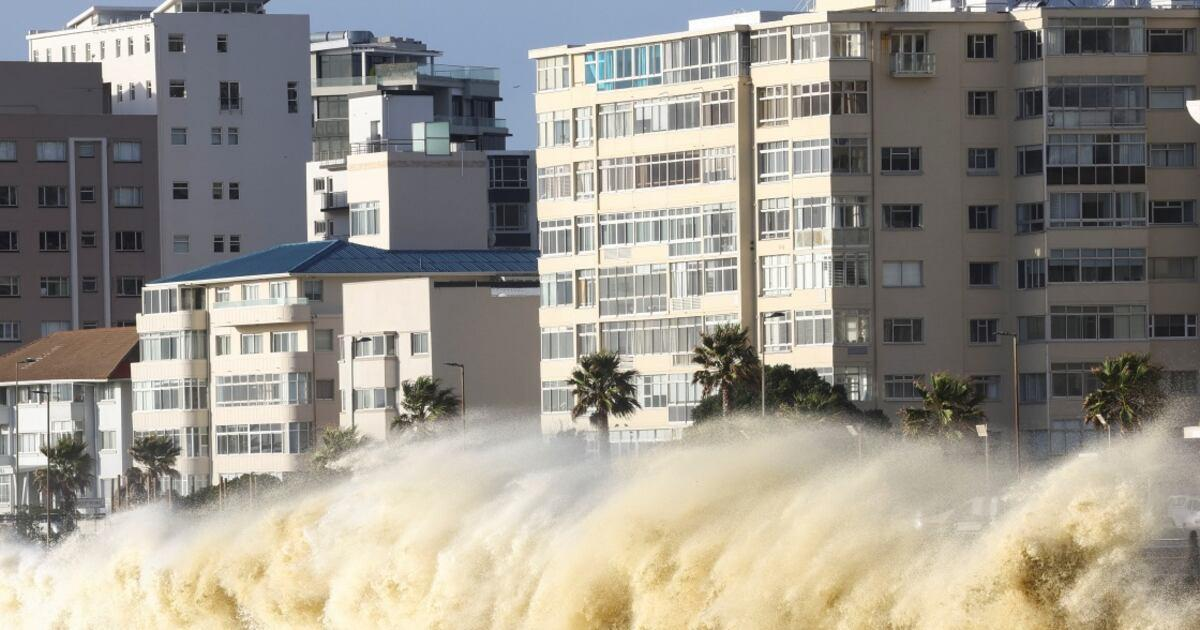
Storm Conditions Turn Victoria Bay Into a Disaster Zone
The most dramatic scenes emerged on Wednesday afternoon when violent surf crashed into beachfront properties along Victoria Bay’s promenade. Homes, restaurants, municipal buildings, and public restrooms were overwhelmed by seawater and thick ocean foam as powerful waves surged inland.
According to reports, the beach itself became almost completely invisible beneath the churning surf. Residents described conditions as among the worst seen in years, with strong winds and rising tides intensifying the threat throughout the day.
The situation became so severe that authorities closed the entrance road to Victoria Bay entirely. George Municipality’s Law Enforcement and Traffic Management teams blocked public access as seawater flooded surrounding areas and made conditions unsafe for vehicles and pedestrians.
High tide later in the evening raised additional concerns, with forecasts warning of even larger waves and heavier foam surges along the coastline.
Holiday Homes and Tourism Infrastructure Suffer Damage
Victoria Bay’s economy relies heavily on tourism, holiday rentals, guesthouses, and seasonal visitors. Many of the affected buildings sit directly along the beachfront promenade, leaving them highly vulnerable to storm surges.
Officials indicated that damage to properties could run into millions of rands as waves repeatedly slammed into homes and businesses.
The destruction has raised concerns about the long-term vulnerability of South Africa’s coastal tourism infrastructure, especially in areas exposed to increasingly intense weather systems.
While Victoria Bay experienced some of the most dramatic coastal impacts, nearby Herolds Bay initially escaped major damage. However, authorities warned that worsening tides and changing weather patterns could rapidly alter conditions there as well. Access roads to Herolds Bay were also closed as a precautionary measure.
Severe Weather Across the Garden Route
Victoria Bay’s crisis forms part of a much larger weather emergency affecting large sections of the Western Cape and Garden Route district.
Heavy rainfall continued through George, Knysna, Plettenberg Bay, Haarlem, Uniondale, and surrounding communities. Local disaster management officials reported flooding rivers, overwhelmed drainage systems, damaged infrastructure, and multiple road closures.
Gerhard Otto, Head of Disaster Management for the region, confirmed that rainfall remained intense across the district, particularly in eastern areas already heavily saturated by earlier storms.
Among the most serious inland incidents was the flooding of the Piesang Valley River in Plettenberg Bay, which burst its banks and forced evacuations of nearby residents. Authorities also reported sewer pump station failures and damage to water infrastructure. Engineering teams were deployed to restore critical services as quickly as possible.
George Municipality Issues Emergency Alerts
George Municipality released multiple public warnings as conditions deteriorated across the district. Residents were urged not to park beneath trees because saturated soil and strong winds had already caused several trees to collapse.
Rainfall measurements released by municipal authorities highlighted the scale of the storm:
- Denneoord Water Works: 101mm
- Uniondale: 85mm
- Haarlem: 80mm
Municipal officials also confirmed:
- Power outages in Haarlem, Avontuur, Uniondale, and parts of Thembalethu
- Flooded roads and dangerous driving conditions
- Rockfalls affecting major routes
- Multiple road closures across the region
Among the closed routes were Meiringspoort, Swartberg Pass, Uniondale Poort, and portions of the R62 and N9 highways.
Emergency numbers and disaster response contacts were widely distributed as officials prepared for additional rainfall and worsening coastal conditions.
George Airport Continues Operating Despite Weather Threat
Despite widespread flooding and transport disruptions, George Airport remained operational throughout the storm period.
Airports Company South Africa (ACSA) confirmed that flights had not been significantly affected, although passengers were advised to check directly with airlines for schedule updates and potential delays. Airport operations continued under close monitoring as authorities tracked weather developments across the region.
The continued operation of the airport provided an important transport link for emergency services, residents, and travelers attempting to navigate the severe conditions affecting the Western Cape.
Wider Impact Across South Africa
The extreme weather affecting Victoria Bay forms part of broader severe conditions impacting several parts of South Africa.
In the Western Cape, approximately 125 schools were closed because of dangerous weather warnings issued by the South African Weather Service. Authorities urged residents to stay indoors whenever possible as winds intensified across the province.
Elsewhere in the country, a deadly incident in Germiston highlighted the broader risks associated with the storms. A large tree collapsed onto informal homes in the Makausi settlement, killing a young woman and injuring three others. Rescue crews were forced to cut through heavy branches to reach trapped victims.
The combination of coastal flooding, infrastructure damage, dangerous surf, fallen trees, and widespread transport disruption has placed emergency services under significant pressure.
Weather Warnings Downgraded, But Risks Remain
There was some relief for residents when the South African Weather Service downgraded its warning level from Level 8 to Level 6 for Thursday, 7 May.
However, officials cautioned that dangerous conditions still persist, especially along the coastline and near rivers already swollen by heavy rainfall.
Authorities continue urging the public to:
- Avoid beachfront areas and rough surf
- Stay away from flooded roads
- Avoid parking under trees
- Follow official municipal updates
- Prepare for potential further flooding and infrastructure interruptions
Climate and Coastal Concerns Growing
The events unfolding at Victoria Bay have once again drawn attention to the growing vulnerability of coastal communities facing stronger storms, rising sea levels, and increasingly unpredictable weather systems.
Small seaside destinations like Victoria Bay are economically dependent on tourism but geographically exposed to extreme weather. Experts warn that storm surges, coastal erosion, and flooding could become more frequent challenges for beachfront developments throughout South Africa’s coastline.
The dramatic images emerging from Victoria Bay — with seawater surging into homes and thick foam engulfing roads — may become symbolic of broader environmental pressures affecting coastal regions globally.
Conclusion
Victoria Bay’s transformation from tranquil surfing destination to storm-battered disaster zone illustrates the immense force of the severe weather system sweeping across South Africa’s Garden Route.
While emergency services, municipalities, and disaster response teams continue working to restore infrastructure and protect residents, the full cost of the damage may take weeks to assess.
For now, authorities remain focused on public safety as heavy seas, flooding, and unstable weather conditions continue to threaten communities across the region. Victoria Bay’s ordeal stands as a stark reminder of the power of nature — and the growing challenges coastal towns face in an era of increasingly extreme weather.


