
MultiChoice in Transition: Reinvention, Pressure, and the Future of Pay-TV in Africa
A Defining Moment for African Broadcasting
Few companies have shaped the African entertainment landscape as profoundly as MultiChoice. For decades, its flagship platforms—particularly DStv—have defined how millions of households consume television, sports, and local content.
Today, however, MultiChoice is undergoing one of the most significant transformations in its history. Following its acquisition by Canal+ in late 2025, the company is being restructured, repositioned, and reimagined for a rapidly changing media environment.
The central question is no longer what MultiChoice has been—but what it is becoming.
From Market Leader to Company in Transition
Six months after the Canal+ takeover, MultiChoice is no longer operating as an independent African media giant. Instead, it forms part of a larger global pay-TV ecosystem.
The combined entity now serves more than 40 million subscribers across nearly 70 countries, supported by a workforce of approximately 17,000 employees .
Officially, the narrative is straightforward: MultiChoice remains focused on African video entertainment, strengthened by global capital, scale, and expertise. In practice, the transformation is more complex.
What was once a vertically integrated platform—covering satellite broadcasting, streaming, sports rights, and content production—is being reorganized into a more streamlined, efficiency-driven structure aligned with Canal+’s global strategy.
The Core Challenge: Declining Subscribers
At the heart of MultiChoice’s restructuring is a clear problem—subscriber decline.
The company lost 2.8 million linear (satellite) subscribers in the two years leading up to March 2025, with a significant portion of those losses occurring in South Africa .
This decline reflects broader industry trends:
- Migration to streaming platforms such as Netflix and YouTube
- Increasing cost sensitivity among consumers
- Changing viewing habits, especially among younger audiences
The traditional DStv model, once dominant, is now under sustained pressure.
Canal+ Strategy: A Multi-Layered Turnaround Plan
To address these challenges, Canal+ has introduced a comprehensive turnaround strategy designed to stabilize and grow MultiChoice’s business.
1. Content Expansion and Localization
The integration of content libraries from both Canal+ and MultiChoice aims to strengthen DStv’s offering. The focus is on combining global entertainment with locally produced African content to maintain relevance across diverse markets.
2. Simplified Pricing and Offers
Pricing structures are being streamlined to improve affordability and customer clarity. Notably, MultiChoice has paused DStv price increases and reduced decoder costs to lower entry barriers .
3. Aggressive Subscriber Growth
The company is investing in distribution and sales capacity, including the recruitment of over 1,000 new salespeople to accelerate customer acquisition .
4. Operational Standardization
A unified operating model is being implemented across markets, focusing on efficiency, best practices, and enhanced anti-piracy measures.
5. Strategic Investment
Canal+ has committed R1.9 billion to support the turnaround, signaling confidence in the long-term potential of the African market .
The Price Freeze: A Tactical Shift
One of the most immediate changes has been the decision to freeze prices.
MultiChoice leadership has acknowledged that raising prices during a subscriber rebuild phase would be counterproductive. As CEO David Mignot explained:
“We are building subscribers, so it’s not exactly the right timing to increase pricing.”
This marks a departure from previous strategies, where annual price increases were common. The new approach prioritizes volume growth over short-term revenue gains.
Streaming Setbacks and Strategic Reset
MultiChoice’s streaming ambitions have faced significant challenges, most notably with Showmax.
Originally positioned as a competitor to global platforms, Showmax struggled to achieve sustainable economics. Its losses contributed to a 49% drop in trading profit to R4 billion in 2025 .
As a result:
- Showmax is being phased out in its current form
- A new streaming model is being developed
- The future platform will integrate global services like Netflix and HBO within a unified Canal+ ecosystem
This shift reflects a broader industry trend: aggregation rather than direct competition with global streaming giants.
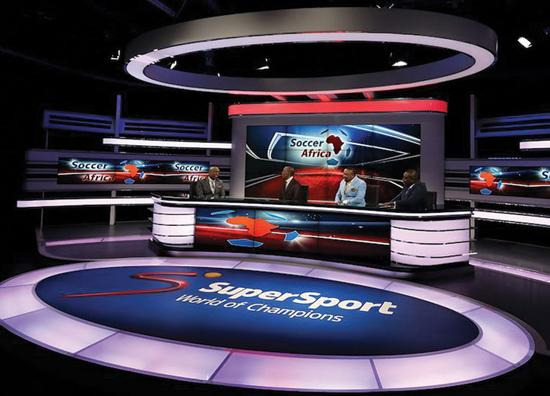
SuperSport: The Last Stronghold
Amid the turbulence, one segment remains resilient—SuperSport.
Live sports continue to anchor MultiChoice’s value proposition. Exclusive rights to major events, including football, rugby, and cricket, provide a competitive advantage that streaming platforms have yet to fully replicate.
However, even this advantage is not guaranteed. The rising cost of sports rights and increasing competition from global tech companies entering the live sports market present long-term risks.
Financial Strategy and Market Positioning
The Canal+ acquisition is built on the promise of synergies and scale.
The combined group is targeting:
- €250 million in operational synergies
- €400 million in cost savings by 2030
Cost efficiencies have already begun, including consolidation of overlapping functions and restructuring initiatives.
However, a critical gap remains—revenue growth. While cost savings are materializing, the anticipated expansion in subscriber numbers and revenue has yet to fully emerge.
JSE Listing: A Strategic Commitment to Africa
A key regulatory requirement of the acquisition was maintaining a connection to South African capital markets.
As a result, Canal+ plans a secondary listing on the Johannesburg Stock Exchange (JSE) by mid-2026 .
According to Canal+ CEO Maxime Saada, this move represents:
- A long-term commitment to South Africa
- A mechanism to maintain local investor participation
- A strategic positioning of Africa as a core growth market
Africa, in this context, is viewed as the most promising region for pay-TV expansion globally.
The Bigger Question: What Is MultiChoice Now?
The transformation raises a fundamental question: what kind of company is MultiChoice becoming?
The current reality can be summarized in three parts:
- A declining but cash-generative satellite business
- A contested and evolving streaming strategy
- A strong but vulnerable sports broadcasting core
In essence, MultiChoice is no longer a high-growth media company. Instead, it is transitioning into a hybrid model—balancing legacy infrastructure with new digital ambitions.
What It Means for Consumers
For subscribers, the implications are practical:
- More affordable entry options due to price freezes and subsidies
- Improved content variety through global partnerships
- Continued reliance on DStv for premium sports
However, the value proposition is increasingly segmented:
- Sports enthusiasts still find strong value
- General entertainment viewers have more alternatives
The decision to subscribe is no longer automatic—it is comparative.
Future Outlook: Growth or Gradual Contraction?
The next two years will be decisive.
Key factors to watch include:
- Whether subscriber growth resumes
- The success of the new streaming strategy
- Retention of key sports broadcasting rights
- Execution of Canal+ integration plans
If these elements align, MultiChoice could stabilize and evolve into a more efficient, globally integrated media business. If not, the company risks gradual contraction in an increasingly competitive environment.
Conclusion
MultiChoice stands at a structural inflection point. Backed by Canal+, it has the capital, scale, and strategic direction to reposition itself. Yet the challenges it faces—subscriber losses, streaming disruption, and changing consumer behavior—are significant.
The transformation underway is not cosmetic. It is foundational.
Whether MultiChoice emerges stronger or smaller will depend on how effectively it executes this transition. What is clear is that the era of dominance is over—and a new, uncertain chapter has begun.


