


Jimmy Kimmel Live April 27, 2026: A Night of Comedy, Controversy, and Political Fallout
Introduction: When Late-Night Comedy Collides With National Headlines
The April 27, 2026 episode of Jimmy Kimmel Live! was never going to be just another night of celebrity interviews and comedy sketches. Instead, it became one of the most politically charged broadcasts in recent late-night television history—placing host Jimmy Kimmel at the center of a national debate about humor, free speech, and the boundaries of satire.
What began as a comedic monologue quickly escalated into a broader cultural and political confrontation involving President Donald Trump, First Lady Melania Trump, and a nation already shaken by a recent assassination attempt at the White House Correspondents’ Association dinner.
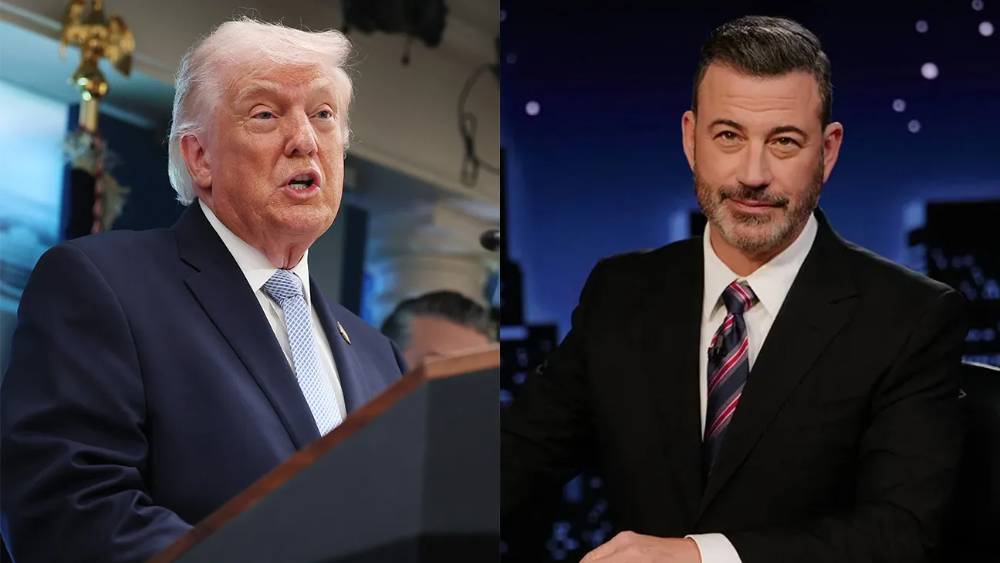
A Routine Episode Turns Into a Defining Moment
On paper, the April 27 episode followed a familiar structure. The show, which airs weeknights at 11:35 p.m. EST, featured guests Anthony Anderson and Jon Lovett as part of its scheduled lineup for the week.
But the real focus of the night was Kimmel’s opening monologue—a segment that has long defined his brand of politically infused comedy.
Instead of light entertainment, viewers witnessed a pointed response to mounting criticism over a joke Kimmel delivered days earlier during a segment parodying the White House Correspondents’ Dinner.
The Joke That Sparked a Political Firestorm
The controversy stems from a line delivered during the April 23 episode, where Kimmel staged a mock version of the Correspondents’ Dinner. Addressing the first lady, he said:
“Mrs. Trump, you have a glow like an expectant widow.”
The joke, intended as part of a traditional comedic roast, referenced the couple’s age difference and relationship dynamics. Kimmel later clarified that it was “a very light roast joke” and “obviously … about their age difference and the look of joy we see on her face every time they’re together.”
At the time, the remark drew limited reaction. That changed dramatically after a violent incident at the actual Correspondents’ Dinner.
The Shadow of Violence: Timing Changes Everything
Two days after the joke aired, a man attempted to breach security at the White House Correspondents’ Dinner while armed with weapons. The suspect, Cole Tomas Allen, 31, was later charged with attempting to assassinate the president.
Although no one was killed, the incident shook Washington and heightened tensions across the political landscape.
In this context, Kimmel’s earlier joke came under intense scrutiny, with critics arguing that it could be interpreted as insensitive or even dangerous given the circumstances.
Trump and Melania Respond: Calls for Kimmel’s Removal
The backlash was swift and forceful.
President Trump publicly condemned the comedian, writing that the joke was “really shocking” and “far beyond the pale,” adding:
“Jimmy Kimmel should be immediately fired by Disney and ABC.”
Melania Trump echoed the criticism, stating:
“People like Kimmel shouldn’t have the opportunity to enter our homes each evening to spread hate.”
She further described the monologue as “hateful and violent rhetoric” and urged ABC to “take a stand.”
The White House press secretary also weighed in, suggesting that such rhetoric contributes to a broader culture of political hostility.
Kimmel’s April 27 Monologue: A Defiant Defense
Facing calls for his firing, Kimmel used the April 27 broadcast to directly address the controversy.
In a carefully measured but unmistakably defiant tone, he rejected the accusation that his joke encouraged violence:
“It was not — by any stretch of the definition — a call to assassination. And they know that.”
He reiterated his long-standing opposition to gun violence and expressed sympathy for those affected by the incident:
“I am sorry that [Melania] and the president and everyone in that room on Saturday went through that … Just because no one got killed doesn’t mean it wasn’t traumatic and scary.”
At the same time, Kimmel defended his role as a comedian operating within the bounds of the First Amendment:
“As Americans, we have a right to free speech.”
He also turned the criticism back toward the administration, suggesting that concerns about inflammatory rhetoric should begin closer to home.
A Longstanding Feud Rekindled
The clash between Kimmel and Trump is not new. The late-night host has frequently mocked the president, while Trump has repeatedly criticized Kimmel’s show and called for its cancellation.
This latest dispute represents an escalation in a relationship already marked by tension. Notably, it is the second time in recent months that Kimmel has faced controversy linked to political violence, following a separate incident in September involving comments about a high-profile killing.
Despite past suspensions and political pressure, Kimmel has consistently returned to the air, often doubling down on his approach to satire.
The Broader Debate: Comedy, Responsibility, and Free Speech
The April 27 episode has reignited a familiar but increasingly urgent debate:
Where is the line between satire and harm?
Critics argue that jokes involving political figures and violence—even indirectly—can contribute to a volatile environment. Advocacy groups have pointed to a “pattern of violence” in public discourse and questioned whether influential voices bear greater responsibility.
Supporters of Kimmel, however, view the backlash as an attempt to silence criticism through political pressure, emphasizing the role of comedy as a form of protected speech.
The controversy also highlights the evolving role of late-night television, which has shifted from entertainment-first programming to a platform for political commentary and cultural critique.
Inside the Show: What Else Happened on April 27?
While the monologue dominated headlines, the rest of the episode maintained the traditional Jimmy Kimmel Live! format.
Guests Anthony Anderson and Jon Lovett appeared for interviews, continuing the show’s mix of celebrity culture and political conversation.
Notably, scheduled guest Oz Pearlman was replaced due to the fallout from the Correspondents’ Dinner incident, underscoring how deeply the real-world event affected the show’s production.
Conclusion: A Turning Point for Late-Night Television?
The April 27, 2026 episode of Jimmy Kimmel Live! may ultimately be remembered as more than just a controversial broadcast—it represents a defining moment in the intersection of comedy, politics, and public accountability.
Kimmel’s refusal to back down, combined with the intensity of the political response, illustrates the high stakes of modern media discourse. In an era where jokes can trigger national debates, late-night hosts are no longer just entertainers—they are influential voices navigating an increasingly polarized landscape.
Whether this incident leads to lasting consequences for Kimmel, ABC, or the broader late-night industry remains to be seen. What is clear, however, is that the boundaries of satire—and the tolerance for it—are being tested like never before.


