


Helen Zille’s High-Stakes Return: Campaign Theatre, Confrontation, and a Final Political Push
Key Highlights
- Helen Zille has re-emerged as a central figure in Johannesburg’s mayoral race, combining political messaging with highly visible public stunts.
- A viral Soweto incident showed her rafting through flooded streets to highlight infrastructure failures.
- She was removed from the Johannesburg Metro Centre during an oversight attempt, raising tensions around governance and transparency.
- The Democratic Alliance has questioned plans to demolish and rebuild the Metro Centre at a cost exceeding R2 billion.
- Her campaign strategy continues to draw both public support and criticism, reflecting broader political divides.
A Campaign Defined by Visibility and Confrontation
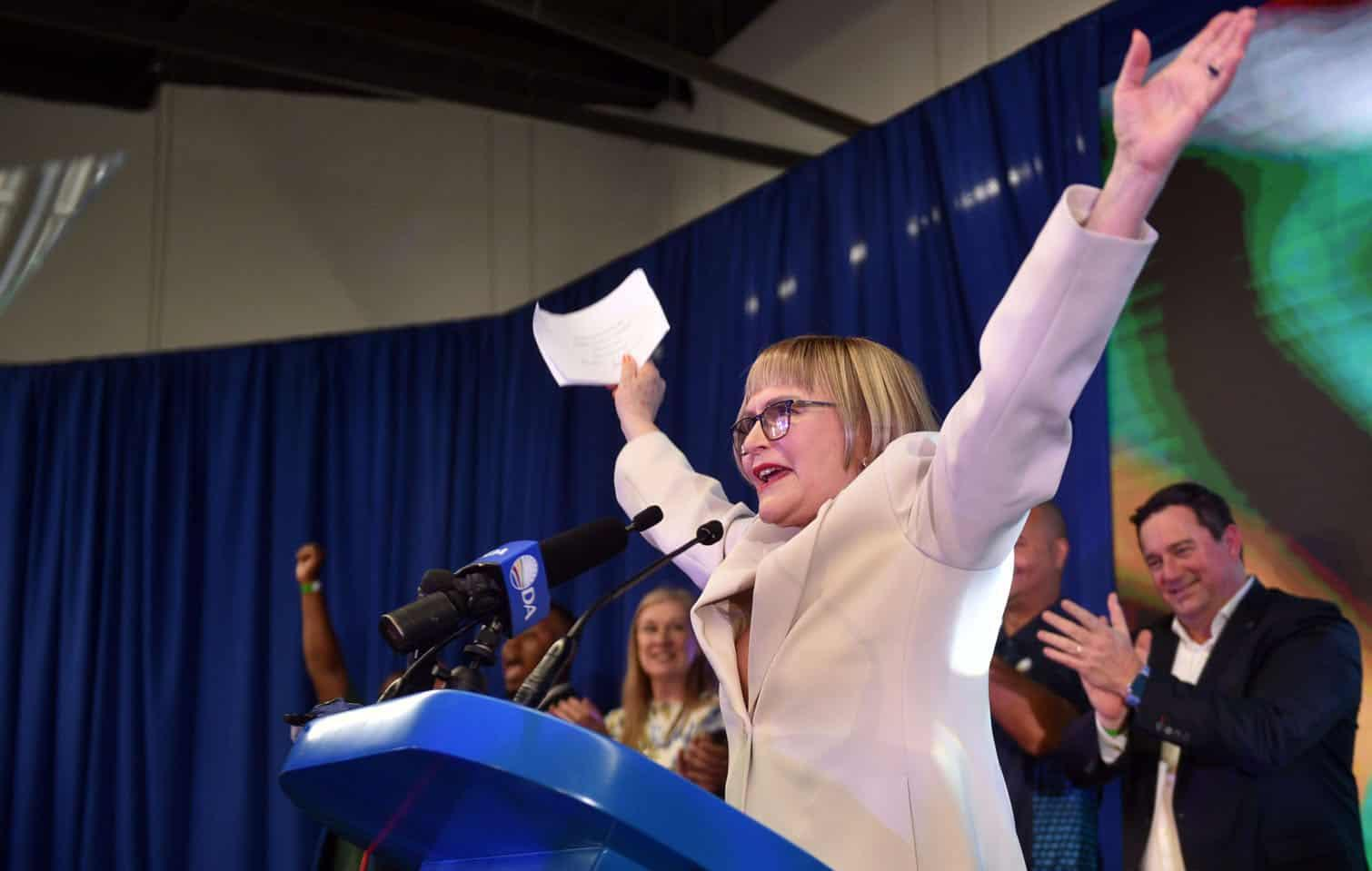
As Johannesburg’s political landscape intensifies ahead of key municipal decisions, Helen Zille has positioned herself at the centre of the debate through a campaign that blends direct confrontation with highly visual activism. Once known primarily for her tenure as Western Cape premier and leader within the Democratic Alliance, she now returns as a mayoral candidate determined to reassert influence in South Africa’s economic hub.
Her latest campaign phase has not followed a conventional script. Instead, it has been marked by a deliberate strategy of drawing attention to infrastructure breakdowns and governance issues in ways that are difficult to ignore. This approach has propelled her back into national headlines while reshaping the tone of the Johannesburg mayoral race.
The Soweto Raft Incident: Campaign Messaging Through Spectacle
One of the most widely circulated moments of Zille’s campaign occurred in Dobsonville, Soweto, where she was filmed navigating a flooded street in an inflatable raft. The footage showed her moving through standing water along Elias Motsoaledi Road, an area residents say has struggled with drainage problems for six years.
The scene was not accidental. It formed part of a broader campaign narrative focused on service delivery failures in Johannesburg. The flooding, reportedly linked to blocked drainage systems, has long disrupted daily life, forcing motorists into unsafe routes and exposing gaps in municipal maintenance.
Zille’s message during the incident was explicit: in the 2025/26 financial year, the City of Johannesburg spent only 26% of its capital budget. According to her campaign framing, funds intended for critical infrastructure such as stormwater systems were either mismanaged or diverted.
The immediate aftermath reinforced the visibility of her approach. Municipal crews were reportedly dispatched soon after, addressing both the flooded road and previously highlighted infrastructure issues. Zille later referred to this as “The Gogo Effect,” suggesting that public pressure triggered rapid responses from city authorities.
Public reaction, however, was divided. Supporters viewed the stunt as an effective method of forcing accountability, while critics argued that such displays risked trivialising the lived experiences of residents dealing with persistent infrastructure failures.
Confrontation at the Johannesburg Metro Centre
The campaign’s confrontational edge became more pronounced during an incident at the Johannesburg Metro Centre. Zille, accompanied by DA councillors and a Member of Parliament, attempted an oversight visit to assess the condition of the building and the handling of sensitive municipal records.
According to statements issued during the event, the Metro Centre—once the administrative core of the city—now stands empty and deteriorating. The DA delegation entered through an open gate but was subsequently confronted by security personnel and prevented from continuing the inspection.
The situation escalated when the group was reportedly blocked from leaving the premises while Metro Police were called, an action described by the DA as “forced detention without any lawful basis.”
Zille’s response framed the incident as part of a broader pattern of secrecy within Johannesburg’s coalition government, which includes the African National Congress and other parties. She argued that the refusal to allow oversight raised serious concerns about transparency, particularly given the scale of proposed spending.
The R2 Billion Question: Infrastructure, Spending, and Accountability
At the centre of the Metro Centre dispute lies a significant financial decision. The current administration is pursuing plans to demolish the existing structure and construct a new facility, with projected costs exceeding R2 billion and a timeline of up to 10 years.
This proposal has become a focal point of political contention. Critics, including Zille and her party, argue that engineers previously confirmed the building is structurally sound, questioning the rationale behind both the evacuation and the planned redevelopment.
The issue is compounded by ongoing expenditure on rented office space, which has already cost the city tens of millions of rand. In this context, the DA has framed the redevelopment plan as fiscally irresponsible, particularly at a time when service delivery challenges remain unresolved across the city.
The party has pledged to continue pursuing what it describes as “all available avenues” to uncover the justification for the project, including the handling of sensitive records and the financial decisions underpinning the proposed rebuild.
Campaign Strategy: Between Symbolism and Substance
Zille’s current campaign reflects a deliberate shift toward highly visible, symbolic actions designed to translate complex governance issues into tangible public experiences. From flooded streets to abandoned municipal buildings, her approach seeks to connect policy debates with everyday realities.
This strategy has proven effective in generating attention, but it also carries risks. The use of dramatic imagery—whether snorkelling in potholes or rafting through floodwaters—has sparked debate about the balance between political messaging and performative activism.
At the same time, her campaign underscores a broader theme within South African politics: the growing importance of public perception and media visibility in shaping electoral outcomes. By focusing on infrastructure failures and financial oversight, Zille is positioning herself as a candidate centered on accountability and governance reform.
A Defining Moment in Johannesburg Politics
As Johannesburg approaches critical budget decisions and political realignment, Helen Zille’s campaign represents more than a personal return—it signals a broader contest over the direction of the city’s governance.
Her actions have forced key issues into public view: infrastructure neglect, capital budget utilisation, and large-scale municipal spending. Whether through confrontation at official buildings or symbolic demonstrations on flooded streets, the campaign has succeeded in shaping the narrative around accountability.
If this marks Zille’s final major political push, it is unfolding with a clear objective—to leave a visible, and contested, imprint on Johannesburg’s political landscape.
Conclusion
Helen Zille’s re-entry into frontline politics has transformed the Johannesburg mayoral race into a highly visible and often polarised contest. Through a combination of direct confrontation and unconventional campaigning, she has brought renewed attention to governance challenges in South Africa’s largest city.
The outcome of this campaign will depend not only on electoral dynamics but also on how voters interpret her methods—whether as effective accountability tools or as political theatre. What is clear is that her presence has redefined the tone and focus of the race, placing infrastructure, transparency, and fiscal responsibility at the centre of public debate.


