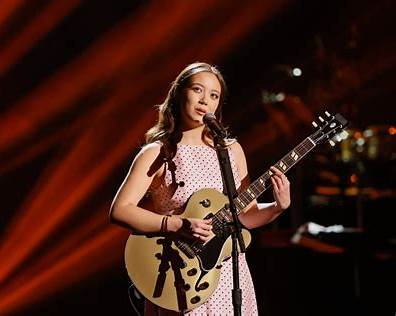
A Story That Begins With a Fish—and Ends With a Movement
It begins, improbably, with a fish.
In a striking scene from her latest music video Mad Woman, Icelandic jazz-pop artist Laufey Jónsdóttir slaps actor Hudson Williams across the face with a red snapper—sending him tumbling into a swimming pool. The moment is theatrical, absurd, and oddly symbolic. For an artist known for delicate melodies and polished orchestration, it represents something deeper: a deliberate rupture with expectations.
“Oh my God, it was amazing. It was cathartic,” Laufey recalls. “I had a lot of unreleased energy that I released on poor Hudson.”
What might seem like a quirky visual gag is, in fact, a revealing glimpse into the psyche of one of the most intriguing artists reshaping contemporary music. Laufey is not merely reviving jazz—she is reimagining it for a generation that has no patience for rigid genre boundaries.
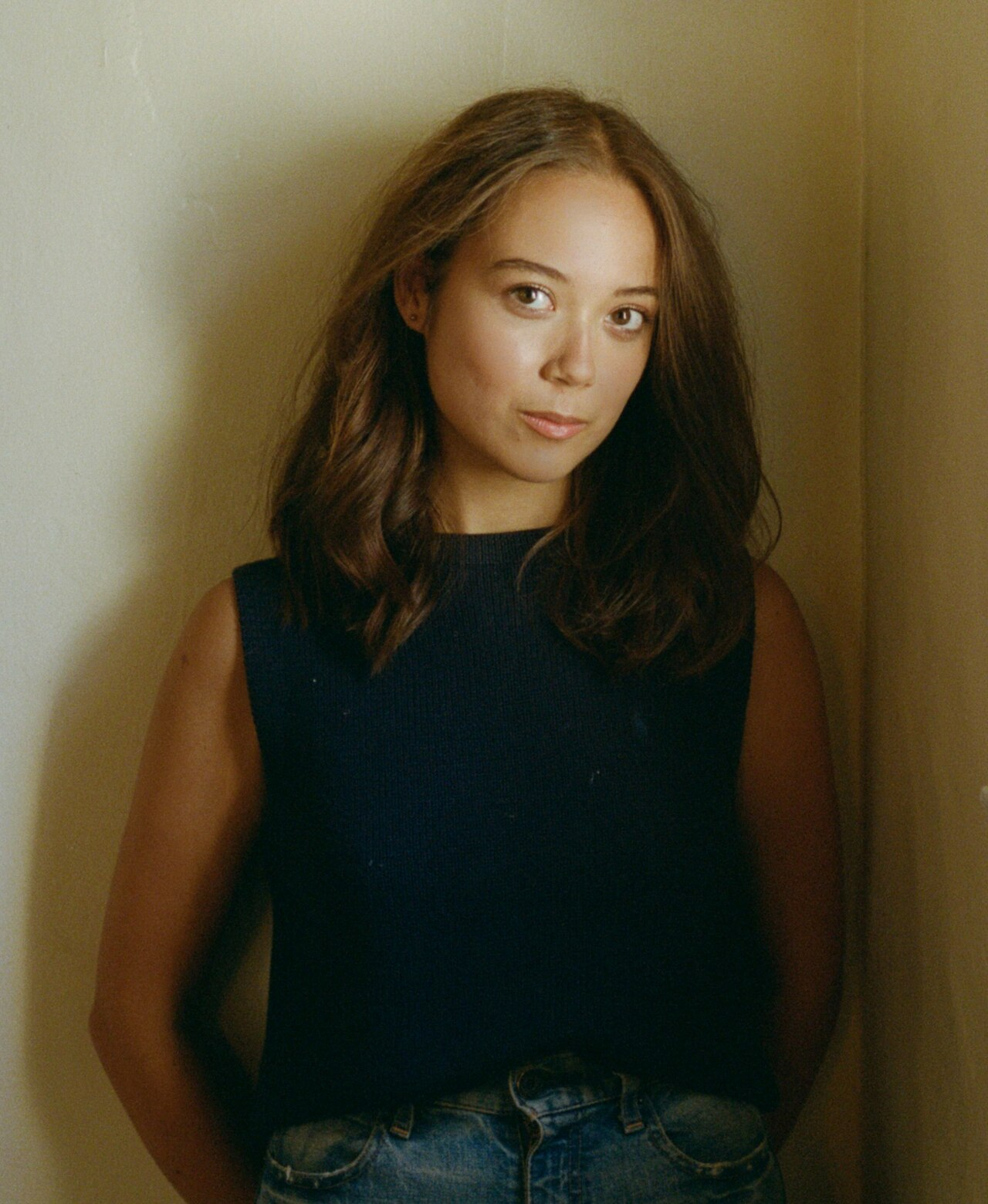
The Unlikely Rise of a Jazz-Pop Phenomenon
Since emerging in 2022, Laufey has carved out a singular space in the global music landscape. Her sound blends classic jazz vocals, lush orchestration, and modern lyrical storytelling—drawing equally from vintage standards and contemporary pop influences.
Her journey began early. Raised in Reykjavik, she started learning piano and cello at just four years old, immersed in a deeply musical environment shaped by her classical background.
Later, at Boston’s Berklee College of Music, she began refining a vision that would ultimately define her career: a fusion of jazz traditions with the emotional immediacy of modern songwriting.
Yet even at the outset, Laufey struggled to define her own genre.
When uploading her debut track Street by Street, she hesitated at the genre selection field—eventually settling on “singer-songwriter.”
Critics have been trying to categorize her ever since.
“Older audiences are always trying to figure me out,” she says. “Like, ‘Is she a jazz musician? Is she a pop musician? Is she a cellist?’”
Her answer is disarmingly simple: it doesn’t matter.
Breaking the Genre Barrier
Laufey’s success is inseparable from a broader cultural shift. In the streaming era, genre lines have blurred, and younger listeners are increasingly guided by emotional resonance rather than classification.
“I feel so lucky to be a musician nowadays, because genre has never meant less,” she explains.
This freedom has allowed her to inhabit multiple artistic identities simultaneously—jazz vocalist, pop storyteller, classical instrumentalist—without compromise.
The result is a sound that feels both nostalgic and new: cinematic yet intimate, structured yet emotionally raw.
A Matter of Time: A Bold Artistic Evolution
Her latest album, A Matter of Time, represents a turning point.
Released last August, the project explores the arc of a romantic relationship, underscored by the metaphor of a ticking clock—counting down to emotional unraveling.
Musically, it marks her most ambitious work to date. The album traverses multiple sonic territories:
- Soul-infused tones on Silver Lining
- Brazilian-inspired rhythms on Lover Girl
- Experimental, dissonant textures on Sabotage
Notably, Sabotage—the album’s chaotic climax—was the first track she wrote, setting the emotional tone for the entire record.
“The whole album was a challenge to myself to push beyond my artistic walls, to be a little scared,” she says.
For the first time, Laufey deliberately allowed imperfection into her work—embracing vocal cracks and emotional vulnerability over technical precision.
Love, Anxiety, and Artistic Honesty
At its core, A Matter of Time is an exploration of love—and the anxiety that accompanies it.
Laufey’s personal experiences play a central role. Having devoted her early life to disciplined musical training, she admits she missed out on many formative social experiences.
“I didn’t date, I didn’t drink, I didn’t do the silly things. I didn’t have a rebellious bone in my body,” she reflects.
When she eventually encountered love in her early twenties, it felt overwhelming—almost chaotic.
“So at the age of 20 or 21… it felt like pure chaos,” she says.
That emotional turbulence fuels her songwriting. Tracks like Lover Girl, Carousel, and A Cautionary Tale chronicle vulnerability, self-doubt, and the painful clarity that follows heartbreak.
“Mad Woman” and the Power of Release
The Mad Woman video, with its theatrical intensity and surreal imagery, encapsulates this emotional journey.
Featuring a star-studded cast—including Hudson Williams, Alyssa Liu, and Megan Skiendiel—the video combines a 1960s aesthetic with a narrative of romantic frustration.
The now-viral fish-slapping scene became a cathartic outlet for Laufey herself.
“I dug into my deepest memories of when I’ve been the most wronged by men… It felt very primal.”
For an artist often associated with elegance and restraint, the moment is striking—revealing a willingness to confront and express raw emotion.
From Niche Artist to Global Phenomenon
Laufey’s ascent has been rapid and far-reaching.
Her work has earned multiple Grammy Awards for best traditional pop album, while her fanbase spans generations and continents.
Recent milestones highlight her growing cultural impact:
- Sold-out performances at London’s 20,000-capacity O2 Arena
- A collaboration with the video game Fortnite
- Appearances alongside major artists like Billie Eilish, Hozier, and Barbra Streisand
Her concerts have become immersive experiences—transforming arenas into fairytale-like spaces filled with elaborate staging and devoted fans.
“They’re all just collected together from different corners of the world,” she says of her audience.
The Role of Globalization and Digital Discovery
Laufey’s success also reflects the power of digital connectivity.
A fan traveling alone from Cyprus to attend her show underscores how globalized music discovery has become.
“Who’d have known if a Cypriot boy could have found out about me back in the day?” she notes.
Platforms like social media and streaming services have enabled niche genres—like jazz—to reach audiences that were once geographically and culturally distant.
In Laufey’s case, this has transformed what was once considered a “traditional” genre into a vibrant, youth-driven movement.
A Dream Written on a Park Bench
Behind the accolades and sold-out shows lies a quieter story of ambition.
Six years ago, while sitting in Boston Public Garden, Laufey wrote down her dream of becoming a recording artist.
“There’s something about a park that just gets you thinking,” she recalls.
At the time, success felt distant—almost unattainable.
“I absolutely always hoped that I’d be able to make it to this level, but I don’t think I dared to write it down,” she says.
Today, that vision has not only materialized—it has expanded beyond what she imagined.
Redefining Jazz for the Future
Laufey’s significance extends beyond her own career.
She is part of a broader redefinition of jazz—transforming it from a genre often perceived as elitist or outdated into something accessible, emotional, and contemporary.
By merging classical discipline with pop sensibilities, she has created a bridge between generations of listeners.
Her work demonstrates that jazz is not a relic of the past but a living, evolving form capable of resonating with modern audiences.
Conclusion: The Art of Becoming
Laufey’s story is one of transformation—both personal and artistic.
From a disciplined classical upbringing to global stardom, from restrained compositions to moments of raw emotional release, she embodies the complexities of a modern artist navigating identity, love, and creativity.
Her refusal to be confined by genre—and her willingness to embrace vulnerability—has made her not just a successful musician, but a cultural force.
And if that journey occasionally involves slapping someone with a fish?
Well, that’s just part of the evolution.