

When Comedy Turns Confrontational: The Sunil Pal–Samay Raina Showdown on Kapil Sharma’s Stage
A Night of Laughter… and Lingering Tension
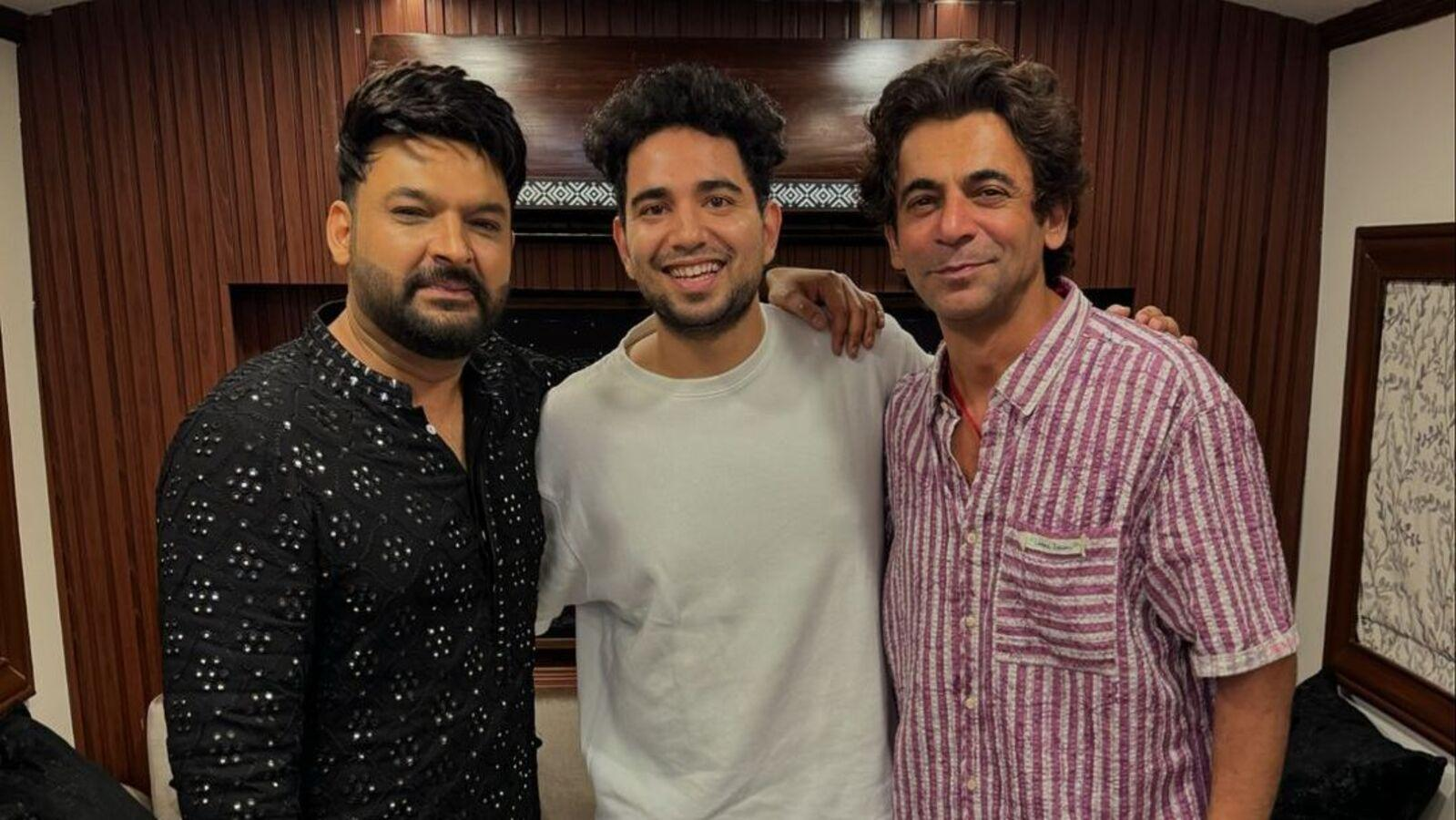
What was billed as a World Laughter Day special episode of The Great Indian Kapil Show quickly evolved into one of the most talked-about moments in Indian entertainment this year. Featuring comedian Samay Raina, podcaster Ranveer Allahbadia, and veteran comic Sunil Pal, the episode became a fascinating blend of humor, controversy, and unresolved rivalry.
At the center of it all was a long-standing friction between Sunil Pal and Samay Raina—one rooted in sharp criticism, generational differences in comedy, and amplified by the fallout from the controversial India’s Got Latent episode.
Rather than avoiding the tension, host Kapil Sharma leaned into it—turning a potentially awkward reunion into a spectacle of wit, satire, and public reckoning.
Background: The India’s Got Latent Controversy
To understand the charged atmosphere on the Kapil Sharma stage, one must revisit the controversy that preceded it.
Samay Raina’s digital show India’s Got Latent faced intense backlash after an episode in which Ranveer Allahbadia made a highly derogatory remark about parents. The incident triggered widespread outrage, leading to multiple FIRs, heavy trolling, and ultimately, the removal of all episodes from the platform.
The controversy didn’t just affect Raina’s career trajectory—it also fueled criticism from industry veterans like Sunil Pal, who openly disapproved of Raina’s edgy and often provocative comedic style.
Kapil Sharma’s Warning: A Moment of Foreshadowing
One of the most revealing moments in the episode came when Samay Raina disclosed that Kapil Sharma had warned him shortly before the controversy erupted.
“And I swear, the day my show shut down, sir called me a day before that, he told me something bad is going to happen to you,” Samay recalled.
Kapil clarified that his warning stemmed from experience rather than prediction:
“You can be famous by saying anything, but once you’re famous, you can’t just say anything.”
This exchange added depth to the episode, shifting it from pure entertainment to a reflection on the responsibilities that come with public influence.
The Face-Off: Sunil Pal vs Samay Raina
“Comedy’s Terrorist”: A Label Revisited
The rivalry reached its peak when Kapil brought up Sunil Pal’s earlier description of Samay Raina as a “terrorist of comedy.” What followed was a fiery yet humorous exchange that had audiences both laughing and dissecting every line.
Sunil Pal reiterated his criticism in a poetic yet cutting manner:
“It would have been better if he had thrown grenades from his mouth, because what actually comes out of him is unbearable… anyone who doesn’t belong in society is basically a terrorist.”
His remarks highlighted a broader critique—that Raina’s style represents a departure from traditional, socially acceptable humor.
Samay Raina’s Comeback: Humor as Defense
Samay, known for his sharp wit, responded with a mix of sarcasm and playful jabs:
“Whatever abusive words I have learned, it is from Sunil Pal’s videos.”
He escalated the roast with personal digs, including a now-viral joke about Sunil’s appearance and habits:
“Ye humesha chappal mein ghoomte hain, joota toh inko pad jaata hai kahin se.”
Even more bluntly, he quipped:
“Why do not you brush your teeth, man?”
The exchange demonstrated Raina’s approach—using humor not just as entertainment, but as a tool for deflection and counterattack.
Ranveer Allahbadia’s Presence: A Parallel Narrative
Adding another layer to the episode was Ranveer Allahbadia, whose controversial remark had triggered the original backlash.
His appearance marked a significant moment—the first on-screen reunion with Raina since the controversy. Post-episode, Ranveer even took to social media with a cheeky caption referencing the incident, acknowledging the past while attempting to move forward.
This subtle acknowledgment reflected a broader trend: creators confronting controversy through humor rather than avoidance.
Viral Impact: When Conflict Becomes Content
A short clip from the episode quickly went viral, capturing the essence of the confrontation. Kapil Sharma’s ability to balance tension with humor played a critical role in shaping public perception.
In one memorable moment, Kapil asked Sunil:
“Sunil bhai, aapne abhi inko maaf kar diya ki nahi?”
To which Sunil responded calmly:
“Main toh request karta hoon. Main kisi ko kuch nahi kehta.”
This interplay—part genuine, part performative—blurred the line between real conflict and scripted entertainment.
The Cultural Divide: Old-School vs New-Age Comedy
Beyond the jokes and jabs, the episode underscored a deeper cultural shift in Indian comedy.
Traditional Comedy (Sunil Pal’s Perspective)
- Emphasis on clean humor and social acceptability
- Structured storytelling and observational comedy
- Respect for established norms
New-Age Comedy (Samay Raina’s Style)
- Edgy, dark, and often controversial humor
- Internet-driven, unfiltered expression
- Willingness to challenge societal boundaries
Sunil’s criticism reflects discomfort with this evolution, while Samay represents a generation that thrives on pushing limits.
Kapil Sharma’s Role: Mediator and Ringmaster
Kapil Sharma emerged as the central figure who made this confrontation possible—and palatable.
By addressing the tension directly, he avoided superficiality and instead created a space where conflict could be transformed into comedy.
His approach highlights a key skill in modern entertainment: turning controversy into engagement without escalating hostility.
What This Means for Indian Entertainment
The episode signals several important trends:
1. Controversy as Content
Rather than damaging careers, controversies are increasingly becoming part of the narrative arc.
2. Audience Appetite for Authenticity
Viewers are drawn to unscripted, real interactions—even when uncomfortable.
3. Blurring of Digital and Television Worlds
Creators like Samay Raina and Ranveer Allahbadia represent the growing influence of digital personalities on mainstream platforms.
Conclusion: More Than Just a Comedy Episode
What unfolded on The Great Indian Kapil Show was not just a comedic exchange—it was a reflection of an industry in transition.
The Sunil Pal–Samay Raina face-off encapsulated:
- generational differences in humor
- the consequences of digital-era controversies
- and the evolving boundaries of public discourse
Ultimately, the episode succeeded because it embraced complexity. It allowed disagreement, satire, and reconciliation to coexist—turning a potentially divisive moment into one of the most compelling spectacles in recent television.


