


Laufey Movies and TV Shows: A Narrative Journey Beyond Music
From Jazz Stages to Visual Storytelling
Laufey has built her reputation as a genre-defying artist—melding jazz, classical, and pop into a sound that resonates with a new generation. Yet beyond her music, a parallel narrative has been quietly unfolding: her growing presence in visual media.
While not traditionally known as a film or television actress, Laufey’s involvement in screen-based storytelling—through music videos, documentaries, specials, and collaborations—reveals a compelling evolution. Her “filmography,” in a broader cultural sense, is less about acting roles and more about immersive storytelling, visual artistry, and cross-industry influence.
This article traces that journey, highlighting how Laufey’s presence in movies and TV-related productions reflects a new model of modern stardom.
Chapter 1: The Breakthrough Visual Era — “Madwoman”
Laufey’s most significant visual project to date is the “Madwoman” music video, which functions less like a traditional music clip and more like a short cinematic experience.
Featured prominently in entertainment coverage, the project brought together a diverse cast including:
- Hudson Williams
- Alysa Liu (Olympic gold medalist)
- Lola Tung
- Megan Skiendiel
The video’s narrative centers on a complex, emotionally charged relationship, blending romance, tension, and psychological intrigue.
Visually, it embraces a retro aesthetic inspired by mid-century glamour, creating a stylized world that feels closer to a film set than a typical music production. Critics have noted its layered storytelling, where themes of attraction, control, and self-awareness unfold through cinematic sequences.
Importantly, this project marks Laufey’s transition from performer to visual storyteller, positioning her within a broader entertainment landscape.
Chapter 2: Documentary Presence and Concert Films
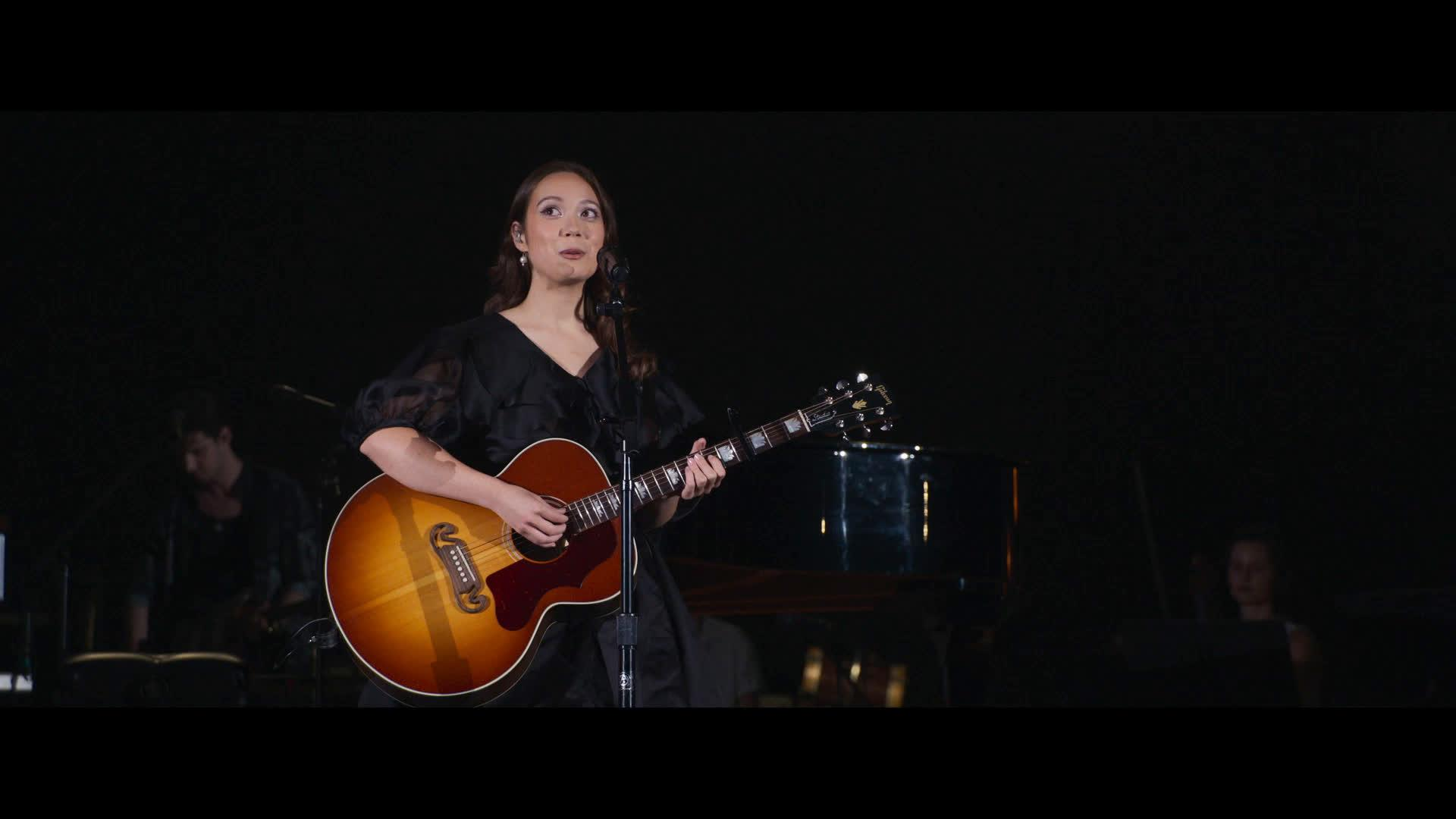
Laufey’s connection to film extends into documentary-style storytelling. One notable example is her concert film:
- “A Night at the Symphony: Hollywood Bowl”
This production captures her live performance alongside a full orchestra, offering audiences a behind-the-scenes look at her creative process and stage presence.
Unlike traditional scripted films, this format emphasizes authenticity—blending performance footage with narrative elements about preparation and artistic vision. It reflects a growing trend where musicians expand their reach through cinematic concert experiences.
Chapter 3: Television Appearances and Broadcast Specials
Laufey’s television presence has largely centered around live performances and cultural events, rather than scripted roles.
One notable appearance includes:
- NBC’s “Christmas in Rockefeller Center” special
Here, she joined a lineup of major performers in a nationally televised event, reinforcing her mainstream visibility.
Such appearances position her within the television ecosystem, even without traditional acting credits. They also highlight her role as a cultural performer bridging music and broadcast media.
Chapter 4: Music Videos as Cinematic Platforms
In the streaming era, music videos have become a crucial intersection between music and film—and Laufey has leveraged this space effectively.
“Madwoman” is not an isolated case. Her visual projects often:
- Feature narrative arcs rather than abstract imagery
- Incorporate ensemble casts with actors and public figures
- Emphasize story-driven direction and production design
The “Madwoman” video, in particular, was directed with a cinematic approach, including structured scenes, character roles, and symbolic storytelling.
This approach aligns her work with short-form filmmaking, blurring the line between music content and cinema.
Chapter 5: Expanding Into Interactive Media
Laufey’s presence in visual entertainment is not limited to traditional formats. Her collaboration with Fortnite Festival demonstrates how her storytelling extends into interactive environments.
The project includes:
- A three-act surreal experience titled “Laufey: The Final Hour”
- Immersive environments such as a hall of mirrors and a jazz club
- Narrative progression through visual and musical storytelling
While not a movie or TV show in the conventional sense, this interactive experience reflects the future of entertainment—where storytelling spans gaming, music, and visual media simultaneously.
Chapter 6: Recognition Within the Entertainment Industry
Laufey’s growing influence has not gone unnoticed. She has been included among notable figures in entertainment and media, alongside actors, filmmakers, and television creators.
This recognition underscores her expanding role beyond music—placing her within a broader creative ecosystem that includes film and television professionals.
Chapter 7: Why Laufey Has Few Traditional Acting Credits
Despite her growing presence in visual media, Laufey does not yet have an extensive list of traditional acting roles in movies or scripted TV shows.
This is largely by design:
- Her primary identity remains rooted in music and composition
- Her visual projects are extensions of her artistic brand, not separate acting pursuits
- She operates within a modern framework where musicians create their own cinematic worlds
Rather than stepping into existing film or TV roles, Laufey is building her own visual universe.
Chapter 8: The Future of Laufey in Film and Television
Given her trajectory, several future developments seem likely:
1. Narrative Film Projects
Her cinematic music videos suggest a natural progression toward short films or feature-length storytelling.
2. Streaming Platform Collaborations
With streaming services investing heavily in music-driven content, Laufey could become a key figure in hybrid productions.
3. Expanded Documentary Work
Her orchestral and touring projects provide rich material for further documentary-style releases.
4. Cross-Media Storytelling
Interactive experiences like Fortnite hint at a future where her narratives unfold across multiple platforms simultaneously.
Conclusion: Redefining “Movies and TV Shows” in the Modern Era
Laufey’s involvement in movies and television cannot be measured by traditional acting credits alone. Instead, her work represents a new paradigm of visual storytelling, where:
- Music videos function as short films
- Concerts become cinematic experiences
- Television appearances reinforce cultural presence
- Interactive media expands narrative boundaries
Her journey reflects a broader shift in the entertainment industry—where artists are no longer confined to one medium, but instead craft interconnected creative worlds.
As Laufey continues to evolve, her role in film and television is likely to grow—not by following established paths, but by redefining them.


