

NYT Connections Hints – April 28, 2026: A Puzzle That Rewards Pattern Hunters
A Daily Brain Teaser That Keeps Players Guessing
For puzzle enthusiasts, the New York Times’ Connections has quickly become a staple of the daily routine—a deceptively simple word game that blends vocabulary, logic, and lateral thinking. Released as part of the NYT Games lineup in 2023, the game challenges players to organize 16 words into four groups of four, each tied together by a shared theme.
The April 28, 2026 edition continues this tradition, offering a grid that appears straightforward at first glance but reveals layers of complexity as players dig deeper. With overlapping meanings, subtle wordplay, and thematic misdirection, this particular puzzle stands out as both engaging and slightly deceptive.
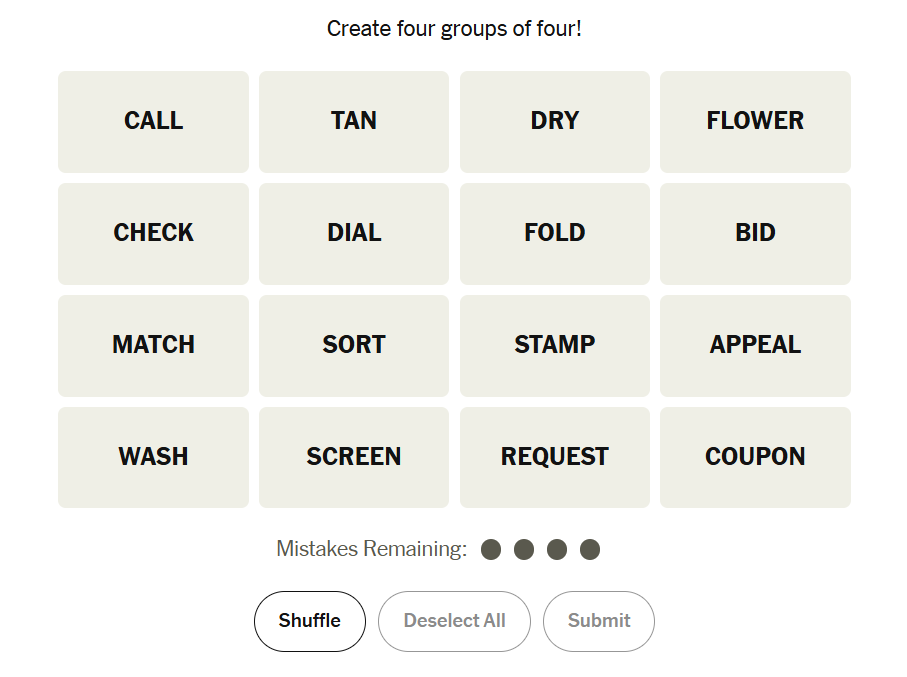
How the April 28 Puzzle Is Structured
At its core, the April 28 puzzle follows the familiar Connections format:
- A 4×4 grid of 16 words
- Four hidden categories
- Each category containing exactly four related words
- Limited mistakes allowed before the game ends
While some categories can be identified quickly, others require stepping back and rethinking assumptions. The challenge lies not just in vocabulary, but in recognizing patterns that go beyond surface-level meanings.
This puzzle, in particular, leans heavily on verb-based thinking, structural patterns, and cultural familiarity—making it both satisfying and occasionally frustrating.
Breaking Down the April 28, 2026 Hints
To guide players without immediately revealing the answers, the puzzle offers subtle clues for each category. These hints act as directional nudges rather than explicit solutions.
Category 1: The Language of Asking
- Think of ways you might make a plea
- Often used in formal or persuasive contexts
- Common in negotiations or requests
This category revolves around communication and persuasion, encouraging players to think about words associated with asking or appealing.
Category 2: Everyday Household Routines
- Actions tied to clothing care
- Typically done in sequence
- Common weekly chores
Here, the puzzle taps into routine activities, specifically those associated with maintaining clothing—something most players can relate to immediately.
Category 3: Items Found in “Books”
- Not related to reading literature
- Used in transactions or exchanges
- Often collected or redeemed
This clue introduces a conceptual twist. Instead of traditional books, it refers to objects grouped in booklet form, requiring a shift from literal interpretation to functional thinking.
Category 4: A Shared Prefix
- A word precedes all items
- Related to light or heat
- Common compound terms
This is where the puzzle becomes more abstract. Players must identify a shared prefix—a structural pattern rather than a thematic one—often associated with natural or outdoor elements.
The Full Answers Explained
For those ready to check their solutions, the April 28 puzzle resolves into four distinct categories:
1. Laundry Day Verbs
- Fold
- Sort
- Wash
- Dry
These words represent sequential actions typically performed during laundry—a straightforward but satisfying group.
2. Entreaty (Ways of Asking)
- Bid
- Call
- Appeal
- Request
This category aligns with persuasive or formal expressions of asking, matching the earlier hint about negotiation and communication.
3. Things That Come in “Books”
- Notebook
- Matchbook
- Stampbook
- Couponbook
A clever conceptual grouping, this category relies on recognizing items commonly bound together in small booklets rather than traditional reading material.
4. Sun ___ (Compound Words)
- Sundial
- Sunflower
- Sunscreen
- Suntan
The most challenging group, this category requires identifying a shared prefix—“sun”—and forming compound words tied to light, heat, or outdoor life.
Why This Puzzle Felt Tricky
Despite containing familiar words, the April 28 puzzle stands out for its overlapping associations. Several words could plausibly fit into multiple categories, increasing the likelihood of second-guessing.
This reflects a broader trend in Connections: puzzles often appear simple initially but become more complex as players commit to incorrect patterns early on.
The difficulty is not just linguistic—it’s cognitive. Players must balance intuition with deliberate analysis, avoiding the trap of jumping to conclusions.
Strategy Tip: How to Approach Similar Puzzles
Before diving into guesses, it helps to understand what the process achieves: reducing ambiguity by locking in certainties first.
A practical approach includes:
- Identify obvious groups early
- Verb clusters or routine actions are often easier to spot
- Look for structural patterns
- Prefixes, suffixes, or compound words
- Re-evaluate remaining words
- Once two groups are solved, the rest become clearer
- Avoid early assumptions
- Words may belong to unexpected categories
This method mirrors expert strategies used by seasoned players, emphasizing pattern recognition and elimination.
The Bigger Picture: Why Connections Keeps Growing
Since its release, Connections has emerged as one of the most popular word games in the NYT ecosystem, second only to Wordle.
Its appeal lies in its balance:
- Accessible rules
- Increasing difficulty
- A mix of logic, language, and creativity
Each puzzle offers a fresh mental workout, rewarding players with a sense of discovery when the final pattern clicks into place.
Conclusion: A Puzzle That Clicks—Eventually
The April 28, 2026 Connections puzzle exemplifies what makes the game so compelling. It blends everyday language with clever misdirection, requiring players to think both literally and abstractly.
From laundry routines to compound words built around the sun, the puzzle rewards persistence and flexible thinking. And while it may momentarily frustrate, the satisfaction of solving it remains unmatched.


