

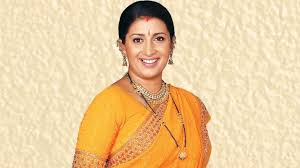
A Legacy Rewritten: The Evolution of Ansh Gujral in Kyunki Saas Bhi Kabhi Bahu Thi
Introduction: When Television History Loops Back on Itself
Few Indian television shows have left as deep a cultural imprint as Kyunki Saas Bhi Kabhi Bahu Thi. For millions, it wasn’t just a daily soap—it was a shared ritual that shaped evening routines and defined family drama for an entire generation. Now, with its reboot, the show is once again commanding attention—but not without controversy.
At the center of this renewed spotlight is Akashdeep Saigal, the actor once synonymous with the rebellious Ansh Gujral. In a striking narrative twist, Saigal has returned—not as Ansh, but as his son, effectively portraying Tulsi Virani’s grandson. This transformation has sparked debate, intrigue, and a deeper conversation about legacy, casting, and storytelling in modern television.
The Return of Ansh—But Not As You Remember Him
Akashdeep Saigal’s journey within the Kyunki universe is unusual, even by television standards. In the original series, he played Ansh Gujral, Tulsi’s son—a character marked by rebellion, emotional conflict, and a dramatic storyline that ended in tragedy.
In the reboot, however, Saigal steps into a new role: Riyansh (also called Rio), Ansh’s son and Tulsi’s grandson. This shift creates a layered continuity that blends nostalgia with reinvention.
The actor himself describes the transition as deeply meaningful:
“It’s a masterclass in evolution. Playing the son was about rebellion; playing the grandson is about legacy.”
For Saigal, the move is more than casting—it is a symbolic progression. He emphasizes that while characters evolve, the essence of performance remains constant.
A “Full-Circle Moment” for the Franchise
Saigal has repeatedly referred to his return as a “full-circle moment,” highlighting both emotional and professional continuity.
His reunion with creator Ektaa Kapoor plays a key role in this narrative. According to the actor:
“When Ekta calls, it’s not a pitch; it’s a shared vision… Bringing me in for Riyansh wasn’t just casting; it was a strategic move to bring back that X-factor.”
This statement underscores the deliberate nature of the decision. Rather than introducing an entirely new face, the creators chose to anchor the reboot in familiarity—leveraging audience memory to deepen engagement.
The return also reunites a powerful ensemble cast, including Smriti Irani (Tulsi), Hiten Tejwani, Gauri Pradhan, and Amar Upadhyay. Saigal even described them as the “architects” of the genre, emphasizing their collective influence on Indian television.
The Audience Reaction: Nostalgia Meets Skepticism
While the casting decision has generated excitement among long-time fans, it has also triggered significant backlash.
The core issue? Age perception.
At 51, Saigal is portraying the grandson of Tulsi, played by Smriti Irani, who is 50. This has led to widespread criticism, with viewers questioning the realism of the casting.
Social media reactions have ranged from humorous to sharply critical:
- Some viewers argued he appears older than his on-screen father.
- Others joked about the generational mismatch, highlighting the unusual casting logic.
The debate reflects a broader shift in audience expectations. Modern viewers, particularly in the streaming era, are increasingly attentive to narrative coherence and visual authenticity.
Saigal’s Defense: Performance Over Perception
Akashdeep Saigal has addressed the criticism directly, framing the issue as one of artistic interpretation rather than realism.
He insists that acting transcends age:
Acting depends on “performance and presence,” which exist independently of an actor’s age.
He also describes his character Riyansh as layered and complex, suggesting that the storyline will gradually reveal deeper dimensions:
- A mix of international sophistication and emotional intelligence
- Hidden aspects that unfold as the narrative progresses
This perspective aligns with a more theatrical tradition of storytelling, where character depth often outweighs physical realism.
Revisiting the Cultural Weight of Kyunki Saas Bhi Kabhi Bahu Thi
To understand the intensity of the reaction, one must consider the show’s legacy.
Originally airing from 2000 to 2008, Kyunki Saas Bhi Kabhi Bahu Thi became a cultural phenomenon. At its peak, it influenced social conversations, fashion, and even perceptions of family roles in Indian society.
Smriti Irani’s portrayal of Tulsi Virani, in particular, turned her into a household name and established the archetype of the ideal daughter-in-law.
The reboot, therefore, carries not just narrative expectations but emotional ones. Viewers are not merely watching a show—they are revisiting a piece of their past.
A New Generation Meets Old Icons
Kyunki Saas Bhi Kabhi Bahu Thi 2 attempts to balance nostalgia with renewal.
Alongside returning cast members, the show introduces a younger generation, including actors like Rohit Suchanti, Aman Gandhi, Shagun Sharma, and Tanisha Mehta.
This dual structure serves two purposes:
- Retaining long-time viewers through familiar faces
- Attracting new audiences with fresh characters and storylines
However, this blending of eras also creates tension—particularly when legacy casting decisions challenge conventional expectations.
The Bigger Question: Can Legacy Shows Evolve?
The controversy surrounding Ansh Gujral’s transformation into Riyansh is not just about one actor or one role. It reflects a broader question facing the television industry:
How do legacy shows evolve without alienating their audience?
On one hand, nostalgia is a powerful tool. On the other, modern audiences demand realism and coherence. The challenge lies in striking a balance between emotional continuity and narrative credibility.
Industry observers note that such debates are inevitable when iconic shows are revived. As viewer expectations evolve, so must storytelling techniques, casting decisions, and character development.
Conclusion: Evolution or Experiment?
Akashdeep Saigal’s return to Kyunki Saas Bhi Kabhi Bahu Thi as Ansh Gujral’s son is both bold and controversial. For some, it represents a poetic continuation of a beloved story. For others, it stretches the limits of believability.
Yet, in many ways, this is precisely what keeps the franchise relevant.
By revisiting its past while experimenting with new directions, Kyunki Saas Bhi Kabhi Bahu Thi 2 is not just retelling a story—it is testing the boundaries of legacy television in a modern era.
Whether audiences ultimately embrace or reject this evolution remains to be seen. But one thing is certain: the Virani family drama is once again at the center of national conversation.


