Inside Puzzle #1052: A Daily Challenge That Kept Players Thinking
The New York Times Connections puzzle for April 28, 2026, offered players another engaging test of pattern recognition, lateral thinking, and vocabulary skills. Released at midnight across time zones, Puzzle No. 1,052 continued the game’s tradition of combining deceptively simple words with layered meanings, drawing in both casual solvers and dedicated enthusiasts.
With a moderate difficulty rating of 3 out of 5, according to testers, the puzzle struck a careful balance—challenging enough to provoke thought, yet accessible enough to keep players motivated. For many, it became part of a broader daily ritual that includes other popular word games like Wordle and Spelling Bee.
How Connections Works: The Core Concept
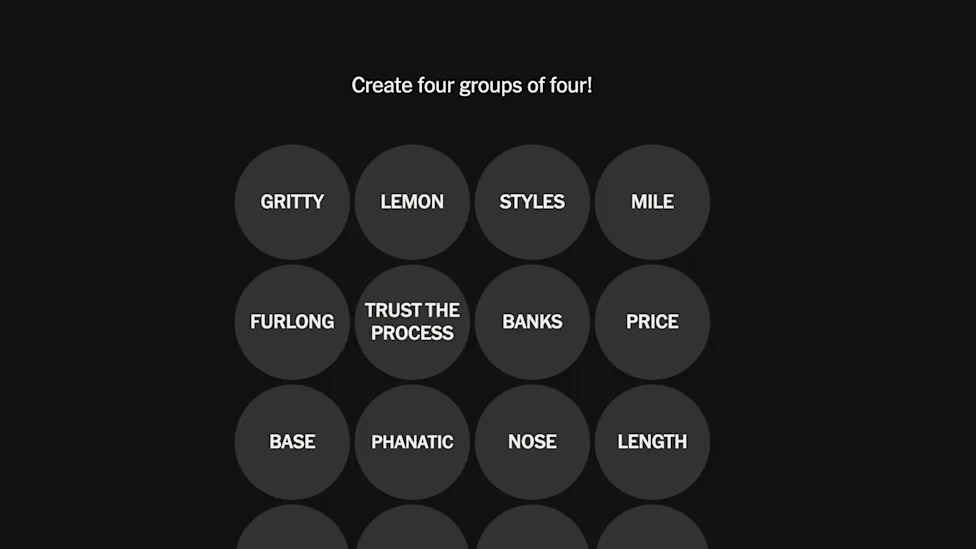
Connections presents players with 16 words arranged in a 4×4 grid. The goal is straightforward in theory but nuanced in practice: group the words into four categories of four, based on shared relationships.
Each category follows a color-coded difficulty scale:
- 🟨 Yellow – The easiest and most direct connection
- 🟩 Green – Moderately challenging
- 🟦 Blue – Requires deeper thinking
- 🟪 Purple – The most abstract and tricky
Players are allowed four mistakes, making careful deduction essential. The puzzle encourages not only vocabulary knowledge but also cognitive flexibility—recognizing patterns, avoiding misleading associations, and thinking beyond the obvious.
April 28 Puzzle Experience: Hints and Entry Points
For Puzzle #1052, the official companion offered subtle hints designed to guide players without giving away the solution. Among the clues provided were individual words tied to each category:
- Yellow (Straightforward): REQUEST
- Green: WASH
- Blue: COUPON
- Purple (Tricky): TAN
These hints served as entry points, helping players begin identifying patterns. However, like many Connections puzzles, the real challenge lay in distinguishing genuine relationships from red herrings.
The Role of Difficulty and Player Perception
Although the puzzle was rated 3/5 in difficulty, individual experiences varied widely. Some players quickly identified the easier groupings and built momentum, while others found themselves stuck between overlapping interpretations.
The structure of Connections often creates this tension: words can belong to multiple conceptual categories, but only one combination is correct. This design forces players to constantly reassess assumptions and refine their reasoning.
For those seeking deeper analysis, tools like the Connections Bot provide personalized breakdowns of solving strategies and performance, highlighting where players excelled—or went wrong.
A Community-Driven Puzzle Culture
One of the defining features of Connections is its vibrant player community. The April 28 puzzle was accompanied by an active discussion forum where participants shared:
- Solving strategies
- Partial grids and near-misses
- Reactions to difficulty levels
- Creative interpretations of categories
Players were encouraged to post their solve grids and compare results, fostering a sense of friendly competition and collaboration. However, community guidelines emphasized civility and discouraged spoilers, ensuring that the puzzle experience remained intact for others.
This social dimension transforms Connections from a solitary activity into a shared daily event—one where players across the globe engage in the same intellectual challenge.
The Expanding Ecosystem of NYT Games
Connections is part of a broader portfolio of New York Times puzzles that has grown significantly in recent years. Alongside Wordle, Spelling Bee, Strands, and traditional crosswords, it contributes to a diverse ecosystem designed to appeal to different types of players.
Each game offers a distinct cognitive experience:
- Wordle focuses on deduction and pattern elimination
- Spelling Bee emphasizes vocabulary expansion
- Connections centers on categorization and abstract thinking
The integration of forums, hints, and companion guides reflects a broader shift toward interactive puzzle engagement, where players are not just solving—but discussing, analyzing, and learning.
Strategy Insights: How Players Approached April 28
While each puzzle is unique, certain strategies proved particularly effective for April 28:
1. Start with the Obvious
Identifying the easiest (yellow) category early helps reduce the grid and clarify remaining relationships.
2. Watch for Misdirection
Words like “TAN” or “BANK” in other puzzles often have multiple meanings, making them prime candidates for tricky categories.
3. Group Tentatively
Testing potential groupings without committing immediately can prevent unnecessary mistakes.
4. Think Flexibly
Connections often relies on less obvious associations—players who shift perspectives tend to perform better.
Why April 28 Matters in the Bigger Picture
Puzzle #1052 may seem like just another daily challenge, but it reflects the evolving sophistication of modern word games. By blending accessibility with depth, Connections continues to attract a growing audience.
The April 28 edition reinforced several key aspects of the game’s appeal:
- Balanced difficulty that caters to a wide audience
- Community interaction that enhances engagement
- Cognitive benefits, including improved pattern recognition and problem-solving
As the game progresses through 2026, each puzzle builds on this foundation, offering new themes, fresh challenges, and opportunities for discovery.
Conclusion: A Daily Ritual of Discovery
The NYT Connections puzzle for April 28, 2026, exemplified what makes the game so compelling: a simple premise executed with clever design and layered complexity. Whether solved quickly or after several attempts, the puzzle delivered the satisfaction of uncovering hidden relationships between words.
For millions of players, Connections is more than a game—it’s a daily mental workout, a social experience, and a reminder of the joy found in language and logic.
As new puzzles arrive each day, one thing remains constant: the thrill of that final “aha” moment when everything clicks into place.