

Japan Earthquake and Tsunami Warning: A Timeline of a High-Alert Day Across Hokkaido and Sanriku
A Sudden Jolt Off Japan’s Northeast Coast
Japan’s earthquake monitoring systems were thrust into action after a powerful seismic event struck off the country’s northeast coast, triggering widespread tsunami warnings and emergency responses across regions including Hokkaido, Sanriku, and parts of northeastern Japan.
Authorities confirmed that the earthquake reached a magnitude of 7.7, after initially being recorded at 7.5. The quake occurred at a relatively shallow depth, intensifying its impact and prompting immediate alerts from the Japan Meteorological Agency and government disaster management systems.
Sirens blared in coastal towns such as Ofunato, where loudspeaker announcements urged residents to evacuate immediately. The warning system—refined after past disasters—was activated within seconds, reflecting Japan’s high level of preparedness.
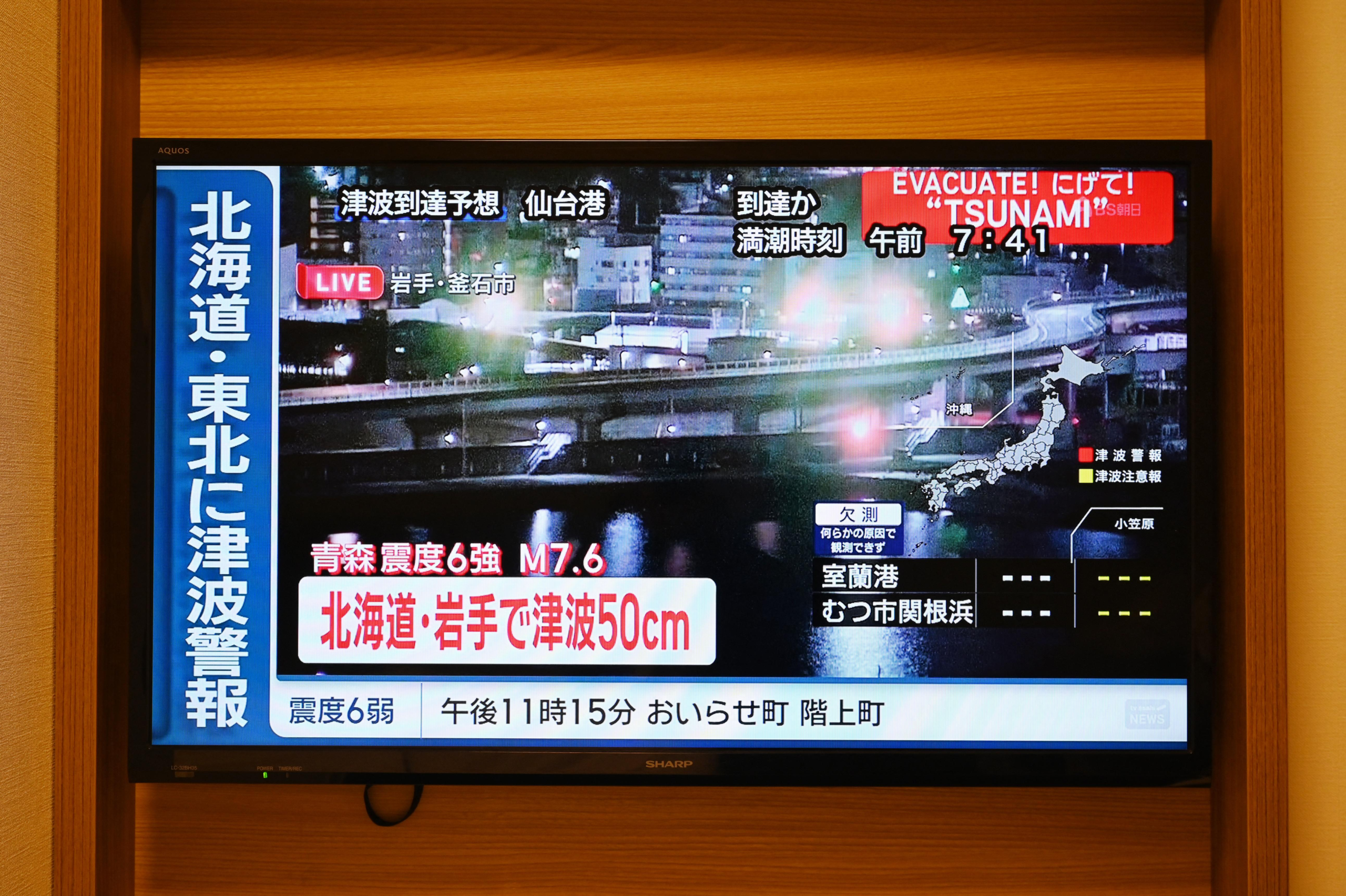
Immediate Tsunami Threat and Coastal Evacuations
Within minutes of the earthquake, tsunami warnings were issued for large sections of Japan’s Pacific coastline. Authorities forecast waves of up to 3 meters (10 feet), triggering mass evacuations across multiple prefectures.
- More than 128,000 residents were placed under evacuation advisories in northern regions.
- In some areas, evacuation orders affected up to 156,000 people across five prefectures.
Residents responded rapidly. Footage showed vehicles streaming toward higher ground, parks, and designated evacuation zones. In Hokkaido, local accounts described people immediately leaving workplaces and homes as alerts sounded.
One witness described the moment:
“All of a sudden, the building started swaying and everyone’s phones sounded the emergency alarm… then about 30 seconds later, a warning for the tsunami.”
The combination of automated alerts, sirens, and public awareness ensured a swift and coordinated response.
Waves Detected, But Disaster Averted
Tsunami waves did reach Japan’s coast, though at lower-than-feared levels:
- 80 cm (2.6 feet) waves recorded at Kuji port
- 40 cm (1.3 feet) waves detected at other locations in Iwate prefecture
Authorities emphasized that even relatively small tsunami waves can be dangerous. Public messaging reinforced the need to stay away from coastlines and riverbanks.
Over time, the situation stabilized:
- Tsunami warnings were downgraded to advisories
- The Pacific Tsunami Warning Center confirmed the broader threat had passed
Despite the downgrade, officials instructed residents not to return to coastal areas until all alerts were fully lifted.
Infrastructure Disruptions Across Tokyo and the North
The earthquake caused immediate disruptions across transport and utilities:
- Bullet train services (Shinkansen) in northeastern Japan were suspended
- Lines connecting to Tokyo experienced delays and stoppages
- Around 100 households lost power temporarily
Traffic congestion was reported as residents evacuated, and some commercial activity slowed, with shops closing in affected zones.
Despite these disruptions, critical infrastructure remained stable:
- No abnormalities were reported at nuclear facilities
- Power plants and major installations continued operating safely
Government Response and Public Guidance
Japan’s leadership responded quickly. Prime Minister Sanae Takaichi urged residents in affected areas to seek higher ground immediately and follow evacuation instructions.
Authorities also issued broader safety guidance:
- Avoid coastal and riverside areas
- Prepare for aftershocks for at least one week
- Monitor official updates and emergency alerts
Emergency services and disaster agencies conducted rapid assessments, confirming no major injuries or significant structural damage at the time of reporting.
Elevated Risk of a “Mega-Quake”
Following the earthquake, Japan issued an advisory highlighting a slightly increased risk of a mega-quake along the northern coast.
- Officials estimate a 1% probability of a major quake occurring within the next week
- The advisory is precautionary, not predictive
Residents were encouraged to:
- Review emergency supplies
- Prepare evacuation kits (“grab bags”)
- Remain alert while continuing normal activities
This marks the second such advisory in recent months, reflecting ongoing seismic volatility in the region.
A Country Defined by Seismic Reality
Japan’s geography places it along the Pacific “Ring of Fire,” making earthquakes a regular occurrence. Statistically:
- The country experiences a magnitude 7 or higher quake roughly once every 16 months
- It accounts for more than 10% of the world’s major earthquakes
The memory of the 2011 Tohoku earthquake and tsunami, which killed over 22,000 people and triggered the Fukushima nuclear disaster, continues to shape national policy and public behavior.
Since then, Japan has invested heavily in:
- Early warning systems
- Public education on tsunami risks
- Strict building codes and infrastructure resilience
The rapid evacuation seen during this latest event reflects lessons learned from past tragedies.
What Happens Next
Although the immediate tsunami threat has eased, authorities remain cautious:
- Aftershocks of similar magnitude may occur
- Landslides and secondary hazards remain possible
- Coastal advisories are still active in some areas
Residents are being told to maintain vigilance and avoid complacency, particularly in regions like Sanriku and Hokkaido, where seismic activity remains elevated.
Conclusion
The latest earthquake off Japan’s northeast coast underscores the country’s constant exposure to seismic risk—and its capacity to respond effectively.
Swift warnings, disciplined evacuations, and resilient infrastructure prevented what could have been a far more severe disaster. While the tsunami threat has subsided, the advisory of a potential mega-quake serves as a reminder that the situation remains fluid.
Japan’s experience illustrates a critical balance: living with risk while maintaining readiness. On this occasion, that balance held firm.


