Bayern Munich vs Real Madrid: A Seven-Goal Classic Defined by Chaos, Quality, and Late Drama
A Champions League Night That Delivered Everything
Few fixtures in European football carry the historical weight and expectation of Bayern Munich versus Real Madrid. When the two giants met in the UEFA Champions League quarter-final at the Allianz Arena on April 15, 2026, the result was a match that exceeded even the highest expectations.
- A Champions League Night That Delivered Everything
- The Fastest Start: Güler Ignites the Tie
- First-Half Fireworks: Goals, Mistakes, and Momentum Swings
- Tactical Reset: A More Measured Second Half
- The Turning Point: Camavinga’s Red Card
- Late Collapse: Díaz and Olise Seal the Tie
- Post-Match Chaos: Emotions Spill Over
- Key Match Stats Snapshot
- Tactical Analysis: Why Bayern Advanced
- Historical Context: Another Chapter in a Legendary Rivalry
- What Comes Next: Bayern’s Road Ahead
- Conclusion: A Match That Defined the Champions League Narrative
Seven goals, two red cards, tactical swings, and moments of individual brilliance combined to produce a chaotic yet compelling encounter. Bayern emerged victorious with a 4-3 win on the night and a 6-4 aggregate triumph, securing a place in the semi-finals.
The Fastest Start: Güler Ignites the Tie
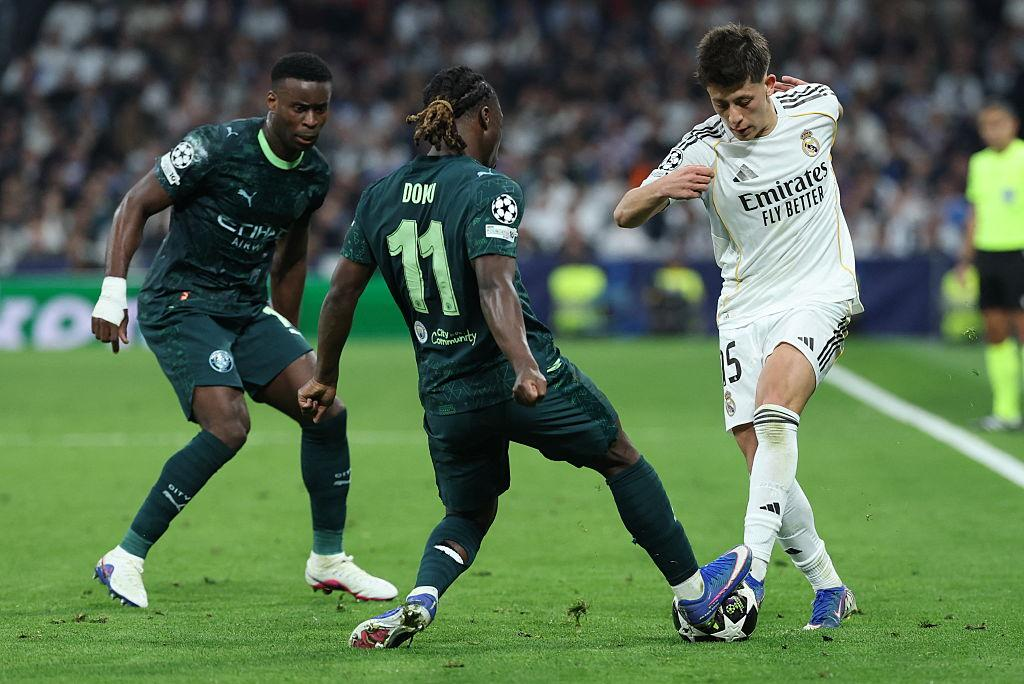
The match exploded into life almost immediately. Within seconds, Arda Güler capitalized on a rare error from Manuel Neuer, scoring from distance to level the aggregate.


This early breakthrough set the tone for a relentless first half, where both teams traded momentum in rapid succession. The goal was the fastest in the Champions League this season, underscoring the unpredictability of elite knockout football.
First-Half Fireworks: Goals, Mistakes, and Momentum Swings
Bayern Respond Immediately
Bayern quickly recovered through Aleksandar Pavlović, who headed in from close range following a corner. Defensive lapses from both sides became a recurring theme.


Güler Strikes Again
Güler doubled his tally with a superb free-kick, again testing Neuer—who managed to get a hand on it but failed to prevent the goal.
Kane and Mbappé Enter the Scene
The match then turned into a showcase for elite forwards:
- Harry Kane scored his 50th goal of the season, restoring Bayern’s aggregate advantage.
- Kylian Mbappé responded before halftime, finishing a rapid counterattack to level the tie again.
At the break, the score stood at 3-2 to Real Madrid on the night (4-4 aggregate), reflecting a half defined by relentless attacking intent and defensive fragility.
Tactical Reset: A More Measured Second Half
After a frenetic opening period, the second half slowed in tempo. Both sides showed greater caution, aware that a single moment could decide the tie.


Bayern controlled possession more effectively, while Real Madrid remained dangerous on the counter, particularly through Vinícius Jr. and Mbappé. However, neither side could break the deadlock for much of the half.
The Turning Point: Camavinga’s Red Card
The decisive moment arrived in the 86th minute. Eduardo Camavinga received a second yellow card for delaying the restart after a foul.
The dismissal proved pivotal. Reduced to ten men, Real Madrid lost control of the closing stages.
Real manager Álvaro Arbeloa later described the decision as “unbelievable,” reflecting the controversy surrounding the incident.
Late Collapse: Díaz and Olise Seal the Tie
With the numerical advantage, Bayern pressed decisively:
- Luis Díaz struck in the 89th minute, his deflected shot finding the net to give Bayern the aggregate lead.
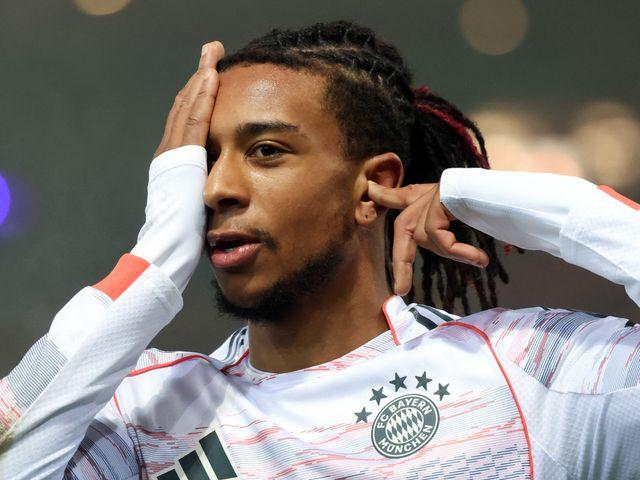
- In stoppage time, Michael Olise produced a composed left-footed finish to seal the victory with the final kick.
Olise’s goal not only confirmed Bayern’s progression but also capped one of the most dramatic matches of the tournament.
Post-Match Chaos: Emotions Spill Over
The drama extended beyond the final whistle:
- Güler was shown a red card for dissent
- Jude Bellingham and other players protested aggressively
- Real Madrid expressed anger at officiating decisions
These reactions highlighted the emotional intensity of a match where margins were razor-thin.
Key Match Stats Snapshot
The numbers reflect Bayern’s control despite the chaos:
- Possession: Bayern 69% – Real Madrid 31%
- Shots on target: Bayern 9 – Real Madrid 5
- Expected goals: Bayern 2.09 – Real Madrid 2.27
- Red cards: Bayern 0 – Real Madrid 2
While Real Madrid were efficient in attack, Bayern’s dominance in possession and territory ultimately proved decisive.
Tactical Analysis: Why Bayern Advanced
1. Control vs Transition
Bayern’s structured build-up and midfield control—led by Joshua Kimmich and Pavlović—allowed them to dictate tempo, particularly in the second half.
2. Wide Threat and Creativity
The impact of wingers like Olise and Díaz stretched Madrid’s defense, creating the spaces that led to decisive late goals.
3. Discipline Under Pressure
In contrast, Real Madrid’s loss of discipline—particularly Camavinga’s dismissal—undermined their ability to manage the closing stages.
Historical Context: Another Chapter in a Legendary Rivalry
This fixture has long been one of European football’s defining rivalries. Entering the match, Bayern held a slight historical edge in head-to-head meetings, and this result further reinforces their competitiveness at this level.
Despite Real Madrid’s record 15 Champions League titles, Bayern demonstrated resilience and tactical maturity to overcome one of the competition’s most successful teams.
What Comes Next: Bayern’s Road Ahead
Bayern Munich advance to face Paris Saint-Germain in the semi-finals, setting up another high-profile clash.
Manager Vincent Kompany praised his team’s mentality, emphasizing their “absolute belief” and ability to recover from setbacks.
For Real Madrid, the defeat raises questions about consistency, discipline, and their prospects for silverware this season.
Conclusion: A Match That Defined the Champions League Narrative
This quarter-final encounter encapsulated everything that defines the UEFA Champions League:
- Elite talent performing under pressure
- Tactical battles shaped by small margins
- Emotional intensity that extends beyond the pitch
Bayern Munich’s victory was not merely about scoring more goals—it was about composure in decisive moments, capitalizing on adversity, and executing when it mattered most.
For neutral observers, it was a spectacle. For Bayern, it was progression. For Real Madrid, it was a reminder that even the most decorated clubs are vulnerable when discipline falters.