

Tacan Ildem and Europe’s Strategic Crossroads: Why Turkey Matters More Than Ever
A Security Debate Reignited
As transatlantic tensions resurface and questions about the future of NATO gain urgency, one voice from within the alliance has sharpened the debate: Tacan Ildem, former Turkish ambassador to NATO. His central argument is direct and consequential—without deeper defense cooperation with Turkey, the European Union will struggle to become the geopolitical force it aspires to be.
This perspective arrives at a critical moment. Renewed rhetoric from Donald Trump about reconsidering the United States’ role in NATO has unsettled European capitals, prompting a reassessment of long-standing security dependencies. Against this backdrop, Turkey—often described as both indispensable and difficult—has re-emerged as a pivotal actor in Europe’s strategic calculations.
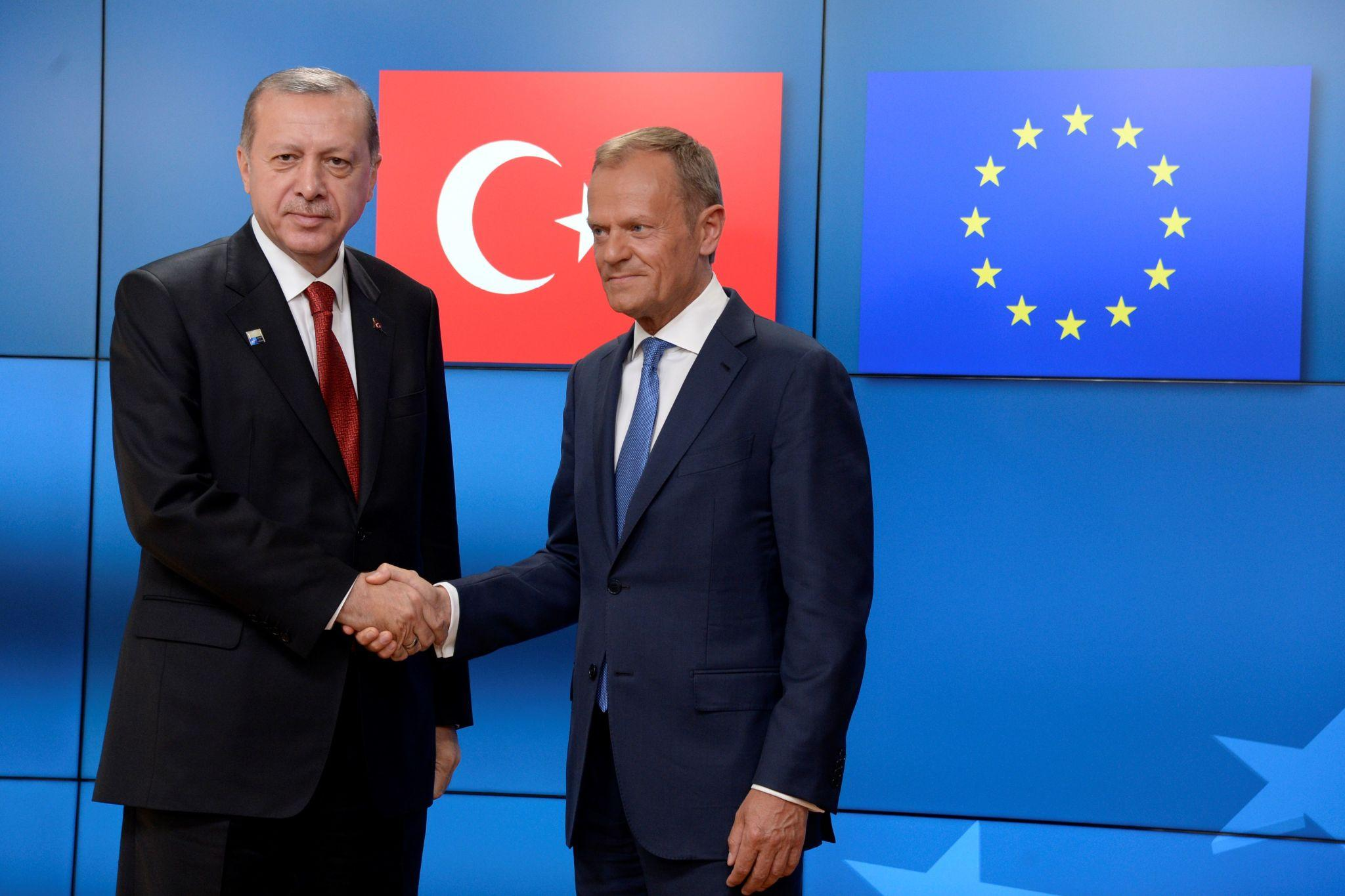
Europe’s Strategic Dilemma
The current security environment has forced Europe into a dual challenge: maintaining alliance cohesion while preparing for the possibility of reduced American engagement. NATO, long anchored by U.S. military power, faces internal questions about burden-sharing, strategic autonomy, and regional responsibility.
Ildem’s position reframes Turkey not as a peripheral ally, but as a central pillar in any credible European defense architecture. Geographically, Turkey sits at the crossroads of Europe, the Middle East, and Asia. Politically and militarily, it anchors NATO’s southern flank—a region increasingly shaped by instability, terrorism threats, and shifting power dynamics.
In this context, Ildem’s assertion is less a diplomatic talking point and more a strategic warning: excluding Turkey from deeper cooperation risks weakening Europe’s ability to respond effectively to emerging threats.
Turkey’s Role Within NATO
Turkey’s importance within NATO is both structural and operational. As one of the alliance’s largest military contributors, it plays a critical role in areas ranging from counterterrorism to regional stability.
Recent diplomatic engagements reinforce this position. Tom Berendsen, the newly appointed Dutch Minister of Foreign Affairs, emphasized during his visit to Ankara that Turkey is “of great importance for stability on the alliance’s southern flank.” His remarks highlight a growing consensus among European policymakers that Turkey’s strategic value cannot be overlooked.
Berendsen also pointed to the broader security environment, noting that threats on NATO’s eastern flank—particularly from Russia—must be balanced with challenges in the south, where Turkey remains a frontline actor in combating terrorism.
A Shifting Transatlantic Relationship
The uncertainty surrounding U.S. commitment to NATO has intensified discussions about European defense independence. While American involvement remains essential, as Berendsen acknowledged, Europe is under increasing pressure to assume greater responsibility.
Ildem’s argument aligns with this shift but adds a critical dimension: European autonomy cannot be achieved in isolation from Turkey. Any attempt to build a robust European defense framework without integrating Turkey’s capabilities would leave significant gaps—geographic, operational, and strategic.
This perspective challenges traditional EU thinking, where political tensions with Turkey have often limited deeper collaboration. Ildem’s view suggests that security realities may ultimately override political اختلافات.
Economic and Societal Interconnections
Beyond military considerations, the relationship between Europe and Turkey is reinforced by strong economic and social ties. The Netherlands, for example, remains the largest foreign investor in Turkey, illustrating the depth of economic interdependence.
Equally significant is the role of the Turkish-Dutch community. Berendsen described Turks in the Netherlands as “respected, valuable, hardworking, and talented,” emphasizing their contribution to strengthening bilateral relations. These human connections serve as a stabilizing force, even when political tensions arise.
Such interdependencies suggest that the EU-Turkey relationship is not solely a matter of defense policy but part of a broader, multidimensional partnership.
The 2026 NATO Summit: A Defining Moment
Attention is now turning to the upcoming NATO summit in Ankara in 2026. This event is expected to serve as a key platform for demonstrating unity within the alliance and addressing the evolving security landscape.
European leaders, including Berendsen, see the summit as an opportunity to redefine burden-sharing and reinforce collective commitments. For Turkey, hosting the summit underscores its central role within NATO and provides a मंच to assert its strategic importance.
Ildem’s perspective will likely resonate strongly in these discussions, particularly as policymakers confront the practical implications of reduced U.S. engagement and the need for a more cohesive European defense strategy.
Security Beyond Borders
The broader implications of Ildem’s argument extend beyond NATO itself. Europe’s ambition to act as a geopolitical player requires not only military capability but also strategic coherence.
Turkey’s position—bridging regions, conflicts, and alliances—makes it uniquely suited to contribute to this vision. However, this also requires a recalibration of relationships, moving beyond transactional diplomacy toward more integrated cooperation.
Failure to do so could leave Europe strategically constrained, reliant on external actors, and less capable of shaping global outcomes.
Conclusion: A Necessary Partnership
Tacan Ildem’s warning is clear: Europe’s geopolitical aspirations cannot be realized without Turkey. In a period marked by uncertainty, shifting alliances, and emerging threats, the need for pragmatic cooperation has become more urgent than ever.
The question facing European leaders is no longer whether Turkey is an essential partner, but how to effectively integrate it into a cohesive security framework. As the 2026 NATO summit approaches, that question will move from theory to practice.
The outcome will not only shape the future of NATO but also determine whether Europe can transition from a regional actor to a truly global strategic force.


