

Trump vs Pope: A Clash of Power, Faith, and Global Influence
A Confrontation Beyond Politics
The escalating dispute between Donald Trump and Pope Leo XIV has moved far beyond a typical exchange of criticism. What has emerged is a highly visible confrontation between two distinct forms of authority—political power and moral leadership—playing out against the backdrop of a volatile global crisis.
At the center of the tension is the ongoing conflict involving Iran, where the pope’s repeated calls for peace have collided sharply with the president’s aggressive rhetoric and policy stance. The result is a rare and deeply symbolic clash between the White House and the Vatican.
How the Conflict Escalated
The disagreement intensified when Pope Leo XIV described threats to Iran as “truly unacceptable,” emphasizing that war contradicts the core teachings of the Gospel. His position has remained consistent: the Church’s role is to advocate for peace, reconciliation, and human dignity.
“I have no fear of either the Trump administration nor speaking out loudly about the message of the gospel,” the pope said during a flight to Africa. “That’s what I believe I am called to do, what the Church is called to do.”
President Trump responded forcefully. In public remarks and on social media, he labeled the pope “weak” and aligned with the “radical left.” He also criticized the pontiff’s views on global security, stating:
“We don’t like a Pope that’s going to say that it’s OK to have a nuclear weapon… I’m not a big fan of Pope Leo.”
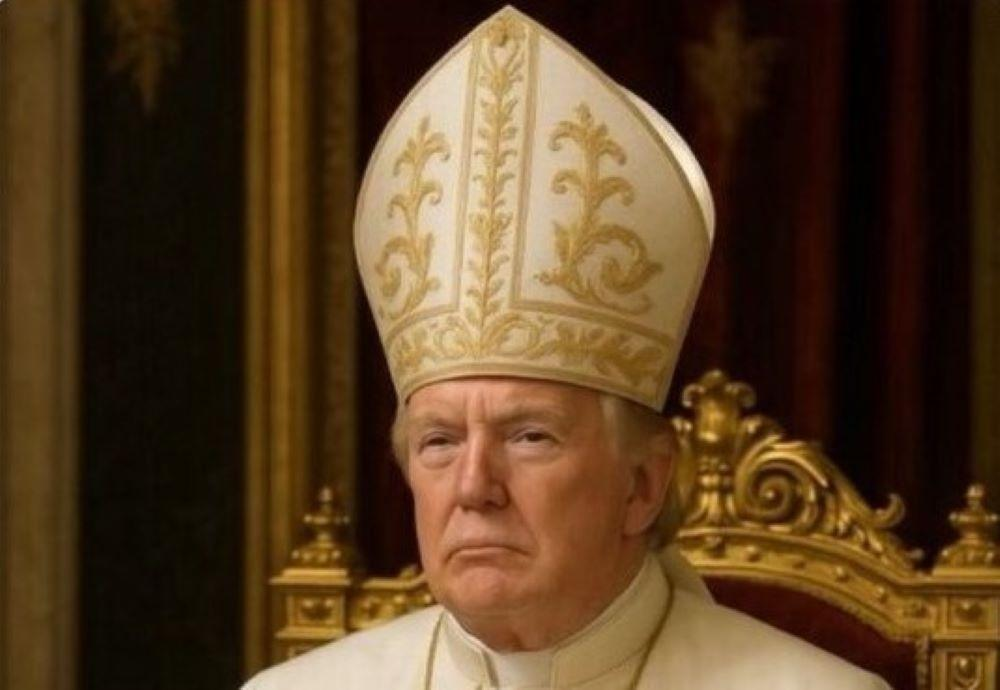
The rhetoric did not stop there. Trump escalated further by sharing—and later deleting—an AI-generated image depicting himself in a Christ-like role. He defended the post as symbolic, claiming it portrayed him as a healer rather than a religious figure.
A Battle of Narratives: Peace vs Power
The contrast between the two leaders is stark. Pope Leo XIV’s messaging is grounded in theological principles and universal ethics. His repeated invocation of “Blessed are the peacemakers” reflects a consistent attempt to frame global conflict through moral accountability.
“We’re not politicians. We’re not looking to make foreign policy,” he explained. “But I do believe in the message of the gospel — ‘Blessed are the peacemakers.’”
Trump, by contrast, approaches the issue through a lens of political authority and national interest. His rhetoric frames disagreement as opposition, often repositioning critics—including the pope—as adversaries.
This divergence has turned what might have been a policy disagreement into a broader philosophical conflict: whether global leadership should be guided primarily by strategic dominance or moral persuasion.
Voices from the Vatican: Public Reaction
The fallout has been immediate and visible, particularly within Vatican circles. Visitors and observers reacted strongly to Trump’s remarks, many defending the pope’s role as a global moral voice.
“It’s just ridiculous, because if the pope is not speaking about peace, and is not taking care about every people in the world, he’s not the pope,” said one visitor.
Others described Trump’s comments as “completely inappropriate” and “absurd,” reflecting a broader discomfort with political interference in religious leadership.
Religious figures also weighed in. A senior Vatican official described the president’s criticism as an attack on “a moral voice,” suggesting that the Church operates outside the sphere of political control.
Historical Context: An Unusual American Dynamic
This conflict is historically significant for another reason: both figures are American. The election of Pope Leo XIV marked the first time a U.S.-born cleric assumed the papacy, a development that initially drew praise from Trump.
“Congratulations… It is such an honor… I look forward to meeting Pope Leo XIV,” Trump said at the time.
However, that early optimism has given way to tension. Trump later claimed the pope’s selection was influenced by his own presidency, asserting that the Church chose an American leader to better “deal with” him.
The pope, meanwhile, has made deliberate efforts to avoid being seen through a national lens. By emphasizing his global mission and using multiple languages in public appearances, he reinforces the Vatican’s identity as a universal institution rather than an extension of any single country.
Religion and War: A Deeper Divide
The core disagreement ultimately revolves around the moral interpretation of war. Pope Leo XIV has explicitly rejected the use of religious language to justify military action.
His position is rooted in doctrine: faith cannot be used to legitimize violence. In contrast, elements within the political sphere have invoked religious narratives to support strategic decisions, blurring the line between spiritual belief and state policy.
This tension is not new, but it has rarely been expressed so directly between a sitting U.S. president and a reigning pope.
The Broader Implications
The implications extend well beyond the individuals involved. The dispute highlights a growing global debate about the role of moral authority in shaping political decisions.
On one side is a model of leadership based on persuasion, ethics, and long-term human impact. On the other is a model centered on power, immediacy, and national priorities.
As the Iran conflict continues to influence global economics, diplomacy, and security, the clash between Trump and Pope Leo XIV adds another dimension: the struggle to define the moral narrative of the crisis.
What Comes Next
There is no indication that either side intends to step back. Trump has stated he will not apologize, while the pope has made it clear he will continue to speak out.
The situation is likely to evolve alongside developments in the Iran conflict. If tensions escalate further, the divide between political and moral leadership may deepen, potentially influencing public opinion, diplomatic relations, and even religious discourse worldwide.
Conclusion
The Trump–Pope Leo XIV confrontation is not merely a personal dispute. It represents a fundamental disagreement about leadership, responsibility, and the role of morality in global affairs.
In a world already strained by conflict, this clash underscores a critical question: who ultimately defines what is right—those who wield power, or those who challenge it?


