

Julie Menin and the Power Struggle Shaping New York City Politics
A City Hall Relationship Under Strain
In the evolving political landscape of New York City, few relationships are currently as consequential—or as closely watched—as the one between Julie Menin and Zohran Mamdani.
What began as a functional partnership between two Democrats navigating the complexities of governing America’s largest city has, in recent weeks, shifted into a more confrontational dynamic. At the center of this tension is a fundamental challenge: how to address a multibillion-dollar budget gap while balancing competing political philosophies and public expectations.
The friction is not merely personal—it reflects deeper ideological divides, institutional roles, and the realities of governing under fiscal pressure.
The Budget Battle: Where Policy Meets Politics
The most visible flashpoint between Menin and Mamdani is the city’s looming fiscal crisis. New York faces a budget deficit of approximately $5.4 billion, forcing difficult decisions about taxation, spending, and economic priorities.
Menin, as Council Speaker, has taken a more cautious and independent stance on the mayor’s proposals. When Mamdani introduced major policy ideas—including a city-owned grocery store initiative and potential property tax increases—Menin responded by calling for broader consultation and raising concerns about the impact on communities and businesses.
Her position became even more pronounced when the City Council released a budget plan suggesting that the deficit could be addressed without major tax increases, directly challenging the mayor’s preferred approach.
This disagreement is not unusual in municipal governance. Legislative leaders are expected to scrutinize executive proposals. However, the speed and intensity of this conflict—emerging just months into the administration—has drawn attention across political circles.
Escalation Beyond Policy Disagreements
The tension between the two leaders has extended beyond formal policy debates into more politically charged territory.
In a single week, several developments signaled a shift:
- Menin publicly questioned elements of the mayor’s agenda, including his grocery store plan.
- She criticized the administration’s handling of diversity, equity, and inclusion language in official reports.
- She pushed back against proposed property tax increases, particularly highlighting concerns in Black communities.
- The Council raised issues regarding a mayoral nominee for the Department of Investigation.
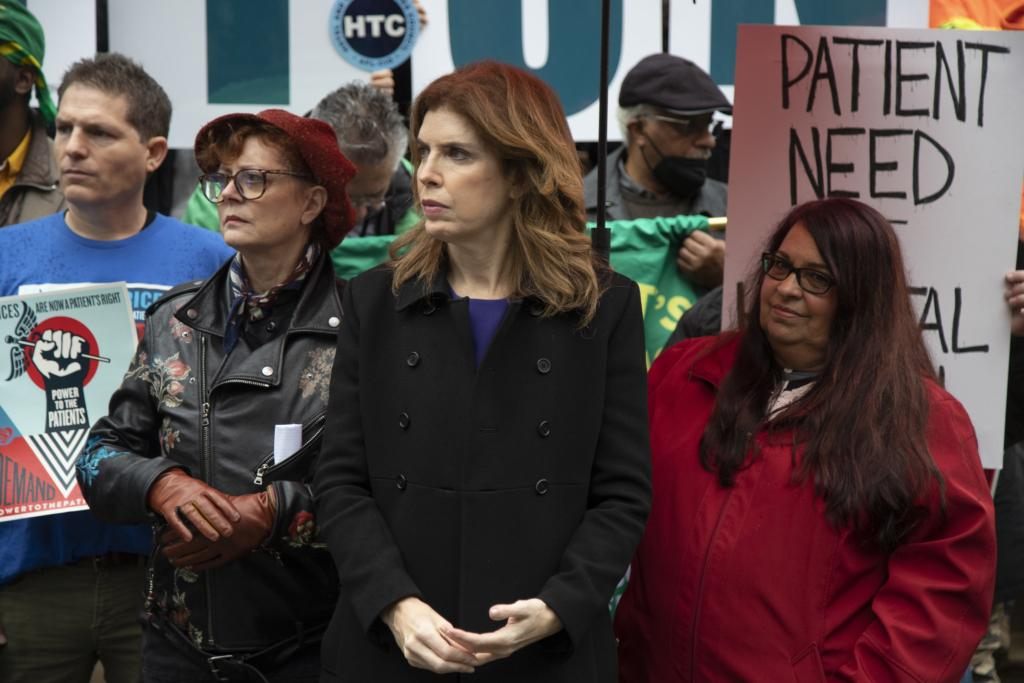
Perhaps most controversially, an internal union email suggested that Menin may have been involved in encouraging a demonstration outside the mayor’s 100-day speech. The message indicated a request for participants to rally with signs supporting paraprofessionals’ pay increases.
Both Menin’s office and the union denied any coordination, calling the situation a misunderstanding. Still, the incident added a layer of political tension that goes beyond routine governance.
The Role of the Council Speaker: Check or Counterweight?
To understand the situation, it is essential to consider the institutional role Menin occupies.
As Council Speaker, she is not merely a collaborator with the mayor—she is also a constitutional counterbalance. Her responsibilities include:
- Holding oversight hearings
- Influencing or delaying land-use decisions
- Negotiating and shaping the city budget
- Approving or blocking key appointments
Historically, speakers have exercised these powers more aggressively later in mayoral terms. What makes this situation notable is the early assertion of authority, suggesting that Menin intends to define the Council’s independence from the outset.
Political observers note that such assertiveness could complicate the mayor’s ability to implement his agenda over the next four years.
Ideological Differences Beneath the Surface
While both leaders are Democrats, their political orientations diverge in meaningful ways.
Mamdani’s leadership reflects a democratic socialist framework, emphasizing progressive reforms, public ownership initiatives, and redistributive policies.
Menin, by contrast, represents a more moderate, liberal Manhattan perspective, often focused on pragmatic governance, business considerations, and incremental reform.
These differences have surfaced in several areas:
- Taxation strategy: Menin has supported progressive taxation but proposed alternative mechanisms, such as adjusting tax credits to generate revenue.
- Public policy framing: She has taken positions that distinguish her from the mayor on issues like Israel-related rhetoric and public demonstrations.
- Legislative priorities: Her early initiatives, including proposals around antisemitism and religious protections, highlighted a distinct policy focus.
These contrasts are not merely stylistic—they shape how each leader approaches the city’s most pressing challenges.
Public Support and Political Risk
Despite the growing tension, Mamdani enters this conflict with notable advantages.
Polling data indicates that:
- He has maintained a relatively strong approval rating, with figures around 61% in some surveys.
- A majority of respondents view him as a leader who understands the city’s problems.
- His support is particularly strong among Democratic voters.
This popularity creates a political risk for Menin. Challenging a mayor with an energized base can carry consequences, especially if conflicts are perceived as obstructive rather than constructive.
At the same time, her role requires independence. Balancing these competing pressures—oversight versus cooperation—is central to her political strategy.
A Working Relationship Still Intact—For Now
Despite the escalating rhetoric, both sides have emphasized that communication remains ongoing.
Menin stated:
“We both love our city and we share a deep commitment to tackling the affordability and fiscal challenges ahead… we remain focused on working together and delivering for New Yorkers.”
Similarly, the mayor’s office expressed a willingness to collaborate in addressing the budget deficit and broader affordability concerns.
Behind the scenes, the two leaders reportedly continue to meet or speak regularly. This suggests that, while public disagreements are intensifying, the institutional relationship has not fully broken down.
What Comes Next: Governance in a High-Stakes Environment
The unfolding dynamic between Julie Menin and Zohran Mamdani is likely to shape New York City’s policy trajectory in the coming years.
Several factors will determine how this relationship evolves:
- Budget negotiations: The immediate test will be whether both sides can agree on a path to close the multibillion-dollar deficit.
- Legislative cooperation: Future policy initiatives will require alignment—or at least compromise—between City Hall and the Council.
- Political positioning: Both leaders are defining their identities early, which may influence future elections and alliances.
- Public perception: Voters’ reactions to conflict versus collaboration will affect the incentives for each side.
At its core, this is a classic governance tension: executive ambition meeting legislative scrutiny under conditions of fiscal constraint.
Conclusion
Julie Menin’s emergence as a vocal and assertive Council Speaker marks a significant development in New York City politics. Her willingness to challenge Mayor Zohran Mamdani—early and publicly—signals a shift toward a more independent and potentially adversarial City Council.
This is not simply a personal rivalry. It reflects deeper structural dynamics, ideological differences, and the pressures of governing a complex, financially constrained city.
Whether this relationship stabilizes into productive negotiation or hardens into prolonged conflict will have lasting implications—not only for the city’s budget but for its broader political direction.


