
Pam Bondi: Power, Pressure, and a Sudden Exit from the Justice Department
A Rapid Political Shift at the Top
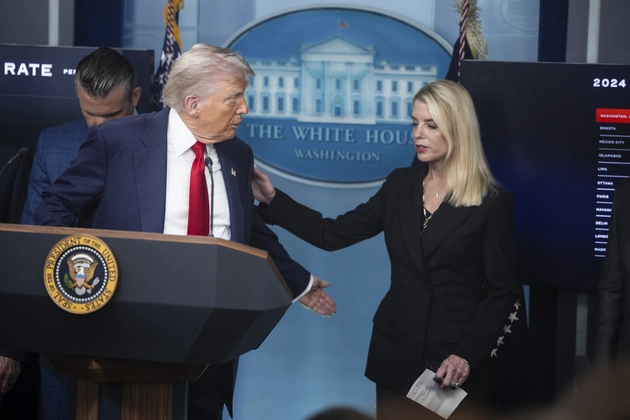
The political landscape in Washington shifted abruptly when Donald Trump removed Pam Bondi from her role as U.S. Attorney General, marking one of the most consequential personnel changes in his administration’s second term.
- A Rapid Political Shift at the Top
- From Trusted Ally to Political Liability
- The Epstein Files Controversy
- Internal Frustrations and Strategic Calculations
- The Decision to Remove Bondi
- What Comes Next for the Justice Department?
- Broader Implications for U.S. Politics
- Conclusion: A Defining Moment in Bondi’s Career
According to emerging reports, Bondi’s departure was not a spontaneous decision but the culmination of weeks—if not months—of internal tension, political pressure, and dissatisfaction within the White House. The move immediately placed Deputy Attorney General Todd Blanche in the role of acting attorney general, signaling both continuity and uncertainty at the Justice Department.
While the official statement framed Bondi’s exit as a transition—describing her as “a Great American Patriot and a loyal friend”—the underlying dynamics suggest a more complex story of political expectations, institutional challenges, and strategic recalibration.


From Trusted Ally to Political Liability
Pam Bondi entered the role of Attorney General in 2025 with strong political credentials and close ties to Trump. Her confirmation passed with a narrow 54–46 vote, largely along party lines, underscoring the polarized environment in which she began her tenure .
Initially viewed as a reliable ally, Bondi’s position began to weaken as controversies surrounding the Justice Department intensified. Central to this was the handling of the investigation into Jeffrey Epstein—a case that continued to generate political and public scrutiny.


Trump reportedly grew frustrated with how the department managed the issue, particularly as it became a liability among his supporters. Concerns extended beyond the investigation itself to broader perceptions of communication failures and a lack of aggressive legal action against political opponents .
Despite public statements praising her performance—“Attorney General Pam Bondi is a wonderful person and she is doing a good job”—private discussions within the administration painted a different picture.
The Epstein Files Controversy
The controversy surrounding the Epstein investigation became a defining issue of Bondi’s tenure. It was not merely a legal matter but a political flashpoint with implications for public trust and intra-party dynamics.
At one point, Bondi stated that an Epstein client list was “sitting on my desk right now to review,” only for the department to later clarify that no such list existed. She later explained that she had been referring broadly to investigative documents such as flight logs, not a definitive client list .


This discrepancy fueled criticism from both political opponents and allies, contributing to a perception that the Justice Department was either withholding information or mishandling communication.
The issue escalated further when the House Oversight Committee moved to subpoena Bondi, compelling her to testify about the investigation. Her deposition was scheduled for mid-April, adding another layer of pressure during an already volatile period .
Internal Frustrations and Strategic Calculations
Beyond the Epstein matter, Trump’s dissatisfaction extended to broader concerns about the Justice Department’s performance. Reports indicate that he believed the department had not been sufficiently aggressive in pursuing cases against political adversaries.
There were also internal concerns about the pace and direction of certain investigations, including inquiries into high-profile figures. Bondi reportedly intervened directly in some cases, seeking to accelerate progress and demonstrate alignment with presidential priorities .
At the same time, Bondi maintained strong support within parts of the administration, including backing from senior figures such as White House Chief of Staff Susie Wiles. This internal divide highlights the competing pressures shaping decision-making at the highest levels of government .
The Decision to Remove Bondi
The decision to remove Bondi ultimately reflects a combination of political calculus and leadership style. Trump had previously expressed reluctance to make frequent cabinet changes during his second term, seeking to avoid the instability that characterized his first administration.
However, recent developments appear to have shifted that approach. The relatively smooth removal of other officials, including Homeland Security Secretary Kristi Noem, may have reduced the perceived risk of additional changes .
In Bondi’s case, the decision followed direct conversations between the president and the attorney general. One source described the exchange as “tough,” with clear indications that her tenure was nearing its end.
The official announcement framed her departure positively, emphasizing her contributions and suggesting a transition to a new role—potentially outside government entirely.
What Comes Next for the Justice Department?
With Todd Blanche stepping in as acting attorney general, attention has shifted to the long-term leadership of the Justice Department.
Among the names floated as potential successors is Lee Zeldin, a figure closely aligned with Trump’s policy agenda. While no final decision has been made, the discussion underscores the administration’s focus on loyalty and ideological alignment.
The transition raises several key questions:
- Will the department’s investigative priorities shift?
- How will ongoing cases, including those tied to Epstein, be handled?
- What message does the change send about internal accountability and performance expectations?
Broader Implications for U.S. Politics
Bondi’s removal is more than a personnel change—it reflects deeper tensions within the administration and the evolving dynamics of U.S. governance.
At a structural level, it highlights the challenges of balancing legal independence with political expectations in a highly polarized environment. The Justice Department, traditionally viewed as an institution grounded in impartiality, remains at the center of these debates.
Politically, the move may resonate with Trump’s base, particularly those dissatisfied with the handling of high-profile investigations. At the same time, it could intensify scrutiny from opponents and lawmakers concerned about the department’s direction.
Conclusion: A Defining Moment in Bondi’s Career
Pam Bondi’s tenure as Attorney General will likely be remembered as a period marked by high expectations, significant controversy, and ultimately, a dramatic exit.
Her rise to one of the most powerful legal positions in the United States underscored her political influence and alignment with the administration. Her departure, however, reveals the limits of that influence in the face of mounting pressure and shifting priorities.
As the Justice Department enters a new phase under interim leadership, the legacy of Bondi’s tenure—and the issues that defined it—will continue to shape the political and legal landscape in Washington.