Generation Z: The Digital Natives Rewriting Work, Politics, Truth and Everyday Life
Generation Z is no longer simply the “young generation” waiting to inherit the future. It is already shaping it.
- A Generation Split Within Itself
- Work, Education and the Reality Behind the “Useless Degree” Debate
- The First Generation to Grow Up Inside the Feed
- Anxiety, Faith and the Search for Offline Belonging
- From FOMO to JOMO: Why Staying In Became a Statement
- Travel, Identity and the Advisor Gap
- What Gen Z Is Really Asking For
- Conclusion: The Generation That Will Not Be Easily Defined
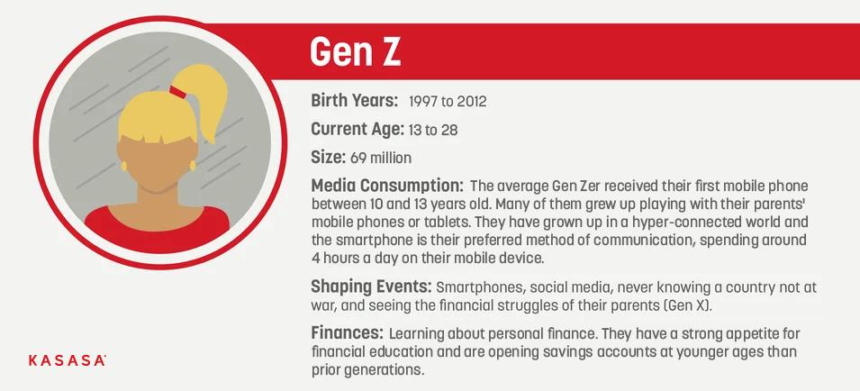
Born between 1997 and 2012, Gen Z has grown up across a uniquely disruptive period: smartphones became ordinary, social media became infrastructure, the COVID-19 pandemic interrupted adolescence and early adulthood, artificial intelligence entered classrooms and workplaces, and political identities became more fragmented than many older observers expected. The result is a generation often described through contradictions: hyperconnected yet lonely, pragmatic yet idealistic, anxious yet self-aware, politically divided yet deeply skeptical of old institutions.
But the most important thing about Gen Z may be that it resists easy labeling. The generation is not one bloc. It is not only “online,” not only “anxious,” not only “progressive,” not only “anti-establishment,” and not only “lost.” It is a cohort learning to live with instability as a normal condition—and finding new ways to define success, truth, community, travel, faith, work and rest.


A Generation Split Within Itself
One of the clearest emerging themes is that Gen Z may be divided internally more than outsiders realize. Researchers and commentators have increasingly described a split between older and younger Gen Zs: sometimes called “Gen Z 1.0 and 2.0,” or “Big Zs” and “Little Zs.” The distinction matters because the older group entered adolescence and young adulthood before COVID-19 reshaped social life, while the younger group experienced lockdowns, remote schooling and social disruption during some of their most formative years.
That difference appears to be shaping politics. The spring 2026 Yale Youth Poll found that a majority of respondents—and roughly 70 percent of young adults—disapproved of Donald Trump. Yet the same data suggested a sharp difference among young men: support for Democrats increased by 14 percentage points among men aged 23 to 29, while among men aged 18 to 22 it fell by one percentage point, even as Trump’s approval declined somewhat.


This divide complicates the familiar story of Gen Z as a uniformly progressive generation. Younger Gen Z men appear more receptive to anti-establishment politics, masculinity-driven messaging and promises of economic restoration. Younger Gen Z women, by contrast, have moved sharply left in ways tied to autonomy, reproductive rights and distrust of political forces they see as limiting their freedom.
The political future of Gen Z, then, is not simply about party loyalty. It is about which leaders can speak credibly to insecurity, distrust and the feeling that traditional paths no longer guarantee stability.
Work, Education and the Reality Behind the “Useless Degree” Debate
Few Gen Z debates are as emotionally charged as the value of higher education. Many young people feel they followed the script—study hard, go to college, earn credentials—only to face underpaid jobs, rising rent, student debt and fewer entry-level opportunities.
That frustration is real. Yet the labor-market data in the provided information tells a more complicated story. Fresh U.S. Bureau of Labor Statistics data shows that among workers aged 25 and over, people with a bachelor’s degree have the lowest unemployment rate of any education group. The pattern is not new: in 2006, unemployment was 6.9 percent for people without a high school diploma compared with 2.2 percent for college graduates; in early 2026, the comparison was still 6.4 percent versus roughly 2.8 percent.


That does not mean degrees feel like a golden ticket. The promise has changed. A degree may still reduce the risk of unemployment, but it no longer guarantees the lifestyle many young people were taught to expect. The article’s sharpest expression of that frustration comes from Robbie Scott, who criticized older generations for failing to understand what it means to work “40-plus hours a week with a master’s degree” and still be unable to afford “a 400-square-foot studio apartment in bumf-ck Iowa.”
The numbers still favor graduates in important ways. Bachelor’s degree holders earn about 66 percent more per week than high school graduates, and top-paying jobs of $200,000 or more overwhelmingly require advanced degrees. But Gen Z’s skepticism comes from lived pressure: the gap between statistical advantage and emotional payoff.
The First Generation to Grow Up Inside the Feed
Gen Z’s defining environment is not just the internet. It is the algorithmic feed.
This generation came of age as smartphones, front-facing cameras and social platforms became central to adolescent life. Researchers began documenting sharp rises in adolescent anxiety, depression, loneliness, self-harm and social withdrawal beginning around 2010, with similar trends appearing across the United States, the United Kingdom, Canada, Australia and Europe between 2012 and 2014.
But the deeper transformation is not only mental health. It is epistemological: how Gen Z understands what is real.
Social media collapses journalism, entertainment, activism, advertising, personal confession and propaganda into the same stream. For Gen Z, truth often arrives emotionally framed, socially discussed and algorithmically amplified. Emma Lembke, director of Gen Z Advocacy at the Sustainable Media Center, described the problem clearly: “Our realities,” she says, “are being shaped by a profit-driven attention economy that prioritizes engagement over well-being.”
Artificial intelligence adds another layer. Deepfakes, cloned voices, AI-generated personas and synthetic news can now manufacture false realities at scale. Gen Z did not create this environment; it inherited it. And it is navigating the consequences in real time.
A 2023 Google study cited in the material found that Gen Z often encounters information passively through social feeds rather than actively seeking it out. Participants reacted emotionally first, discussed stories with peers second and verified details later, if at all. The study described this as “information sensibility”—a socially informed way of judging credibility online.
To older generations, that may look careless. But it may also be a survival mechanism for a chaotic information system. Gen Z is not necessarily abandoning truth; it is asking who deserves to be trusted in a media environment where institutional authority no longer feels sufficient.
Anxiety, Faith and the Search for Offline Belonging
The phrase “the anxious generation” has become a shorthand for Gen Z, but the provided material warns against reducing millions of young people to a diagnosis. The mental-health crisis is serious, yet the label can become dismissive when it treats young adults as merely fragile, disconnected or screen-addicted.
The same material argues that older generations helped build the world Gen Z inherited: a culture designed to capture attention, monetize screen use and keep people engaged. That context matters. Gen Z’s anxiety is not simply a character flaw; it is a response to an environment engineered for overstimulation.
One proposed answer is deeper offline community. The argument is that anxiety thrives in isolation, while real, embodied communities offer something algorithms cannot: being fully known and fully loved.
Whether through religious communities, friendships, family networks, clubs, creative groups or local causes, the broader lesson is clear. Gen Z’s future well-being may depend less on perfect digital discipline and more on whether young people can build durable offline roots.
From FOMO to JOMO: Why Staying In Became a Statement
One of the most revealing lifestyle shifts among Gen Z is the rise of JOMO—the Joy of Missing Out—as a response to the older culture of FOMO, or Fear of Missing Out.
The supplied opinion piece describes JOMO as “a deliberate, considered choice” to opt out of the performance of always being visible and socially available. It is not laziness or antisocial behavior. It is a move toward quiet, genuine friendships, rest and the confidence of being unreachable when necessary.
The numbers are notable. People who embrace JOMO report 32 percent lower stress levels on average and sleep 45 minutes longer each night than those caught in FOMO loops. Expedia’s 2025 Travel Trends research found that 62 percent of travelers say slow, JOMO-style holidays reduce stress and anxiety, while nearly half say such travel deepens relationships with loved ones.
This shift also has an economic dimension. Going out has become expensive: meals, drinks, transport, clothes and grooming can turn a casual night out into a major financial event. For many, staying in is no longer a consolation prize. It is a choice to invest in peace, home and self-preservation.
For a generation raised inside constant notification and comparison, JOMO may be more than a wellness trend. It may be a form of resistance.
Travel, Identity and the Advisor Gap
Gen Z’s relationship with travel reveals another contradiction. This is a digital-first generation that often plans trips through TikTok, Instagram, group chats, Google Docs and AI-generated lists—but that does not mean it rejects expertise.
Only 38 percent of Gen Z use a travel agent by default, according to the provided information. Yet 59 percent of Gen Z Australians plan to travel in the coming year, compared with 43 percent of Gen X and 41 percent of Baby Boomers. International research from Berkshire Hathaway Travel Protection found that in 2024 Gen Z travelers took more trips and spent more on travel than any other generation, averaging around USD $11,000 per year on travel.
That makes Gen Z commercially important for the travel industry. But the issue is positioning. Travel advisors traditionally sold access—booking flights, arranging hotels, navigating visas. Gen Z already has access. What it lacks is clarity: help cutting through choice paralysis, influencer hype, overtourism, poor timing and generic recommendations.
The opportunity is not to lecture Gen Z for using TikTok. It is to meet the generation where it already plans, then show expertise in visible, specific and useful ways.
What Gen Z Is Really Asking For
Across politics, education, mental health, technology, lifestyle and travel, the same pattern appears: Gen Z is not rejecting institutions simply for the sake of rebellion. It is testing whether institutions still work.
Does college still pay off? Does politics still represent ordinary people? Does social media connect or distort? Does constant availability improve life or exhaust it? Does expertise matter in a world of infinite content? Can truth survive when emotion, virality and AI compete with evidence?
These are not shallow questions. They are the questions of a generation that has inherited unstable systems and is being asked to build adulthood inside them.
The mistake older observers often make is treating Gen Z as a problem to be fixed. A more accurate reading is that Gen Z is an early warning system. Its anxieties reveal the costs of hyperconnection. Its skepticism exposes the weakening of trust. Its politics show how quickly identity, gender and economics can reshape public life. Its embrace of JOMO shows that rest can become countercultural. Its travel habits show how digital inspiration and human expertise must coexist.
Conclusion: The Generation That Will Not Be Easily Defined
Generation Z is not one story. It is a generation split by age, gender, politics, class, technology and experience. It contains young people who are moving right and young people moving left; graduates who are statistically advantaged but emotionally frustrated; digital natives who rely on the feed but increasingly want to escape it; travelers who use AI and TikTok but still need human judgment; and young adults labeled anxious who may yet become more intentional about community, rest and meaning than the generations before them.
The future of Gen Z will not be determined by stereotypes. It will be determined by how this generation responds to the systems it inherited—and how society responds to what Gen Z is already making visible.
In that sense, Generation Z is not just coming of age. It is forcing a larger reckoning with the modern world itself.