Ghana Evacuates Citizens After South Africa Protests

8 Min Read

Ghana Moves to Evacuate Citizens Amid Rising Anti-Migrant Tensions in South Africa

Ghana has announced plans to evacuate approximately 300 of its citizens from South Africa following a fresh wave of anti-migrant protests and xenophobic tensions that have unsettled communities across several South African cities.

The move reflects growing concern among African governments over the safety of their nationals living in South Africa, where demonstrations against illegal immigration have intensified in recent weeks. Ghana’s response also highlights broader regional anxieties about migration, economic hardship, and social tensions across the continent.

Ghana plans to evacuate 300 citizens from South Africa after rising anti-migrant protests and xenophobic tensions.

Ghana Launches Emergency Evacuation Plan

Ghanaian Foreign Minister Samuel Okudzeto Ablakwa confirmed that the government had approved the “immediate evacuation” of citizens who had sought help through the Ghana High Commission in Pretoria. According to official statements, around 300 Ghanaians registered for assistance after reports of threats and attacks targeting foreign nationals began circulating widely.

The evacuation decision came after what Ghana described as a “latest wave of xenophobic attacks” directed at migrants from other African countries. Authorities said many of those requesting evacuation were distressed and feared for their safety.

The development marks one of the most serious diplomatic reactions so far to the unrest.

Reuters reported that Ghana had also protested over videos of violent incidents shared on social media and pledged to protect its citizens both at home and abroad.

Growing Anti-Immigration Protests in South Africa

The tensions stem from a surge in demonstrations against illegal immigration in South Africa. Protesters in multiple cities have demanded stronger government action, mass deportations of undocumented migrants, and stricter border enforcement.

Many South Africans involved in the protests argue that undocumented migration has placed pressure on jobs, housing, healthcare systems, and municipal services. Demonstrators have also linked immigration to rising crime and economic frustrations in poorer communities.

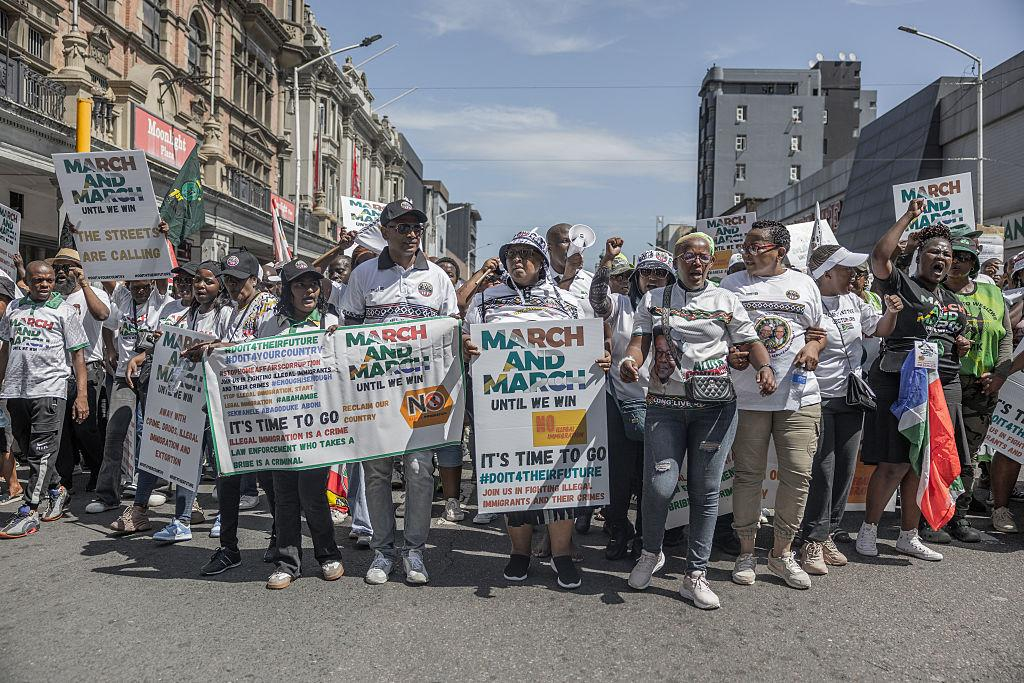
Images from Pretoria showed civil society groups and activists carrying placards demanding action against illegal immigration as protests gained momentum.

South African President Cyril Ramaphosa publicly condemned violence directed at foreign nationals, describing such incidents as “opportunistic” and “criminal.”

“These are the acts of opportunists who are exploiting the legitimate grievances, particularly those of the poor, under the false guise of ‘community activism’,” Ramaphosa said in a national statement.

He added that some groups had unlawfully taken policing matters into their own hands by stopping people to inspect identification documents and conducting searches of private property.

“Such lawlessness will not be tolerated, regardless of who the perpetrators or victims are,” the president stated.

At the same time, Ramaphosa acknowledged that undocumented migration remained a serious issue for South Africa. He said the government would continue efforts to “regulate migration, secure our borders and enforce our laws.”

Conflicting Narratives Over Violence

One of the most contentious aspects of the crisis has been disagreement over the scale and authenticity of alleged attacks.

South African authorities recently denied reports that widespread attacks had occurred, claiming some of the videos shared online were fake or misleading. Officials condemned the circulation of what they described as “fake videos and images” falsely portraying xenophobic violence.

However, concerns among foreign communities have continued to grow despite those denials.

The Ghanaian embassy in South Africa issued safety advisories urging nationals to avoid public gatherings, remain cautious, and temporarily close businesses in certain high-risk areas, including Durban ahead of planned demonstrations.

The situation has created uncertainty and fear among many migrants who rely on South Africa for employment and business opportunities.

Regional Alarm Across Africa

Ghana is not the only country responding to the tensions.

Nigeria said at least 130 of its citizens had requested assistance to return home. Other African countries including Kenya, Malawi, Lesotho, and Zimbabwe have also warned their nationals living in South Africa to exercise caution and stay indoors during periods of unrest.

Diplomatic tensions have also emerged. Ghana and Nigeria reportedly summoned South African envoys to explain the treatment of their citizens. Ghana further escalated the matter by writing to the African Union, urging the continental body to address what it described as a “serious risk to the safety and wellbeing” of Africans living in South Africa.

South Africa responded by insisting it had “nothing to hide” and reiterated that government policy does not support violence against foreigners.

A Long History of Xenophobic Violence

Xenophobia has periodically erupted in South Africa for years, often during periods of economic hardship and political tension.

The country hosts more than three million documented foreign nationals, representing roughly 5% of the population, according to official figures. However, many analysts believe the true number of migrants is significantly higher due to undocumented immigration.

Past outbreaks of violence against migrants have resulted in deaths, looting, business destruction, and diplomatic disputes with neighboring African states. Foreign-owned shops and informal businesses have frequently been targeted during unrest.

The issue remains politically sensitive because South Africa continues to struggle with high unemployment, inequality, and pressure on public infrastructure decades after the end of apartheid.

For many migrants, however, South Africa remains one of the continent’s largest economic hubs and an important destination for work and trade opportunities.

Human Impact Behind the Headlines

Beyond politics and diplomacy, the crisis has deeply affected ordinary families.

Many Ghanaian migrants living in South Africa have built businesses, raised children, and established long-term lives there. The sudden need to evacuate reflects not only security concerns but also the emotional toll of feeling unwelcome in another African nation.

Community leaders fear the tensions could damage pan-African solidarity and worsen mistrust between citizens of different African countries.

The evacuation operation is expected to focus first on those considered most vulnerable, including women, children, and individuals who reported direct threats or harassment.

What Happens Next?

The coming weeks may prove critical for both Ghana and South Africa.

South African authorities face pressure to restore confidence among migrant communities while also addressing domestic frustrations over illegal immigration. Ghana, meanwhile, must manage the logistics of repatriation and support returning citizens.

Regional organizations such as the African Union could also become more involved if tensions continue to escalate.

The crisis underscores the complex balance African governments must navigate between migration management, economic pressures, public security, and continental unity.

For now, Ghana’s evacuation plan signals how seriously governments across Africa are treating the latest unrest — and how quickly anti-migrant tensions in South Africa have become a continental concern.

Sources referenced in this article include Reuters coverage and BBC reporting on the evacuation plans and regional response.

Share This Article