


Inside the New “Mafia”: How Criminal Syndicates Are Exploiting Informal Trade Networks in Southern Africa
Across Southern Africa, the word “mafia” is increasingly being used not to describe fictional crime families, but to explain the rise of sophisticated criminal syndicates operating through everyday businesses and informal retail networks.
From counterfeit household goods sold through township spaza shops in South Africa to massive supply-chain inefficiencies crippling Tanzania’s fishing economy on Mafia Island, authorities and researchers are warning of expanding underground systems that are quietly draining billions from regional economies.
The latest reports from South Africa and Tanzania reveal how criminal activity, weak enforcement, infrastructure failures, and illicit trade are converging into a growing economic and social crisis.
Criminal Syndicates Move Into Township Economies
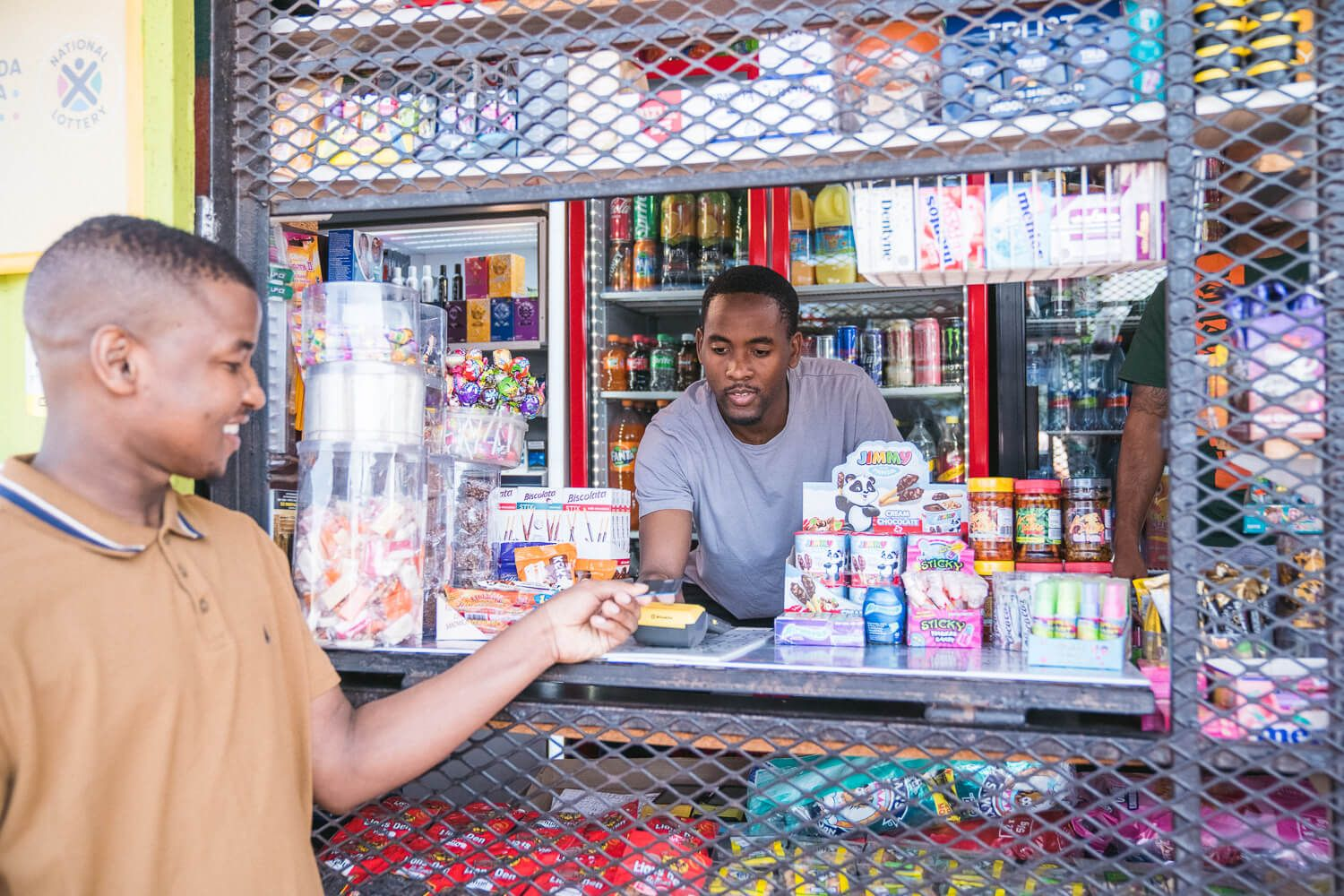
In South Africa, law enforcement officials say organized criminal groups are increasingly using spaza shops as fronts for illicit operations. According to KwaZulu-Natal police commissioner Lt-Gen Nhlanhla Mkhwanazi, gangs are exploiting the township retail sector to disguise broader criminal activities.
“We have seen a lot of these gangs operating within spaza shops. The reality is it’s not because they are making money out of the spaza shops; it’s another method of justifying the means to get away with other illicit activities,” he said.
The warning came during a briefing to Parliament’s portfolio committee on police in May 2026, where officials outlined growing concerns about the infiltration of informal businesses by criminal syndicates.
Spaza shops play a critical role in South Africa’s township economy, providing affordable food, household items, and daily essentials to millions of residents. However, authorities say the sector’s fragmented and largely informal structure has made it vulnerable to exploitation.
Michael Ramothopo, Deputy President of the South African Spaza and Tuck Shop Association (SASTA), said communities have reported a surge in counterfeit products entering local markets.
“A lot of calls came in flooding, talking about all these complaints of duplicate products, looking the same as FMC products that we know and love,” he said.
The association established a national hotline after the deaths of children in Soweto last year, seeking to understand the scale of public complaints related to potentially dangerous counterfeit goods.
Hidden Manufacturing Networks Raise Alarm
One of the most concerning revelations is the emergence of suspected hidden manufacturing facilities producing counterfeit goods at scale.
According to Ramothopo, investigators suspect that illicit products are being manufactured in abandoned or closed buildings before being distributed through township retail channels.
“It seems as if there’s some manufacturing hub that is happening in these buildings that are closed down,” he said.
The products allegedly mimic trusted fast-moving consumer goods (FMCG) brands, making it difficult for ordinary consumers to distinguish between legitimate and counterfeit items.
Authorities warn that the consequences extend far beyond consumer deception. Counterfeit operations are believed to be damaging legitimate businesses, reducing tax revenues, and contributing to broader economic instability.
“We can be able to understand this illicit problem that we have in the country that is actually destroying jobs, loss of taxes, and so much more,” Ramothopo added.
The Boksburg Raid Exposes the Scale of the Problem
Recent enforcement operations suggest the illicit trade network may already be deeply entrenched.
South Africa’s Directorate for Priority Crime Investigation, known as the Hawks, recently raided an illegal detergent manufacturing site in Windmill Park informal settlement in Boksburg.
Investigators discovered a makeshift factory producing and repackaging counterfeit household cleaning products into recycled containers labeled as major international brands.
Hawks spokesperson Colonel Katlego Mogale said authorities found large volumes of chemicals and finished products on site, including:
- Thick bleach
- Fabric softener
- Dishwashing liquid
- Foam bath
- Ammonia-based cream cleaner
“It is alleged that the chemicals are mixed in 200-litre barrels and subsequently repackaged into recycled containers bearing labels of well-known brands manufactured by Unilever and Colgate-Palmolive,” Mogale said.
Authorities also seized chemicals commonly used in detergent manufacturing, including caustic soda, sodium hypochlorite, soda ash light, sodium chloride, and kulubrite.
Forensic investigations are now underway to determine whether the products violate consumer safety laws and confirm whether they are counterfeit.
Why Enforcement Is Becoming More Difficult
The rise of mafia-style syndicates highlights a major challenge facing governments across Africa: policing increasingly decentralized criminal economies.
Unlike traditional organized crime structures, modern illicit trade networks can operate through:
- Small informal retail stores
- Hidden production facilities
- Cross-border transport routes
- Weakly monitored supply chains
- Recycled packaging systems
Ramothopo warned that weak inspection systems are allowing criminal networks to thrive.
“Consumers have to always be protected by regular inspections. Regular inspections are very critical to people not losing their lives,” he said.
He also called on municipalities and the National Consumer Commission to increase enforcement efforts and close regulatory gaps that enable illegal operators to continue functioning.
Mafia Island’s Economic Crisis Reveals Another Side of the Problem
While South Africa battles counterfeit syndicates, Tanzania’s Mafia Island is facing a different kind of economic challenge—one centered on infrastructure collapse and supply-chain inefficiencies.
A recent study revealed that Tanzania’s sardine value chain loses approximately $15 million, or about Sh40.5 billion, every year because of post-harvest inefficiencies affecting fish transported from Mafia Island to markets in the Democratic Republic of Congo (DRC).
The research warned that these losses are severely undermining the incomes of small-scale fishers while threatening food security across East and Central Africa.
Although the island’s name coincidentally matches the term “mafia,” the crisis itself reflects how vulnerable coastal economies become when transport systems and logistics networks fail.
Transport Breakdown Deepens Isolation on Mafia Island
The situation worsened further after the breakdown of the MV Kilindoni ferry, a key transport link connecting Mafia Island with Nyamisati and Dar es Salaam.
Residents say the ferry failure has intensified long-standing transport difficulties and exposed the island’s dependence on unreliable maritime infrastructure.
“The people of Mafia have no alternative transport; we must travel by sea,” said resident Mr Faki Sosi. “But the frequent breakdowns of the MV Kilindoni show the need for the government to open up the sector to investors to support service delivery.”
With the ferry out of service since May 12, 2026, residents have been forced to rely on small dhows and boats that are unable to meet growing passenger demand.
Another resident, Mr Dadi Mohammed, urged authorities to accelerate repairs.
“We are asking the government to make urgent efforts to repair this ferry so that residents can continue accessing safe transport services,” he said.
Residents also argue that faster vessels and private-sector investment could dramatically improve connectivity and reduce economic losses.
“The ferry takes almost five hours for a journey that could take about one and a half hours with faster vessels,” Mr Sosi said.
The Broader Economic Stakes
Both South Africa’s illicit trade crisis and Tanzania’s Mafia Island transport failures point to a larger regional issue: fragile supply chains are creating opportunities for criminal exploitation while also undermining economic growth.
Experts say the consequences include:
- Rising counterfeit trade
- Public health risks
- Job losses
- Reduced government tax revenues
- Lower investor confidence
- Food security concerns
- Supply-chain inefficiencies
- Higher transport costs
In South Africa, criminal syndicates appear to be exploiting regulatory weaknesses within informal markets. In Tanzania, inadequate infrastructure is contributing to massive waste in the fisheries sector.
Despite the differences, both crises highlight how weak systems can destabilize local economies and expose ordinary citizens to significant hardship.
What Happens Next?
Authorities in both countries are now under pressure to respond decisively.
In South Africa, enforcement agencies are expected to intensify inspections, crack down on counterfeit manufacturing hubs, and strengthen monitoring within township economies.
In Tanzania, residents and industry stakeholders are calling for major investment in maritime transport infrastructure, including faster vessels and expanded ferry services.
There is also growing recognition that regional cooperation will be essential, especially as supply chains increasingly cross national borders.
For governments, the challenge will be balancing economic inclusion with stronger oversight. Informal economies remain essential for millions of Africans, but without effective regulation and infrastructure investment, they may also become vulnerable gateways for criminal syndicates and economic losses.
Conclusion
The evolving “mafia” phenomenon in Southern Africa is no longer limited to traditional organized crime narratives. Today, it represents a complex web of counterfeit manufacturing, illicit trade, infrastructure breakdowns, and supply-chain vulnerabilities affecting ordinary citizens and entire industries.
From spaza shops in South African townships to sardine transport routes linked to Mafia Island, the warning signs are becoming increasingly difficult to ignore.
The question now is whether governments can move quickly enough to strengthen enforcement, modernize infrastructure, and protect consumers and businesses before these underground systems become even more deeply embedded in regional economies.


