Tom Cruise and the Flight That Defined a Hollywood Daredevil
Few modern movie stars have built a screen identity as instantly recognizable as Tom Cruise. For decades, he has represented a particular kind of Hollywood spectacle: the actor who does not merely appear in action scenes, but appears to test himself inside them. That reputation is now inseparable from the image of Cruise in a cockpit, strapped into a jet, chasing velocity, danger and cinematic realism with unusual intensity.
- The Blue Angels Ride That Changed Everything
- From Rising Star to Maverick
- Why the Casting Still Matters 40 Years Later
- The Birth of Cruise’s Stunt Persona
- Maverick Returns, and the Myth Expands
- Beyond Aviation: Cruise as a Pop-Culture Reference Point
- Why Tom Cruise Still Commands Attention
- Conclusion: The Man Who Said “I’m In”
The story of how Cruise joined Top Gun captures that persona almost perfectly. Before he became Pete “Maverick” Mitchell, before the aviator sunglasses, the roaring jets and the film’s long afterlife in popular culture, Cruise was still a rising actor being courted for a role he had not yet accepted. The way producers got him to say yes has become part of Hollywood folklore: they put him in the air.
The Blue Angels Ride That Changed Everything
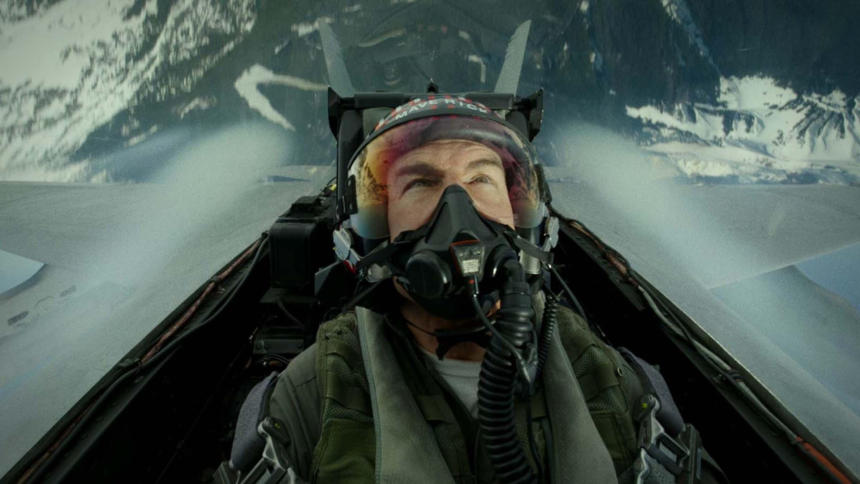
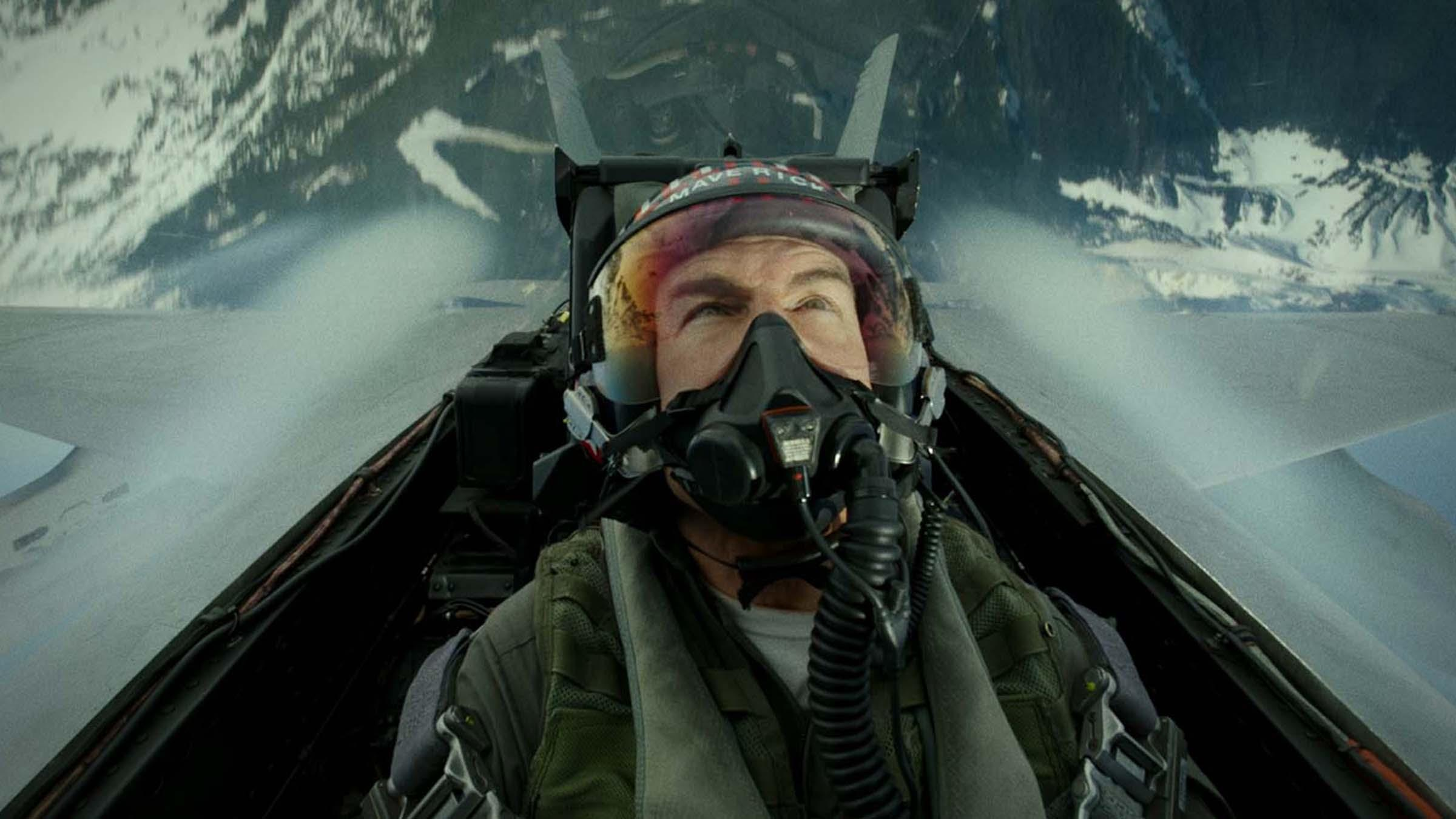
Producer Jerry Bruckheimer wanted Cruise for Top Gun, but Cruise had not fully committed. So Bruckheimer arranged for him to fly with the Blue Angels in El Centro, California. At the time, Cruise had long hair and a ponytail, a look he was wearing while filming Ridley Scott’s Legend. The pilots, according to Bruckheimer, saw him and decided to give him a serious ride.


Bruckheimer recalled: “We couldn’t quite get him to commit [to the movie], so I arranged for him to fly with the Blue Angels in El Centro, California.” He added: “He had long hair and a ponytail, and they saw this guy walk up and they said, ‘We’ll get this hippy a real ride.’”
Screenwriter Jack Epps Jr. remembered the result even more vividly: “They look at him, and they don’t know who Tom Cruise is,” he said. “They do what they like to do: They took him up, they shook him around, he barfed on himself, and he came out and said, ‘I love this.’ From that moment, he was on.”


That reaction explains much of Cruise’s career. Many actors might have stepped out of the aircraft shaken, embarrassed or eager to avoid more punishment. Cruise saw possibility. The physical intensity that made him vomit did not repel him; it sold him on the movie.
Bruckheimer said Cruise then “got out of the plane, walked to a phone booth, because there were no cell phones then, called me up, said, ‘I’m in.’”
From Rising Star to Maverick
When Top Gun was being assembled, Cruise had already attracted attention through Risky Business, Taps and The Outsiders, but he had not yet become the global box-office figure he would later be. Casting director Margery Simkin viewed him as the right fit for Maverick because he combined toughness with charm.
Cruise’s agent, Paula Wagner, reportedly wanted $1 million for him. Producer Don Simpson asked who else might be available. Simkin searched for alternatives, then reached a clear conclusion. “There were great actors out there. But when you thought of this part, Tom seemed the best of any of those guys of that time,” she said. “So, I called Don back and I said, ‘Pay him.’”


It was a decisive judgment. Top Gun became one of the defining films of 1986, and Cruise’s Maverick became one of the decade’s most enduring screen characters. The film’s success did not simply elevate Cruise; it established a template for the kind of movie star he would become.
Why the Casting Still Matters 40 Years Later
The 40th anniversary of Top Gun has revived interest not only in Cruise’s role, but in the ensemble built around him. The film’s power came from more than one charismatic lead. Its cast included Anthony Edwards as Goose, Val Kilmer as Iceman, Kelly McGillis as Charlie, Meg Ryan as Carole Bradshaw, Tom Skerritt as Viper and Tim Robbins as Merlin.
Simkin described the emotional importance of Goose with precision: “Every role has a purpose in a screenplay and the role of that character was that you cared about him enough that when he died, you were heartbroken.” She fought for Anthony Edwards because, in her words, “He’s so sympathetic. There’s a kindness to his face. I just thought people will love him and be upset when he dies.”
She also pushed for Val Kilmer as Iceman, despite resistance from executives who knew him mainly from comedy. Simkin remembered him differently: “I knew him as this serious, intense theater actor.” Her insistence helped create one of the great screen rivalries of 1980s cinema: Maverick and Iceman, arrogance and discipline, instinct and control.
That balance gave Top Gun its durability. Cruise brought the heat, but the ensemble gave the story emotional range.
The Birth of Cruise’s Stunt Persona
The Blue Angels story now feels like the opening chapter of a much larger career narrative. Cruise’s willingness to endure physical risk became central to his screen appeal, especially through the Mission: Impossible series. Over time, audiences began to expect that a Tom Cruise action film would include something real, dangerous or unusually demanding.
The provided account notes that the Mission: Impossible series cemented Cruise’s legacy for daring stunt work, but that the foundation began with Top Gun. The actor’s willingness to chase the adrenaline rush of flying in Navy jets helped shape the public image that would follow him for decades.
That is why the vomiting anecdote matters. It is not just a funny behind-the-scenes detail. It is a character-revealing moment. Cruise’s response — “I love this” — reads like a mission statement.
Maverick Returns, and the Myth Expands
The connection between Cruise and aviation did not end with the 1986 film. In 2022, Top Gun: Maverick returned him to the cockpit and introduced a new generation of viewers to the idea that spectacle could still be built around practical intensity. The source information notes that the cast of Top Gun: Maverick went through an experience similar to Cruise’s first flight, but even more intense.
That continuity is part of the franchise’s appeal. The original Top Gun captured youthful arrogance and the seduction of speed. Top Gun: Maverick reframed that same energy through age, mentorship, memory and loss. Cruise’s Maverick was no longer just the hotshot pilot trying to prove himself; he became the veteran responsible for preparing others.
The possibility of Top Gun 3 adds another layer. The information provided notes that Cruise wants to do it all again, which suggests that the character — and the performance model behind him — still has cultural momentum.
Beyond Aviation: Cruise as a Pop-Culture Reference Point
Cruise’s influence also extends beyond action cinema. One of the supplied reports connects him to War of the Worlds, the 2005 alien-invasion film, in a wider discussion about Hollywood and public imagination. Neil deGrasse Tyson argued that movies have prepared audiences for ideas about extraterrestrial life.
“Of course, we’re ready, because movies have been prepping us ever since War of the Worlds,” Tyson said. He added, jokingly, “We’ve already been told the government has them in the back shed; they just haven’t brought them out yet.”
The reference shows how Cruise films often become larger than individual performances. Whether in fighter jets, impossible missions or alien-invasion narratives, Cruise has frequently occupied stories built around fear, speed, scale and survival. His work has helped shape the visual language through which mainstream audiences process danger and spectacle.
Why Tom Cruise Still Commands Attention
Cruise remains compelling because his career combines old-fashioned movie-star charisma with a modern obsession for authenticity. In an era when digital effects can create nearly anything, Cruise has made physical commitment part of his brand. The audience is not only watching a character survive an extreme situation; it is also watching an actor insist on getting unusually close to the real thing.
That approach carries commercial and cultural value. It gives studios an easy marketing hook, gives audiences a reason to see action on the biggest screen possible and gives Cruise a distinct position in a crowded entertainment market. He is not simply selling a role. He is selling effort, risk and endurance.
The original Top Gun helped launch that promise. The Blue Angels flight revealed that Cruise was not just willing to act like Maverick. He was willing to feel the force, the nausea and the thrill behind the fantasy.
Conclusion: The Man Who Said “I’m In”
The story of Tom Cruise and Top Gun endures because it feels almost too perfectly symbolic. A young actor is flown by elite pilots, pushed hard enough to vomit, and emerges not discouraged but convinced. From that moment, the path to Maverick becomes clear.
Forty years later, that moment still explains why Cruise remains one of Hollywood’s most durable stars. His career has been built on intensity, control, risk and the pursuit of cinematic immersion. The phone call after the Blue Angels ride — “I’m in” — was more than an acceptance of a role. It was the beginning of a screen identity that continues to define action cinema.