Inter Milan Complete Domestic Double With Commanding Italian Cup Triumph
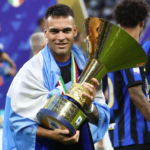
Inter Milan’s season of authority reached its defining image in Rome: the Nerazzurri lifting the Italian Cup after a composed 2-0 victory over Lazio, sealing a domestic double alongside their 21st Serie A title.
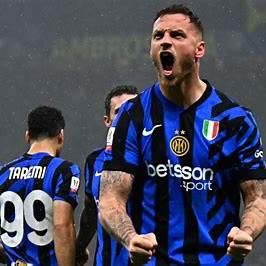
At the Stadio Olimpico on May 13, 2026, Inter did not need drama, late heroics, or a frantic finish. They needed control — and they had it from the opening stages. An Adam Marusic own goal and a Lautaro Martinez tap-in, both in the first half, gave Inter a victory that felt as decisive as the scoreline suggested. By full-time, the result had confirmed the club’s 10th Cup triumph and reinforced the scale of a campaign in which Inter were not merely successful, but dominant.

A Final That Quickly Bent Inter’s Way
Finals often begin cautiously, shaped by nerves and the weight of what is at stake. This one tilted early.


Inter took the lead in the 14th minute when Marcus Thuram’s poorly timed header from Federico Dimarco’s corner flicked home off Adam Marusic. It was officially an own goal, but it reflected the kind of pressure Inter had already begun to impose. Lazio were not cut open by a sweeping move; they were squeezed into error by a side that looked sharper, stronger, and more comfortable on the occasion.
The second goal came 20 minutes later and effectively ended the contest. Nuno Tavares hesitated near the edge of his own area, allowing Denzel Dumfries to steal possession and roll the ball across to Lautaro Martinez. The Argentine striker, who had missed large parts of the season through injury, finished from close range for his 22nd goal in all competitions.


For Martinez, it was not just another goal. It was the captain’s stamp on a night that confirmed Inter’s superiority. His tap-in gave Inter a two-goal cushion, quieted Lazio’s surge of support, and allowed the Serie A champions to manage the rest of the final on their own terms.
Lautaro Martinez Delivers on the Big Stage
Martinez’s season had not been straightforward. Injuries had interrupted his rhythm, yet the final offered a reminder of why he remains central to Inter’s identity. He did not need many touches to influence the match. He needed one lapse from Lazio, one unselfish pass from Dumfries, and one striker’s instinct.
His 22nd goal in all competitions carried symbolic weight. Inter’s domestic double was built on collective strength, but Martinez gave the final its decisive attacking moment. In a match where Lazio rarely threatened, his finish turned Inter’s advantage into inevitability.
After the Coppa Italia victory, the wider reaction around Inter also reflected the importance of Cristian Chivu’s leadership, with Martinez quoted in related coverage giving Chivu a “10 out of 10” assessment following the triumph.


Chivu’s Inter Turn Dominance Into Silverware
Cristian Chivu’s Inter arrived in Rome with the Serie A title already secured earlier in the month. The team were sitting comfortably at the top of the league with 85 points, underlining the depth of their domestic superiority. The Italian Cup final was therefore not a rescue mission or consolation prize. It was a chance to crown a championship season properly.
They did exactly that.
The 2-0 win over Lazio made this Inter side the club’s first team since the historic 2009/10 season to win both the league and the cup in the same year. That comparison matters because it places the 2025/26 campaign in a broader club context. Inter’s modern identity has long been measured against the standards of trophy-winning sides from the past; this season now belongs in that conversation.
Chivu had faced scrutiny when he took the managerial role at the start of the season, with criticism intensifying after an unsuccessful Club World Cup campaign. But the domestic outcome has changed the tone entirely. A 21st Scudetto, two games to spare, followed by the Italian Cup, gives his first season the kind of substance that arguments cannot easily diminish.
Lazio Had No Answer After Another Difficult Night
For Lazio, the final became another painful chapter in a demanding season. They arrived with hope, and their supporters made themselves heard early, but the match slipped away once Martinez doubled Inter’s lead.
The second half was marked by Inter’s control and Lazio’s lack of attacking conviction. Luis Henrique missed a strong opportunity to make it 3-0 with around 20 minutes remaining, flashing wide from close range after Dimarco’s volleyed low cross. Shortly afterward, Boulaye Dia tripped over his feet and bundled a shot against Inter goalkeeper Josep Martinez’s head — a moment that seemed to capture Lazio’s night: effort without clarity, motion without execution.
The broader mood around Lazio has been tense. Their hardcore supporters had boycotted home matches in protest at long-time owner Claudio Lotito’s stewardship of the club. They returned for the final and produced noise until Inter’s second goal drained the occasion. Near the final whistle, chants of “Lotito piece of shit” underlined how the defeat fit into a wider sense of frustration around the club.
The pain may deepen quickly. Lazio were set to be without those supporters again at the weekend for the Rome derby, a match in which rivals Roma could take a major step toward Champions League qualification.
Why This Double Matters for Inter Milan
Inter’s achievement is not only about two trophies. It is about the manner of the season.
They beat Lazio 3-0 at the same stadium just days before the final, then returned to the Stadio Olimpico and controlled them again. In both matches, Inter looked like a side operating at a higher competitive level. Their Cup final performance was not frantic; it was mature, professional, and economical.
That is often the mark of a champion. Inter did not need to chase the match. They did not need to survive long spells of Lazio pressure. They imposed the rhythm early, punished mistakes, and made the second half feel like a countdown to the trophy ceremony.
The domestic double also strengthens Inter’s standing in Italian football at a time when consistency remains difficult for many major clubs. Winning Serie A confirms excellence over a long campaign. Winning the Italian Cup adds the pressure-test of knockout football. Doing both in the same season signals a squad capable of managing different competitions, different emotional demands, and different tactical problems.
The Road Ahead
Inter’s next match is against Verona on May 17, but the larger question is already forming: what comes after domestic supremacy?
A double raises expectations. It also changes how opponents view a team. Inter will begin the next phase not as contenders trying to prove a point, but as the benchmark. For Chivu, that means the conversation will shift from whether he can lead this team to how long he can keep it at this level.
For Martinez, Dumfries, Dimarco, Thuram and the rest of the squad, the Coppa Italia final was another confirmation of a team that knows how to win without losing its structure. That quality is what separates strong teams from title-winning ones.
Conclusion: Inter’s Season Gets the Ending It Deserved
Inter Milan’s 2-0 win over Lazio was not the most dramatic final, but it was a fitting one. It reflected the season Inter have produced: controlled, efficient, and ruthless when opportunity appeared.
The own goal gave them the opening. Lautaro Martinez gave them command. The defense and midfield gave Lazio almost nothing. By the time the final whistle arrived in Rome, Inter were not just Italian Cup winners. They were domestic double winners — league champions, cup champions, and the defining force of Italian football’s 2025/26 season.