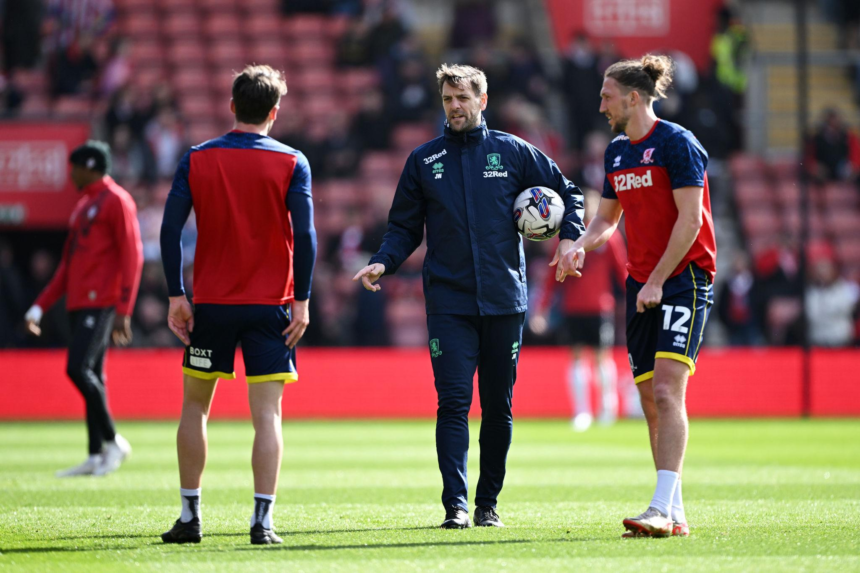
Southampton Middlesbrough Spygate: A Play-Off Triumph Now Caught in Football’s Integrity Storm
Southampton reached Wembley the hard way: a tense, emotional, extra-time victory over Middlesbrough at St Mary’s. Yet the scoreline has become only part of the story. The 2-1 win, sealed by Shea Charles after 116 minutes, has been overtaken by a controversy that threatens to reshape not only the Championship play-off final but also the wider debate around sporting fairness in English football.
- A Night of Drama at St Mary’s
- What Southampton Are Accused Of
- Why Middlesbrough Feel Wronged
- Southampton’s Position
- Could Southampton Be Removed From the Play-Off Final?
- The Political and Public Pressure Builds
- The “New Evidence” Twist
- Why This Case Matters for English Football
- What Happens Next?
- Conclusion: A Wembley Dream Under a Cloud
At the centre of the storm is the so-called “Southampton Middlesbrough Spygate” case: an allegation that someone connected to Southampton watched and filmed Middlesbrough’s training before the play-off semi-final. Southampton have been charged by the EFL over alleged breaches of regulations, including rules around acting in good faith and observing another club’s training session shortly before a fixture.
The result on the pitch sends Southampton toward a Championship play-off final against Hull City at Wembley on May 23, 2026. The unresolved disciplinary case, however, has left a more uncomfortable question hanging over the celebration: could Southampton’s place in the final be at risk if the club is found guilty?
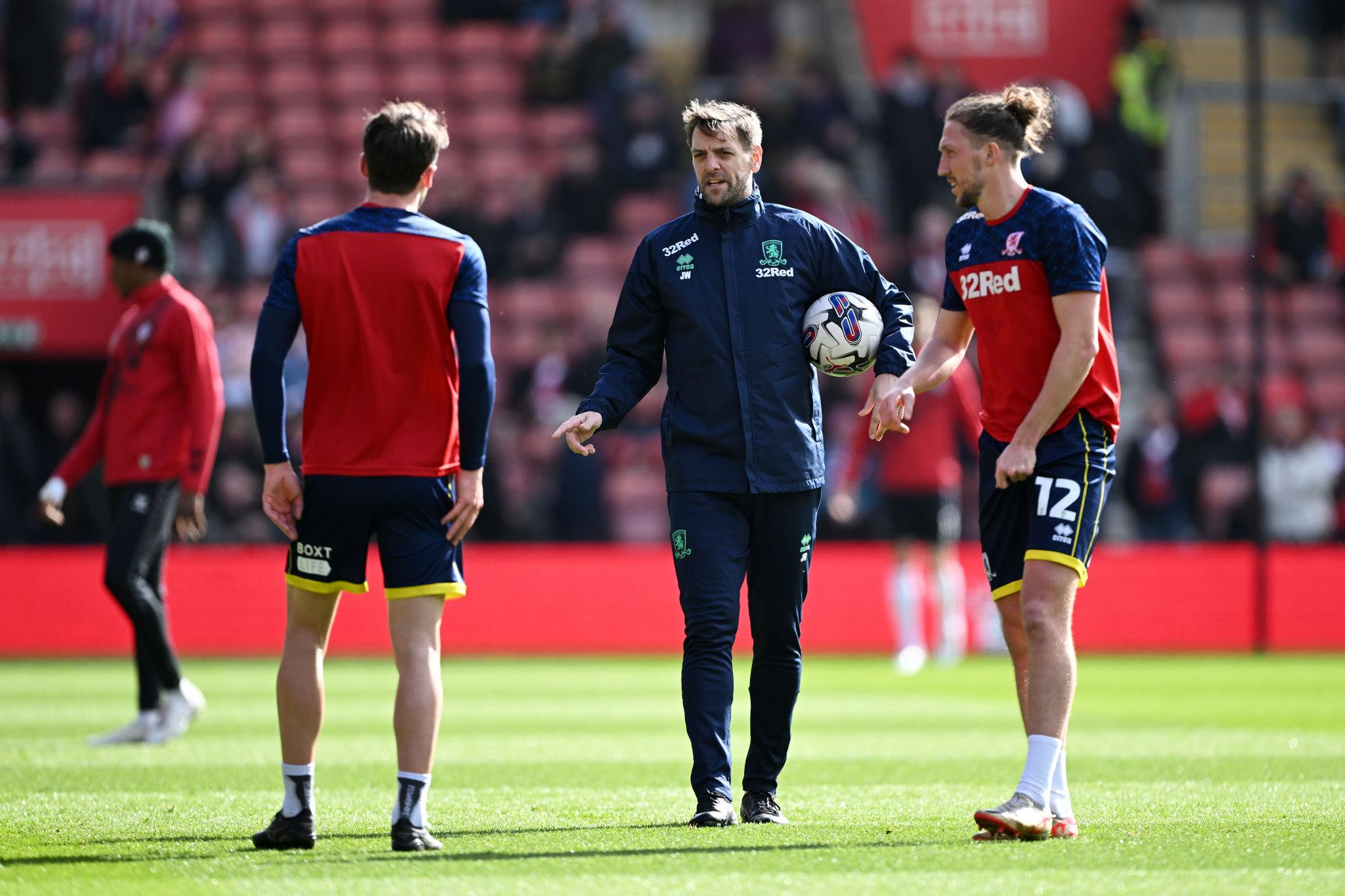


A Night of Drama at St Mary’s
The second leg had everything expected from a high-stakes Championship play-off tie: urgency, nerves, confrontation and late heartbreak. Middlesbrough struck first when Riley McGree scored after five minutes, giving Boro a platform and bringing renewed belief to the travelling support. Southampton responded in first-half stoppage time through Ross Stewart, whose header brought the tie level again.
The match then stretched into extra time, where fatigue and tension began to shape the rhythm. Middlesbrough appeared to be tiring, struggling to escape pressure as the game moved toward penalties. Then Charles produced the decisive moment, curling home from outside the box with four minutes of extra time remaining.


Southampton’s players and fans celebrated a Wembley place. But the atmosphere was anything but cleanly triumphant. The match was played under the cloud of the spying allegation, and that tension spilled into chants, touchline arguments and post-match interviews.
Southampton fans reportedly goaded Middlesbrough with “We spy when we want,” while the away end responded with “You cheating b***ards.” Managers Tonda Eckert and Kim Hellberg had to be separated on the touchline as emotions boiled over.
What Southampton Are Accused Of
The allegation is serious because it goes beyond ordinary scouting. Clubs routinely analyse opponents through match footage, public data, tactical trends and legal observation. The disputed issue here is whether a Southampton-linked individual observed or filmed Middlesbrough training in a way prohibited by EFL rules.
Reports in the provided material say an alleged spy was seen watching Middlesbrough players train before the second leg. The person was described as hiding behind a tree and allegedly using professional surveillance equipment, including a microphone to record voices and technology capable of livestreaming footage remotely.


Mail Sport, as cited in the supplied material, reported that the alleged spy was Southampton intern William Salt.
The EFL rule at the heart of the matter stems from concerns sharpened by the earlier Leeds-Derby spying controversy. The rule prohibits any opposition representative from attending or attempting to observe a rival team’s training session within 72 hours of a scheduled match.
That 72-hour window is crucial. Training immediately before a play-off tie can reveal formations, set-piece routines, injury adjustments, penalty preparation and tactical surprises. For a coach, that private work is often where the final advantage is built.
Why Middlesbrough Feel Wronged
Middlesbrough’s frustration is not only about procedure. It is about the belief that the club’s tactical preparation — the one area where a team with fewer resources can still gain an edge — may have been compromised.
Kim Hellberg’s reaction after the defeat captured that sense of emotional and professional violation. The Middlesbrough head coach said:
“I worked 15 years as a coach in terms of trying to get to the Premier League,” said Hellberg. “That’s my dream, for 15 years.”
He continued:
“I know there are clubs with bigger resources, there are teams that have more money, there are teams with bigger squads than us.
“What you have as a coach and as a group is the tactical element of the game, where we can beat opponents.”
Hellberg’s strongest remarks came when he described what the alleged incident meant to him personally:
“If we wouldn’t have caught that man that they sent up on a five-hour drive, you would sit there and say, ‘well done (to Southampton) in the tactical aspect of the game’ and I would go home and feel like I had failed.
“When someone decides, ‘nah, we’re not going to watch every game, we send someone instead and film the session’, see everything and hope they don’t get caught – I guess that’s why he was switching clothes and everything that I have seen on the television – it breaks my heart in terms of all those things I believe in.
“I think that it’s disgraceful. It makes me very sad.
“If we hadn’t caught that person, I would be sitting here thinking I should have done better things.”
Those comments explain why the controversy has resonated so strongly. Hellberg framed the issue not as gamesmanship, but as an attack on the basic fairness of preparation.
Southampton’s Position
Southampton have not publicly accepted wrongdoing in the material provided. The club has said it is cooperating with the EFL and conducting its own review.
Southampton chief executive Phil Parsons stated:
“The club is fully cooperating with the EFL and the Disciplinary Commission, while also undertaking an internal review to ensure that all facts and context are properly understood.
“Given the intensity of the fixture schedule and the short turnaround between matches, we have requested time to complete that process thoroughly and responsibly. We understand the discussion and speculation that has followed over recent days, but we also believe it is important that the full context is established before conclusions are drawn.”
Southampton manager Tonda Eckert has also avoided detailed comment because of the ongoing process. Asked whether he feared Southampton might not get to play in the final, he replied:
“We’ve had this topic in the last game as well and you can believe me, it’s not easy to speak about that.
“But it’s an ongoing investigation at this very moment and the club has made a statement, and I just can’t comment on that any further right now.
“Believe me when the time comes, I will say something, just not now.”
When it was put to him that Hellberg had accused his club of cheating, Eckert added:
“I think everyone has the right to express his opinion. He has done that in his way, but it’s not for me to comment.”
That restraint may be legally sensible, but it has done little to calm the public debate.
Could Southampton Be Removed From the Play-Off Final?
This is the question driving the controversy. Southampton are scheduled to face Hull City at Wembley on May 23, 2026. But the supplied information says Middlesbrough players have been told to continue training in case Southampton receive a ban from the final.
The potential sanctions discussed include exclusion from the play-off final or a points deduction next season if Southampton are found guilty. Reports also indicate the EFL wants the disciplinary hearing, and any appeal, concluded before the final.
That timeline matters. If the case is resolved before Wembley and Southampton are punished with a sporting sanction, Middlesbrough could argue that the integrity of the semi-final was compromised. If the case is unresolved until after the final, any punishment becomes more complicated, especially if promotion has already been won.
The stakes are enormous. Promotion to the Premier League is one of the most financially valuable prizes in football. The supplied material cites James Corden suggesting that if Southampton go up and make “£150m” from TV revenue, then “50% of next year’s revenue” should go to Middlesbrough if the club is found guilty.
Corden said:
“If Southampton go up they would make from the TV revenue, let’s say it’s £150m, then you’ve got to give 50% of next year’s revenue to Middlesbrough. Because you’re cheating [if found guilty].
“Next year, regardless of the league you’re in, 50% of your revenue or projected revenue will be paid as compensation. So if they go up they need to pay £75m.
“I think we should also stop calling it spygate and call it cheating. It’s just cheating, you’re cheating the system, that’s all you’re doing. You’re cheating those fans, you’re cheating those players so therefore you should have to pay a severe and heavy price.”
His comments reflect the public mood among many Middlesbrough sympathisers: a fine may not feel sufficient if the alleged conduct is judged to have affected a promotion race.
The Political and Public Pressure Builds
The controversy has already moved beyond football media and fan debate. Middlesbrough & Thornaby East MP Andy McDonald questioned Southampton’s conduct and urged swift action from the EFL.
Posting on X, McDonald wrote:
“Kim Helberg’s post-match interview showed his decency, commitment and total integrity. By contrast, the Southampton manager walks out again when asked if he is a cheat.
“Remarkable lack of awareness for the club spokesman to respond with ‘Have some respect’. What respect did they show to Kim Helberg, his players, to MFC and our fans?
“Southampton cannot be allowed to profit from their dishonesty. The EFL have to come down firmly and decisively on Southampton and they need to do it quickly.”
The intensity of those comments shows how quickly this case has become a question of institutional credibility. The EFL is not only deciding whether rules were broken; it is being asked to show whether its rules carry meaningful consequences when the reward at stake is Premier League promotion.
The “New Evidence” Twist
The situation became even more complex with reports that Middlesbrough hold fresh evidence suggesting Southampton may have spied on two further clubs during the campaign. The supplied material says Middlesbrough reportedly possess CCTV footage from the alleged incident and evidence from two other Championship clubs who believe they were also subjected to spying during the regular season.
That remains an allegation, but it could significantly affect the seriousness of the disciplinary process. A one-off incident would still be grave. A broader pattern, if proven, would raise deeper questions about club practices, internal oversight and competitive advantage over a longer period.
This is why the EFL’s investigation matters beyond the Southampton-Middlesbrough tie. The league must determine not only whether an individual acted improperly, but whether the club bears responsibility and whether any alleged conduct was isolated or systemic.
Why This Case Matters for English Football
Football has always tolerated a degree of tactical secrecy and competitive edge. Clubs study throw-ins, pressing triggers, goalkeeper distribution, defensive set-ups and set-piece routines in exhaustive detail. But there is a line between analysis and intrusion.
The Southampton Middlesbrough Spygate case sits directly on that line. If the allegations are proven, the issue is not that Southampton wanted information. Every club does. The issue is how that information was allegedly obtained.
In the modern game, marginal gains are valuable. A single set-piece routine can decide a play-off tie. A team shape revealed in private training can change an opponent’s preparation. A player’s fitness status can influence pressing strategy, substitutions and defensive matchups.
That is why training-ground privacy exists. It protects the competitive contest. It also protects the credibility of the result.
What Happens Next?
The immediate next step is the EFL disciplinary process. Southampton have been charged, the matter has been referred to an Independent Disciplinary Commission, and the league is seeking a resolution before the May 23 final.
Several outcomes remain possible. Southampton could be cleared. They could receive a fine. They could face a sporting sanction, such as exclusion from the play-off final or a points deduction next season. The more severe the finding, the more likely the debate will turn to whether Middlesbrough should be reinstated to face Hull City at Wembley.
For now, Southampton are play-off finalists on the pitch. Middlesbrough are eliminated by the scoreline but still training because the disciplinary process may not be finished with the tie.
Conclusion: A Wembley Dream Under a Cloud
Southampton’s victory over Middlesbrough should have been remembered for Shea Charles’ late winner, Ross Stewart’s equaliser and the raw theatre of Championship play-off football. Instead, it has become one of the most controversial promotion stories in recent EFL history.
The central question is no longer only who won at St Mary’s. It is whether the contest was conducted within the rules that make competition meaningful.
Until the EFL reaches a decision, Southampton’s path to Wembley remains shadowed by uncertainty, Middlesbrough’s sense of injustice remains unresolved, and English football faces a test of how seriously it protects the integrity of its biggest matches.