The End of the Daryl Morey Era: Why Bob Myers and Josh Harris Now Face the Biggest Test in Philadelphia
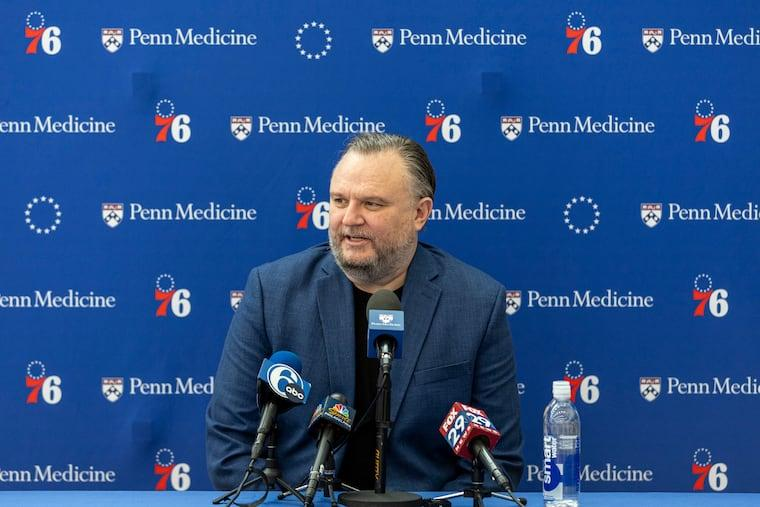
The Philadelphia 76ers have entered one of the most consequential transitions in franchise history. After six seasons leading basketball operations, Daryl Morey is out. In his place, at least temporarily, stands former Golden State Warriors architect Bob Myers — brought in by team governors Josh Harris and David Blitzer to stabilize a franchise once again facing uncertainty after another disappointing playoff exit.
The move signals far more than a front-office reshuffle. It represents a philosophical crossroads for the Sixers: whether the organization continues chasing star power and analytics-driven roster building, or pivots toward a more balanced, culture-oriented approach after years of postseason frustration.
A Sudden but Unsurprising Split
The Sixers officially parted ways with Morey after six seasons as President of Basketball Operations. During his tenure, Philadelphia posted a 270-212 regular-season record and reached the playoffs five times, but never advanced beyond the second round.

For a franchise built around MVP center Joel Embiid and championship expectations, that simply was not enough.
Josh Harris acknowledged the frustration directly in the team’s statement:


“After speaking with Daryl, we determined that it was time for a fresh start.”
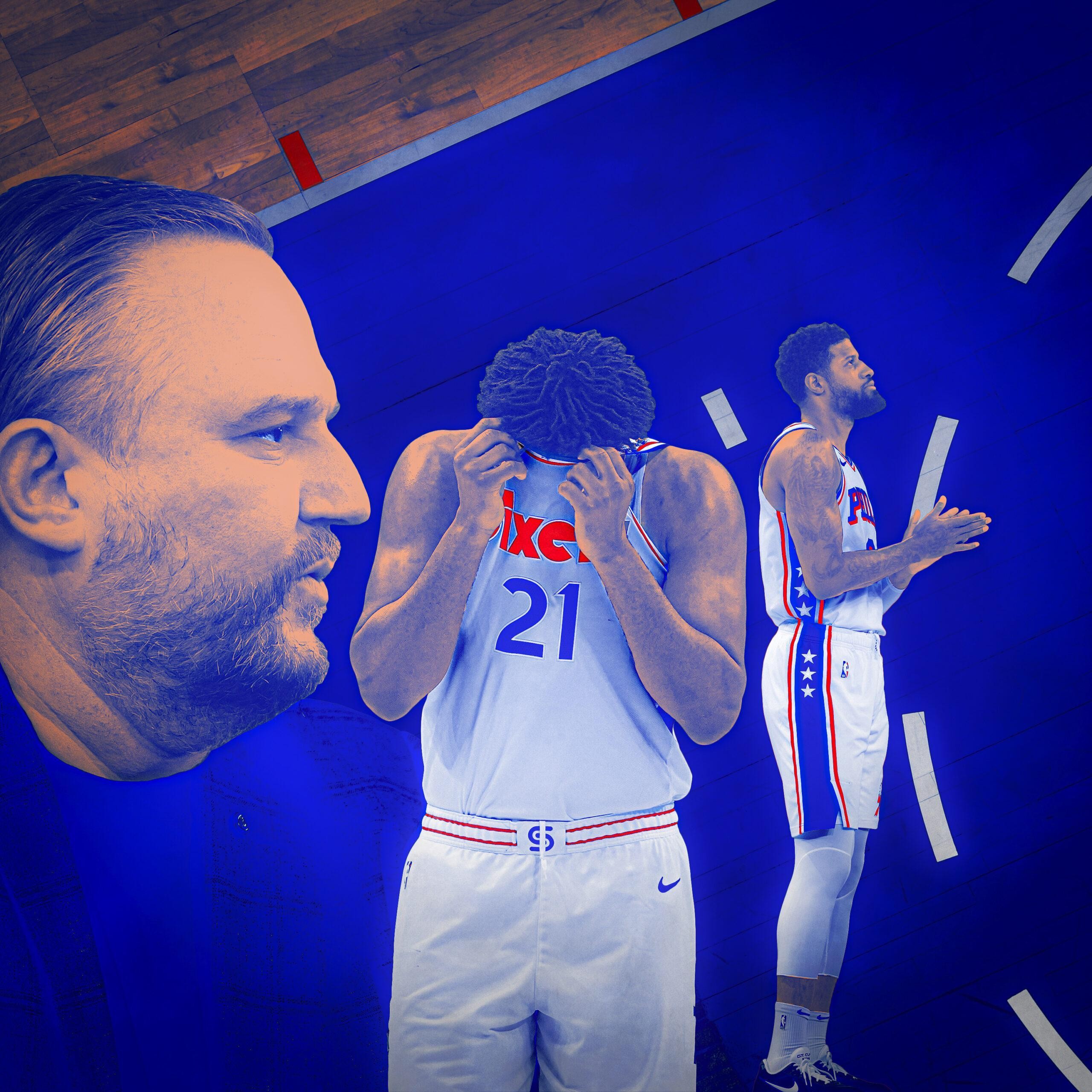
The decision came after the Sixers were swept by the New York Knicks in the Eastern Conference semifinals, exposing major flaws in roster construction and long-term planning. The Embiid-Tyrese Maxey-Paul George core never fully clicked, and injuries continued to derail the team’s championship ambitions.
Even more concerning for Philadelphia was the growing perception that the organization had become emotionally disconnected — analytically sharp, but culturally unstable.
The Reputation That Followed Morey
Daryl Morey has long been regarded as one of basketball’s smartest executives. His influence on modern NBA analytics reshaped how franchises evaluate efficiency, three-point shooting, and roster value.
But as criticism mounted after his departure, another reputation resurfaced.


On ESPN’s The Hoop Collective, Brian Windhorst revealed a striking assessment from a longtime NBA agent:
“Daryl maybe has the highest IQ of any of the NBA executives and one of the lowest EQs.”
The criticism centered on emotional intelligence — or the perceived lack of it.
Tim MacMahon added that Morey “has never been a guy who valued, or even frankly considered, the human element,” and that he “does not believe in basketball chemistry.”
That perception increasingly became attached to the Sixers themselves.
James Harden publicly called Morey “a liar” after their relationship collapsed during contract negotiations. Patrick Beverley reportedly felt misled before being traded. Young players like Isaiah Joe and Paul Reed developed elsewhere after being discarded by Philadelphia.
Even successful moves often seemed to unravel later.
Morey’s front office drafted Tyrese Maxey, a move widely considered a home run, and navigated the chaotic Ben Simmons situation by acquiring Harden. He also landed Paul George in free agency and selected VJ Edgecombe with the third pick in the 2025 NBA Draft.
But critics argue the Sixers consistently lacked cohesion, depth, and long-term roster balance.
By the end of the 2025-26 season, Philadelphia ranked 23rd in both three-point frequency and three-point accuracy, while defensive rebounding became a glaring weakness.
Why Bob Myers Matters
Into that chaos steps Bob Myers.
The former Golden State Warriors executive is not just another NBA executive. He is one of the most respected relationship-builders in modern basketball and the architect behind four Warriors championship teams.
According to reports, Myers will oversee basketball operations temporarily while conducting a broad search for Morey’s permanent successor.
Jake Fischer reported that Myers is expected to return to an advisory role once the Sixers hire a new president of basketball operations, though the situation could evolve quickly.
That caveat matters.
Because if Myers stabilizes the organization, ownership could ultimately decide he is the best option long-term.
The Warriors Blueprint
Myers’ résumé contrasts sharply with Morey’s.
In Golden State, Myers became known for nurturing relationships throughout the roster, not just with stars. He helped draft Harrison Barnes and Draymond Green, signed Andre Iguodala, and strongly supported keeping Klay Thompson during periods when trade pressure mounted.
His style emphasized continuity, trust, and chemistry alongside elite talent evaluation.
That approach produced one of the greatest dynasties in NBA history.
Still, Myers is not without flaws. Critics point to failed lottery picks late in his Warriors tenure and the Jordan Poole contract as major missteps.
But in Philadelphia, perception matters almost as much as strategy right now.
And Myers instantly changes the tone.
Josh Harris Under Pressure
While Morey’s departure dominates headlines, many observers believe the spotlight ultimately belongs on owner Josh Harris and Harris Blitzer Sports & Entertainment.
Several analysts and reporters have argued that the Sixers’ deeper issues extend beyond one executive.
The organization has repeatedly been accused of prioritizing star names and financial flexibility over sustainable team building. Joel Embiid himself publicly referenced the franchise “ducking the luxury tax the past couple of years.”
Critics also note that Philadelphia repeatedly pursued recognizable basketball figures:
- Bryan Colangelo
- Doc Rivers
- James Harden
- Daryl Morey
- Paul George
- Bob Myers
That strategy brought attention and expectations — but not a conference finals appearance.
The Sixers have not reached the Eastern Conference Finals since 2001.
For Harris, this next hire may define the next decade of the franchise.
The Joel Embiid Timeline Is Shrinking
The urgency surrounding the Sixers is driven largely by Joel Embiid’s reality.
The former MVP remains one of the league’s most dominant players when healthy, but health continues to define every discussion around Philadelphia’s future. Embiid is now in his 30s, dealing with persistent knee concerns, while Paul George is already 36 years old.
The franchise still has valuable pieces:
- Tyrese Maxey
- VJ Edgecombe
- Joel Embiid
- Paul George
But the timeline is narrowing rapidly.
The biggest question facing the incoming executive may be whether to continue building around this expensive core or begin reshaping the roster before the window fully closes.
George, Embiid, and Maxey are owed approximately $153 million next season alone.
That financial reality limits flexibility and raises the stakes of every decision.
A Fanbase Running Out of Patience
Perhaps the clearest message from the Morey firing is that Philadelphia’s fanbase had reached exhaustion.
Years of promise repeatedly ended with second-round disappointment, injuries, or internal dysfunction. What once felt like “The Process” evolved into frustration and skepticism.
One analysis described the emotional state of the fanbase as caught between “apathy and anger.”
That may explain why Myers’ arrival matters symbolically even before any basketball decisions are made.
He represents a reset.
Not necessarily a rebuild — but a reset in tone, trust, and organizational identity.
What Happens Next?
The Sixers now face one of the most important offseasons in franchise history.
Key dates are approaching quickly:
- NBA Draft: June 23–24
- Free agency: immediately afterward
- Front-office search: already underway
Philadelphia still has talent. The team still has championship ambitions. But the margin for error is shrinking fast.
The organization must now answer difficult questions:
- Can Embiid stay healthy enough to contend?
- Is Paul George still worth building around?
- Should Maxey become the undisputed centerpiece?
- Will ownership finally prioritize roster depth over star accumulation?
- And perhaps most importantly: what kind of basketball culture does Philadelphia actually want?
Bob Myers may not ultimately become the permanent head of basketball operations.
But his influence over the next several weeks could determine the direction of the franchise for years to come.