Feroz Khan Biography: The Suave Bollywood Maverick Who Turned Style Into Cinema
Feroz Khan remains one of Hindi cinema’s most distinctive personalities: an actor, producer, director, screenwriter, editor, showman, risk-taker, and enduring style icon whose screen image blended Indian melodrama with Western swagger. Born Zulfiqar Ali Shah Khan on 25 September 1939 in Bangalore, he built a career that stretched from supporting roles in the 1960s to self-authored blockbusters in the 1970s and 1980s, finally returning to mainstream pop-culture memory as RDX in Welcome in 2007. He died of lung cancer on 27 April 2009 in Bengaluru, leaving behind a film legacy associated with speed, horses, leather jackets, desert landscapes, glamour, music, and cinematic bravado.
- Feroz Khan Quick Facts: Age, Family, Career, Net Worth and Legacy
- Bangalore Roots, Afghan-Persian Heritage and the Making of a Rebel Star
- From Supporting Roles to Breakthrough Recognition in Hindi Cinema
- The Star-Director Era: Apradh, Dharmatma and the Birth of the Feroz Khan Signature
- Qurbani: The Film That Defined Feroz Khan’s Cinematic Legend
- Janbaaz, Dayavan, Yalgaar and the Later Creative Phase
- Welcome and the Final Screen Appearance That Reintroduced Him to a New Generation
- Feroz Khan Movies: The Essential Filmography Behind the Icon
- Feroz Khan Net Worth, Income Sources and Lifestyle
- Feroz Khan Wife, Children and Family Life
- Feroz Khan Young: The Look, Confidence and Early Charisma That Built the Myth
- Feroz Khan Died: Illness, Final Days and Funeral in Bengaluru
- Feroz Khan Pak, Feroz Khan Arjun and the Name Confusion Explained
- Current Relevance, Recent Mentions and Continuing Public Interest
- Interesting Facts and Lesser-Known Details About Feroz Khan
- Influence, Impact and Legacy in Indian Cinema
- Final Reflection on Feroz Khan’s Overall Significance
Often remembered as the “Clint Eastwood of India,” Feroz Khan became more than a star; he became a mood. His films carried a signature: high-stakes masculinity, international locations, sleek styling, powerful music, and a taste for larger-than-life drama. His best-known works include Oonche Log, Arzoo, Aadmi Aur Insaan, Safar, Mela, Apradh, Dharmatma, Qurbani, Janbaaz, Dayavan, Yalgaar, Janasheen, and Welcome. Across more than 60 films, he moved between acting, directing, producing, writing, and editing, creating one of Bollywood’s most recognizable auteur-star identities.
A note on search confusion: the keywords “Feroz Khan pak,” “Feroz Khan Arjun,” and “Feroz Khan died” often mix three different public figures. This profile focuses primarily on the late Indian actor-filmmaker Feroz Khan. “Feroz Khan Arjun” refers to Firoz Khan, the Indian actor who became famous as Arjuna in B. R. Chopra’s Mahabharat and later used the screen name Arjun. “Feroze Khan pak” usually refers to the living Pakistani television actor Feroze Khan, born in Quetta in 1990.
Feroz Khan Quick Facts: Age, Family, Career, Net Worth and Legacy
| Field | Details |
|---|---|
| Full Name | Zulfiqar Ali Shah Khan |
| Professional Name | Feroz Khan |
| Date of Birth | 25 September 1939 |
| Age at Death | 69 |
| Place of Birth | Bangalore, Kingdom of Mysore, British India; present-day Bengaluru, Karnataka, India |
| Nationality | Indian |
| Profession | Actor, film director, producer, screenwriter, editor |
| Years Active | 1957/1960–2007, depending on filmography listing |
| Current Status | Deceased |
| Date of Death | 27 April 2009 |
| Cause of Death | Lung cancer |
| Place of Death | Bengaluru, Karnataka, India |
| Spouse | Sundari Khan; married in 1965, later separated/divorced |
| Children | Laila Khan and actor Fardeen Khan |
| Notable Relatives | Brothers Sanjay Khan and Akbar Khan; niece Sussanne Khan; nephew Zayed Khan |
| Major Awards | Filmfare Best Supporting Actor for Aadmi Aur Insaan; Filmfare Lifetime Achievement Award |
| Best-Known Films | Dharmatma, Qurbani, Janbaaz, Dayavan, Yalgaar, Welcome |
| Net Worth | No audited public figure is available; public estimates vary widely, with some placing it around US$1 million–US$5 million and others much higher |
| Income Sources | Acting fees, film production, direction, writing/editing credits, F.K. Films, property, horse breeding/racing interests |
| Legacy | Bollywood style icon, pioneer of glamorous action filmmaking, one of Hindi cinema’s original star-directors |
Feroz Khan’s biography is inseparable from his image: a rebel raised in Bangalore who moved to Bombay with film dreams and eventually built his own cinematic empire. He was not just a performer hired into other people’s visions. He became a builder of worlds—worlds filled with imported cars, Afghan landscapes, nightclub energy, revenge plots, ornate villainy, romantic risk, and songs that stayed in public memory long after the films left theatres.


His career also remains valuable for SEO-driven entertainment search because it answers multiple enduring queries: Feroz Khan movies, Feroz Khan wife, Feroz Khan son, Feroz Khan young, Feroz Khan died, Feroz Khan net worth, Feroz Khan family, and Feroz Khan career. Unlike many stars who are remembered only for performances, Khan is remembered for a total cinematic personality.
Bangalore Roots, Afghan-Persian Heritage and the Making of a Rebel Star
Feroz Khan was born into a culturally layered family in Bangalore. His father, Sadiq Ali Khan, had Afghan roots from Ghazni, while his mother, Fatima, had Persian ancestry from Iran. This background gave him an identity that later seemed to echo through his cinema: cosmopolitan, proud, aristocratic, and outward-looking. His mother’s family was associated with horse breeding, a detail that became especially meaningful because horses, racing, open land, and the outdoors remained central to his lifestyle and screen image.


He studied at Bishop Cotton Boys’ School and St. Germain High School in Bangalore. His youth was marked by a restless streak. He described himself as rebellious, and his move toward cinema reflected a refusal to live within conventional expectations. He cleared his Senior Cambridge examinations but did not pursue college, choosing instead to move to Bombay, where the Hindi film industry was expanding and where a new generation of actors was beginning to reshape screen masculinity.
Feroz came from a large family that would eventually become associated with film and entertainment. His brothers included Shah Abbas Khan, better known as Sanjay Khan, and Akbar Khan, both of whom entered the industry. His family circle later expanded into another generation of public figures, including actor Fardeen Khan, Zayed Khan, and Sussanne Khan. The Khan family’s entertainment lineage gave Bollywood one of its recognizable film dynasties, though Feroz’s own identity remained unusually individualistic.
His early years in Bombay were not instantly glamorous. Like many actors of his era, he began with smaller parts, second-lead appearances, and films that tested his screen presence before giving him full star authority. What separated him was not immediate superstardom but instinct: he understood image, costume, body language, pace, and the power of presentation. Long before branding became a formal entertainment concept, Feroz Khan knew how to brand himself.
From Supporting Roles to Breakthrough Recognition in Hindi Cinema
Feroz Khan made his early screen mark with Didi in 1960, where he appeared as a second lead. In the early part of his career, he worked across thrillers, romances, and dramas, often opposite leading actresses of the time. His early filmography included Tarzan Goes to India, Arzoo, Oonche Log, Raat Aur Din, Aurat, Pyasi Sham, and Safar. These roles helped him graduate from handsome newcomer to reliable screen presence.


A major breakthrough came with Oonche Log in 1965, where he appeared alongside established screen names and drew attention for a more sensitive dramatic performance. The same year, Arzoo gave him wider recognition as part of a successful romantic musical. By the late 1960s, he had established himself strongly enough to receive substantial roles in mainstream Hindi cinema.
His performance in Aadmi Aur Insaan brought him the Filmfare Best Supporting Actor Award, a career-validating achievement that signaled industry recognition beyond style and charm. The film’s success showed that Feroz could hold his ground in a star-driven setup and deliver character work with emotional weight.
The early Feroz Khan career was shaped by persistence. He was not handed instant dominance. He built it through volume, experimentation, and a willingness to reinvent. By the early 1970s, he had understood that waiting for ideal roles was limiting. His answer was to create his own material.
The Star-Director Era: Apradh, Dharmatma and the Birth of the Feroz Khan Signature
The decisive turning point in Feroz Khan’s career came when he moved behind the camera. With Apradh in 1972, he became a producer-director-star, creating the template for the kind of cinema he wanted to make. The film became notable for its international flavor and auto-racing elements, with Germany serving as a striking backdrop. It was a bold move at a time when much of mainstream Hindi cinema was studio-bound or India-centered.
Then came Dharmatma in 1975, a landmark in his career. Inspired by the gangster-family dramatic tradition made globally famous by The Godfather, the film became one of the first major Hindi films shot in Afghanistan. Feroz Khan did not merely use foreign locations as scenery; he used them to expand the scale and texture of Hindi popular cinema. Dharmatma carried his fascination with power, family loyalty, betrayal, landscape, and visual grandeur.
The film also became important for Hema Malini’s glamorous presentation and for its combination of crime drama with emotional spectacle. It showed Khan’s talent for packaging: he knew how to combine star casting, music, visuals, costume, and attitude into a complete entertainment product. This ability later reached its peak with Qurbani.
By the mid-1970s, Feroz Khan had become one of the few Hindi film personalities who could credibly operate as actor, producer, director, and style architect at once. His films were not modest star vehicles. They were designed as events.
Qurbani: The Film That Defined Feroz Khan’s Cinematic Legend
Qurbani, released in 1980, remains the central monument in the Feroz Khan biography. Starring Feroz Khan, Vinod Khanna, and Zeenat Aman, the film became a huge commercial and cultural success. Khan produced, directed, acted in, and edited the film, making it one of the clearest expressions of his total creative control.
The film’s glamour was unmistakable: bikes, leather jackets, friendship, betrayal, nightclub energy, crime drama, romance, and a soundtrack that helped shape the disco mood of the era. Qurbani also became historically important for introducing Nazia Hassan’s “Aap Jaisa Koi” to Hindi film audiences, giving the film a pop-cultural afterlife far beyond its theatrical run.
The risk behind Qurbani became part of the family lore. Fardeen Khan later recalled that his father had said he gambled his “last shirt” making the film, and that failure would have left the family financially devastated. That anecdote captures Feroz Khan’s personality better than almost any formal description: he believed in betting big on vision, style, and instinct.
Qurbani did more than succeed at the box office. It helped define Feroz Khan as a filmmaker who could fuse Indian emotion with international cool. The film’s afterlife remains strong because it feels like a distilled version of his personality: excessive, stylish, sentimental, dangerous, musical, and unapologetically cinematic.
Janbaaz, Dayavan, Yalgaar and the Later Creative Phase
After Qurbani, Feroz Khan continued to build large-canvas films. Janbaaz in 1986 became another major title associated with his visual language. Featuring an ensemble cast and memorable music, it carried the sleek, sensual, dramatic style that viewers had come to expect from him. It remains one of the films most often mentioned when discussing his post-Qurbani peak.
In 1988, he directed and starred in Dayavan, a Hindi remake of Mani Ratnam’s Tamil film Nayakan. The film starred Vinod Khanna and Madhuri Dixit alongside Feroz, and it reflected his continuing interest in crime, morality, and larger-than-life male figures. While Dayavan was rooted in a different cinematic source, Khan’s treatment reflected his recognizable appetite for intensity and scale.
Yalgaar in 1992 marked another ambitious entry in his career. After that, he took a long break from acting. The gap itself is revealing: Feroz Khan was not an actor who remained constantly visible simply for visibility’s sake. He appeared when the project aligned with his interests or when he had something substantial to mount.
In 1998, he launched his son Fardeen Khan with Prem Aggan. The film did not achieve the success he may have hoped for, but it underlined his role as a family patriarch and industry mentor. In 2003, he returned with Janasheen, acting alongside Fardeen and directing again. By then, his screen image had evolved into that of an elder statesman of style—still flamboyant, still self-aware, still unmistakably Feroz Khan.
Welcome and the Final Screen Appearance That Reintroduced Him to a New Generation
Feroz Khan’s final film appearance came in the 2007 comedy Welcome, where he played Ranvir Dhanraj Xaka, popularly remembered as RDX. The film, starring Akshay Kumar, Katrina Kaif, Anil Kapoor, Nana Patekar, Paresh Rawal, and Mallika Sherawat, became a major commercial success and gave Feroz a late-career pop-culture revival.
His role in Welcome worked because it played with his established image. RDX was intimidating, stylish, theatrical, and slightly absurd—qualities that matched the film’s comic universe while still preserving Khan’s aura. For younger audiences who may not have seen Dharmatma or Qurbani in theatres, Welcome became their first direct association with his charisma.
The dialogue “Abhi hum zinda hai” became especially memorable because of its timing in his career. It sounded like a meta-statement from a star whose legend had outlived eras, trends, and generational changes. Even in a crowded ensemble comedy, Feroz Khan had the kind of presence that made him impossible to ignore.
His final appearance now carries additional emotional weight because he was already dealing with illness around that period. The film became a commercial farewell, though audiences did not fully understand at the time how close he was to the end of his life.
Feroz Khan Movies: The Essential Filmography Behind the Icon
A complete Feroz Khan movies list spans several decades, but the key titles reveal the phases of his career. His early rise included Didi, Tarzan Goes to India, Oonche Log, Arzoo, Aurat, Aadmi Aur Insaan, Safar, Mela, and Upaasna. These films built his base as an actor capable of romance, drama, and action-oriented roles.
His auteur period is defined by Apradh, Dharmatma, Qurbani, Janbaaz, Dayavan, and Yalgaar. These are the films that best express his directorial identity and explain why he remains one of Bollywood’s most stylish filmmakers. His later phase includes Prem Aggan, Janasheen, Ek Khiladi Ek Haseena, Om Shanti Om in a cameo, and Welcome.
Several of his films also stood out for their technical or production ambition. Apradh brought international racing visuals into Hindi cinema. Dharmatma used Afghanistan as a major setting. Qurbani integrated music, crime, fashion, and action into an influential mainstream package. Janbaaz pushed his taste for high-gloss drama. Dayavan adapted a major South Indian crime classic into a Hindi star vehicle.
For viewers exploring Feroz Khan’s career today, the strongest starting points are Qurbani, Dharmatma, Janbaaz, Dayavan, and Welcome. Together, they show the actor, the director, the risk-taker, the image-maker, and the late-career icon.
Feroz Khan Net Worth, Income Sources and Lifestyle
Feroz Khan net worth remains difficult to state with certainty because no audited estate valuation is publicly available. Public estimates vary widely, with some online profiles placing his net worth around US$1 million–US$5 million and others suggesting much higher figures. A responsible estimate must therefore be treated as approximate rather than definitive.
His income sources were broader than acting alone. He earned through film roles, production, direction, writing, editing, and ownership of film assets under F.K. Films. As a producer-director, he carried both upside and risk. A film like Qurbani could create major wealth and brand value, but producing ambitious cinema also required heavy capital exposure.
His lifestyle was famously “king size.” He was associated with horses, racing, snooker, luxury, stylish clothes, open spaces, and a farmhouse near Bangalore. Reports about his Bangalore farmhouse described a large property linked to his love of animals, particularly horses, and his desire to spend his final period away from the hospital environment.
Unlike some stars whose luxury appears disconnected from their work, Feroz Khan’s lifestyle and cinema fed each other. The horses, cars, jackets, hats, sunglasses, and swagger were not accessories; they were part of his mythology. He lived the image he sold on screen, and that is why his persona still feels unusually coherent.
Feroz Khan Wife, Children and Family Life
Feroz Khan married Sundari Khan in 1965. Sundari came from a Sindhi Hindu background, and their marriage became part of a broader family story that connected different cultural worlds. The couple had two children: daughter Laila Khan, born in 1970, and son Fardeen Khan, born in 1974.
Fardeen Khan followed his father into acting and was launched by Feroz in Prem Aggan. Their relationship also became visible in Janasheen, where father and son shared the screen. Fardeen has often been central to later public memories of Feroz, especially when discussing Qurbani, family legacy, and the pressures of inheriting a famous screen surname.
Feroz Khan’s family dynamics were often discussed because he belonged to a prominent film family. His brothers Sanjay Khan and Akbar Khan also built careers in entertainment. His extended family includes names that remained visible in Indian popular culture, including Sussanne Khan and Zayed Khan. The family’s presence across film, television, design, and celebrity culture has kept the Khan surname in public circulation long after Feroz’s death.
His personal life, like his public persona, carried complexity. The marriage to Sundari eventually ended, and his relationships and lifestyle were often written about in the entertainment press. Yet his family identity remained central to how he is remembered: as a father, brother, patriarch, and the creative force behind a film lineage.
Feroz Khan Young: The Look, Confidence and Early Charisma That Built the Myth
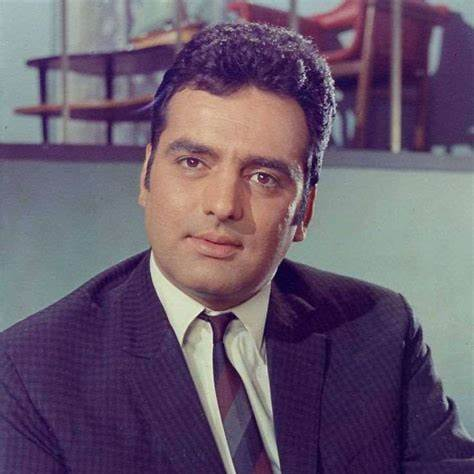
Search interest in “Feroz Khan young” remains strong because his early photographs reveal the raw ingredients of his later image. In youth, he had the classic features of a leading man—sharp eyes, strong jawline, thick hair, and a serious screen gaze—but what made him stand out was attitude. He did not look like a conventional romantic hero alone; he looked like someone who belonged in action, danger, rebellion, and glamour.
His young screen persona developed during a period when Hindi cinema was transitioning from the softer romantic masculinity of the 1950s and early 1960s into more volatile, stylish, and morally complex male characters. Feroz Khan fitted that transition well. He could play sensitivity, but he also projected danger and independence.
As his career matured, he refined his appearance into a personal uniform: leather, boots, hats, sunglasses, open collars, chains, and a Western-inflected silhouette. This was not costume gimmickry. It was image authorship. He understood that stars are remembered not only for performances but also for frames, postures, entrances, and silhouettes.
That is why his younger images remain powerful today. They show the making of a man who would later become one of Bollywood’s most quoted examples of style-driven stardom.
Feroz Khan Died: Illness, Final Days and Funeral in Bengaluru
Feroz Khan died on 27 April 2009 after battling lung cancer. He had been receiving treatment in Mumbai, including at Breach Candy Hospital, but wished to return to his Bangalore farmhouse. He passed away in Bengaluru and was buried near his mother’s grave at the Hosur Road Shia Kabristan.
His death marked the end of one of Hindi cinema’s most flamboyant lives. The tributes that followed focused not only on his films but also on his personality: stylish, fearless, extravagant, warm, stubborn, and deeply attached to the world he built around himself. For many admirers, his passing felt like the disappearance of an entire cinematic temperament.
His funeral in Bangalore drew family, friends, colleagues, and fans. Images from the prayers captured the solemn contrast between the glamour of his screen life and the simplicity of farewell. The man who had filled cinema frames with motion, music, dust, speed, and spectacle was finally remembered in stillness.
The phrase “Feroz Khan died” continues to attract searches because his final years remain emotionally tied to his last screen appearance in Welcome. The memory of his character declaring vitality on screen, followed by his death two years later, gives his final role a poignant afterlife.
Feroz Khan Pak, Feroz Khan Arjun and the Name Confusion Explained
The search term “Feroz Khan pak” usually points to Pakistani actor Feroze Khan, a different personality. Pakistani actor Feroze Khan was born on 11 July 1990 in Quetta, Pakistan, and is known for Urdu television dramas, including Khaani and Khuda Aur Mohabbat 3. His personal life, including marriage, divorce, children, and later remarriage, has kept him frequently in entertainment headlines.
“Feroz Khan Arjun” refers to another different figure: Firoz Khan, the Indian actor known for playing Arjuna in B. R. Chopra’s Mahabharat. Because of name similarity with Bollywood’s Feroz Khan, he adopted the screen name Arjun. He is married to Kashmira and has three children, including actor Jibraan Khan.
This distinction matters because online searches often merge unrelated facts. The Bollywood Feroz Khan died in 2009, was the father of Fardeen Khan, and was married to Sundari Khan. The Pakistani Feroze Khan is alive and active in television. The Mahabharat actor Firoz Khan/Arjun is a separate Indian television and film actor.
A high-authority Feroz Khan biography must therefore avoid mixing wives, sons, death details, and filmographies across these names. The late Bollywood legend is the subject of this article, while the other two names are relevant only because audiences frequently search them together.
Current Relevance, Recent Mentions and Continuing Public Interest
Feroz Khan remains relevant because his films continue to circulate through television, streaming discussions, anniversary features, social media nostalgia, and family tributes. Qurbani in particular remains a recurring reference point when discussing Bollywood style, disco-era soundtracks, and the tradition of actor-directors who took large financial risks to realize personal cinematic visions.
His memory also resurfaced in discussions around Welcome, especially because his RDX role remains widely quoted by fans of 2000s Hindi comedy. The character gave him a new-generation audience, ensuring that he is not remembered only as a vintage star but also as part of modern meme culture and ensemble comedy nostalgia.
The “Feroz Khan died” search trend also appears whenever film anniversaries, death anniversaries, or family mentions revive interest in his life. New audiences frequently discover him through Fardeen Khan, through clips from Qurbani, or through the famous styling that made him a fashion reference.
His public relevance is not driven by controversy alone. It is sustained by image. Very few Hindi film personalities created such an instantly recognizable visual language. Even decades later, a leather jacket, tinted glasses, horse-ranch attitude, and desert-crime aesthetic can evoke Feroz Khan almost immediately.
Interesting Facts and Lesser-Known Details About Feroz Khan
Feroz Khan’s birth name was Zulfiqar Ali Shah Khan, but his professional name became one of the most memorable in Hindi cinema. He was born in Bangalore and retained a deep connection to the city throughout his life. His final wish to return to his farmhouse near Bangalore shows how strongly he remained attached to his roots.
He was associated with horses not merely as a hobby but as a lifestyle. Horse breeding, racing, and animal care were part of his personal world, and that equestrian sensibility flowed naturally into his on-screen persona. He was also known to enjoy snooker and billiards, adding to his image as a man of leisure, sport, and old-world masculine polish.
His films often carried international ambition. Apradh used auto-racing in Germany; Dharmatma took Hindi cinema to Afghanistan; Qurbani carried a glossy, cosmopolitan mood that looked and sounded different from many mainstream films of its time. These choices were part of a deliberate creative strategy.
He was also one of the rare stars who made editing part of his creative identity. For an actor-producer-director to also shape the film in the edit room showed how deeply involved he was in the final cinematic product. His films were not simply “vehicles” for his performance; they were curated expressions of taste.
Influence, Impact and Legacy in Indian Cinema
Feroz Khan’s legacy rests on four pillars: style, authorship, risk, and reinvention. As an actor, he had charisma. As a director, he had a signature. As a producer, he took major risks. As a style icon, he created a screen identity that remains instantly recognizable.
He helped expand the visual imagination of mainstream Hindi cinema. His films suggested that Bollywood could be Indian in emotion while international in look and sound. He brought in Western iconography without surrendering the melodramatic intensity that Indian audiences loved. That balance is one reason Qurbani and Dharmatma still matter.
His influence can also be seen in later Bollywood’s fascination with designer masculinity: the hero as a complete visual package, not simply a narrative function. Feroz Khan understood that a star’s entrance, costume, vehicle, posture, and soundtrack could be as important as dialogue. In that sense, he anticipated much of modern celebrity image-making.
His contribution is especially important because he was not content to be styled by others. He styled himself and his cinema. That is why his legacy feels unusually personal. When viewers remember Feroz Khan, they do not remember only individual scenes. They remember an atmosphere.
Final Reflection on Feroz Khan’s Overall Significance
Feroz Khan’s life reads like the story of a man who refused to be ordinary. From Bangalore roots to Bombay ambition, from supporting roles to auteur-driven blockbusters, from the risk of Qurbani to the late-career immortality of Welcome, he built a career defined by instinct and audacity. His biography is not merely the record of an actor’s filmography; it is the portrait of a cinematic personality who believed that film should be lived with full force.
He remains one of Bollywood’s great self-made style legends: a man who turned personal taste into screen grammar. His movies were not always subtle, but they were rarely forgettable. They had scale, rhythm, glamour, and nerve. He understood entertainment as spectacle and stardom as attitude.
For anyone searching Feroz Khan biography, Feroz Khan age, Feroz Khan net worth, Feroz Khan relationships, Feroz Khan career, or Feroz Khan family, the central truth is clear: he was a performer and filmmaker whose influence outlasted his lifetime. He died in 2009, but the world he created—fast, stylish, dangerous, romantic, and defiantly larger than life—continues to glow in Indian cinema memory.