
Alan Carr’s BAFTA Moment Captures the Chaotic Joy of British Television
Alan Carr has never built his career around subtlety. From his unmistakable laugh to his flamboyant stage presence and quick-fire wit, the British comedian has long occupied a unique corner of UK entertainment. But at the 2026 BAFTA Television Awards, Carr delivered a moment that instantly became one of the defining highlights of the night — a celebration so animated and unapologetically theatrical that viewers immediately compared him to one of his own eccentric film characters.
- A BAFTA Win That Became a Show of Its Own
- Why Viewers Compared Him to Nativity!
- The Celebrity Traitors Continues Its Awards Momentum
- Alan Carr and Paloma Faith’s “Murder” Reunion
- A Career Built on Personality, Not Perfection
- The BAFTA Awards’ Most Human Moment
- Social Media and the Modern Awards Show
- Alan Carr’s Enduring Place in British Entertainment
- Conclusion
At London’s Royal Festival Hall, Carr’s reaction to winning the P&O Cruises Memorable Moment Award for The Celebrity Traitors turned into a viral sensation, reinforcing both his enduring popularity and the unpredictable charm that has made him a staple of British television for nearly two decades.
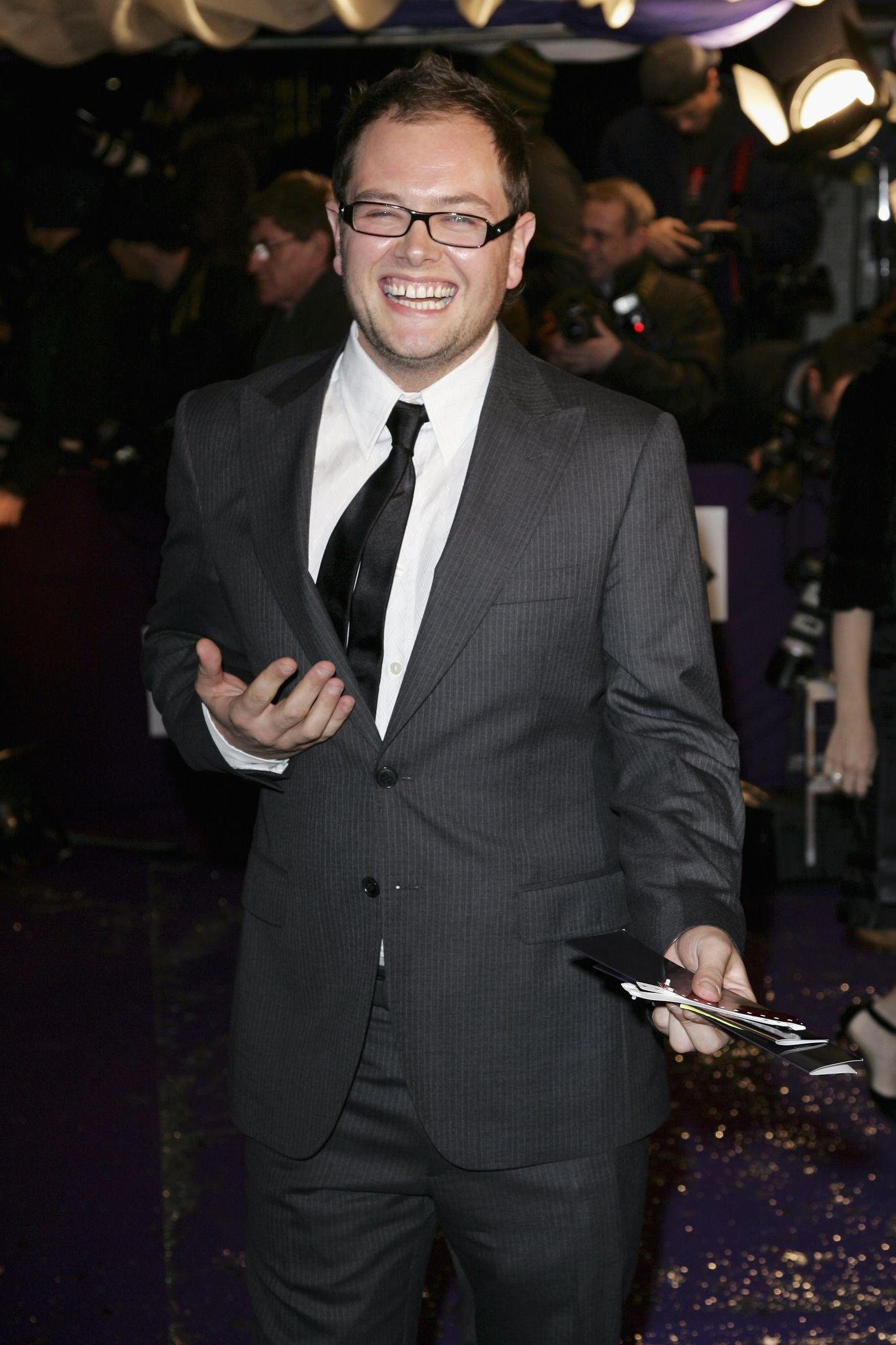
A BAFTA Win That Became a Show of Its Own
The moment unfolded after Carr’s victory scene in the first season of The Celebrity Traitors was announced as the winner of the public-voted Memorable Moment category. Rather than calmly accepting the award, Carr bounded toward the stage, hopping and dancing with unfiltered excitement before grabbing the microphone.

The comedian then delivered what quickly became one of the most quoted lines of the ceremony:
“Was I really good – or were the other celebrities just thick?!”
The joke referenced how fellow contestants failed to identify him as one of the Traitors during the series finale — a twist that helped secure his victory and captivated audiences across the UK.


The crowd erupted in laughter, and social media responded almost instantly.
Why Viewers Compared Him to Nativity!
Fans online soon noticed that Carr’s exuberant BAFTA celebration strongly resembled a memorable scene from the 2009 comedy film Nativity!, in which he played the eccentric theatre critic Patrick Burns.
In the film, Burns famously performs an over-the-top tap dance during the school play finale — a scene remembered for its chaotic energy and exaggerated enthusiasm. BAFTA viewers began posting side-by-side clips comparing Carr’s awards-show reaction to the film sequence, with one social media user writing:
“Alan Carr possessed by his Nativity Critic Man at the Baftas.”
The comparison only amplified the viral momentum surrounding the moment, transforming a routine acceptance speech into a broader pop-culture conversation.


The Celebrity Traitors Continues Its Awards Momentum
Carr’s BAFTA triumph also reflected the continued cultural dominance of The Celebrity Traitors, the BBC reality competition that became one of the UK’s most talked-about television events.
Carr not only appeared in the inaugural celebrity edition of the show — he won it. Playing as a Traitor, he successfully manipulated fellow contestants and survived until the end, earning widespread praise for his surprisingly strategic gameplay. According to records of the series, Carr donated his £87,500 prize money to Neuroblastoma UK, a charity supporting childhood cancer research.
At the BAFTAs, the show collected multiple honors. Earlier in the evening, presenter Claudia Winkleman accepted the Reality Award for The Celebrity Traitors. Winkleman revealed she had briefly flown from Scotland, where she was filming the second season at Ardross Castle, specifically to attend the ceremony before quickly returning to production.
The awards reinforced how The Celebrity Traitors evolved from a reality experiment into a genuine mainstream television phenomenon.
Alan Carr and Paloma Faith’s “Murder” Reunion
One of the most entertaining subplots of the evening involved Carr reuniting with singer Paloma Faith, whom he had famously “murdered” during The Celebrity Traitors.
Their betrayal storyline became one of the season’s defining moments because the pair were known to be friendly in real life. At the BAFTAs, however, the tension appeared entirely playful.
The two smiled together on the red carpet, prompting BAFTA’s official social account to joke:
“Breaking news: Alan Carr and Paloma Faith are still friends.”
Host Greg Davies later joined in during the ceremony, joking that the reality series had transformed Carr into “a manipulative serial killer,” before adding: “We all know he’s a good person.”
Carr himself closed the loop during his acceptance speech, dedicating the award directly to Faith:
“I dedicate this to Paloma – there’s no one else I would rather murder more than you, I love you.”
The line perfectly encapsulated the self-aware absurdity that has made The Celebrity Traitors such compelling television.
A Career Built on Personality, Not Perfection
Carr’s BAFTA moment resonated so strongly because it aligned perfectly with the public persona he has cultivated since his rise in British comedy.
Born Alan Graham Carr in Weymouth, Dorset, in 1976, Carr first broke through after winning both the City Life Best Newcomer of the Year award and the BBC New Comedy Award in 2001.
From there, he became one of Britain’s most recognizable television entertainers through shows including:
- The Friday Night Project
- Alan Carr’s Celebrity Ding Dong
- Alan Carr: Chatty Man
- RuPaul’s Drag Race UK
- Interior Design Masters with Alan Carr
His trademark style — loud, self-deprecating, emotionally expressive, and deliberately awkward — has remained remarkably consistent throughout his career.
That consistency is partly why audiences embraced his BAFTA reaction rather than viewing it as performative. It felt authentic to the comedian viewers already knew.
The BAFTA Awards’ Most Human Moment
The 2026 BAFTA Television Awards featured major industry milestones, including Netflix’s Adolescence becoming the most-awarded series of the ceremony.
There were emotional speeches from Martin Lewis and Dame Mary Berry, major acting victories, and political discussions surrounding documentary filmmaking. Yet Carr’s acceptance speech arguably became the evening’s most replayed clip precisely because it injected spontaneity into a polished awards ceremony.
Industry analysts noted that the Memorable Moment Award carries unique significance because it is voted for entirely by the British public rather than BAFTA juries. Carr’s win therefore reflected genuine audience enthusiasm rather than insider industry consensus.
That distinction matters. In an era dominated by carefully managed celebrity branding, Carr’s chaotic celebration felt refreshingly unscripted.
Social Media and the Modern Awards Show
Carr’s viral reaction also highlighted how modern awards ceremonies increasingly live beyond the broadcast itself.
Moments are now designed — intentionally or not — for online circulation. GIFs, memes, clips, and reaction videos often define cultural impact more than the actual trophies.
Carr’s stage dance, facial expressions, and improvised jokes provided exactly the type of instantly shareable content that thrives online. The Nativity! comparisons only strengthened the cross-generational appeal, connecting longtime fans with newer audiences who discovered him through The Celebrity Traitors.
The result was a reminder that television awards today are no longer simply about industry recognition. They are also about creating moments that travel across social platforms and enter wider public conversation.
Alan Carr’s Enduring Place in British Entertainment
Few British entertainers have managed to remain culturally relevant across as many formats as Carr.
He has successfully transitioned between stand-up comedy, radio, reality television, panel shows, acting, chat shows, and documentary programming. He has also maintained broad mainstream appeal while preserving a highly distinctive comedic identity.
His BAFTA moment reflected the culmination of that career trajectory. Rather than reinventing himself to fit changing television trends, Carr has succeeded by amplifying the qualities audiences already associate with him.
That authenticity continues to resonate.
Conclusion
Alan Carr’s BAFTA Television Awards appearance became far more than a simple acceptance speech. It evolved into one of the defining entertainment moments of 2026 — a blend of comedy, nostalgia, spontaneity, and pure theatrical joy.
From comparisons to his Nativity! character to his playful reunion with Paloma Faith, Carr demonstrated why he remains one of Britain’s most beloved television personalities.
At a ceremony filled with prestige and emotional speeches, it was Carr’s gleeful chaos that captured the public imagination most vividly.
And perhaps that is exactly what British television does best.