

Alan Carr’s Remarkable Reinvention: Why Britain’s Comic Star Is Having Another Big Moment
Few British entertainers have mastered reinvention quite like Alan Carr. For more than two decades, the comedian and television presenter has remained a familiar face on UK screens, known for his sharp wit, unmistakable laugh, and ability to turn awkwardness into comedy gold. But in 2026, Carr finds himself at the center of a fresh wave of public attention — one driven by reality television success, renewed popularity, and growing speculation about his future in British broadcasting.
Yet despite being linked to one of television’s most coveted hosting roles, Carr insists there are limits to what he wants from fame.
The 49-year-old comedian recently dismissed rumours that he could become the next presenter of Strictly Come Dancing, explaining candidly that he does not “love it enough” to take on the role.
The comments come during what Carr himself describes as a “renaissance” in his career — a resurgence powered largely by his standout appearance on Celebrity Traitors, where audiences saw a different side of the comic entertainer.
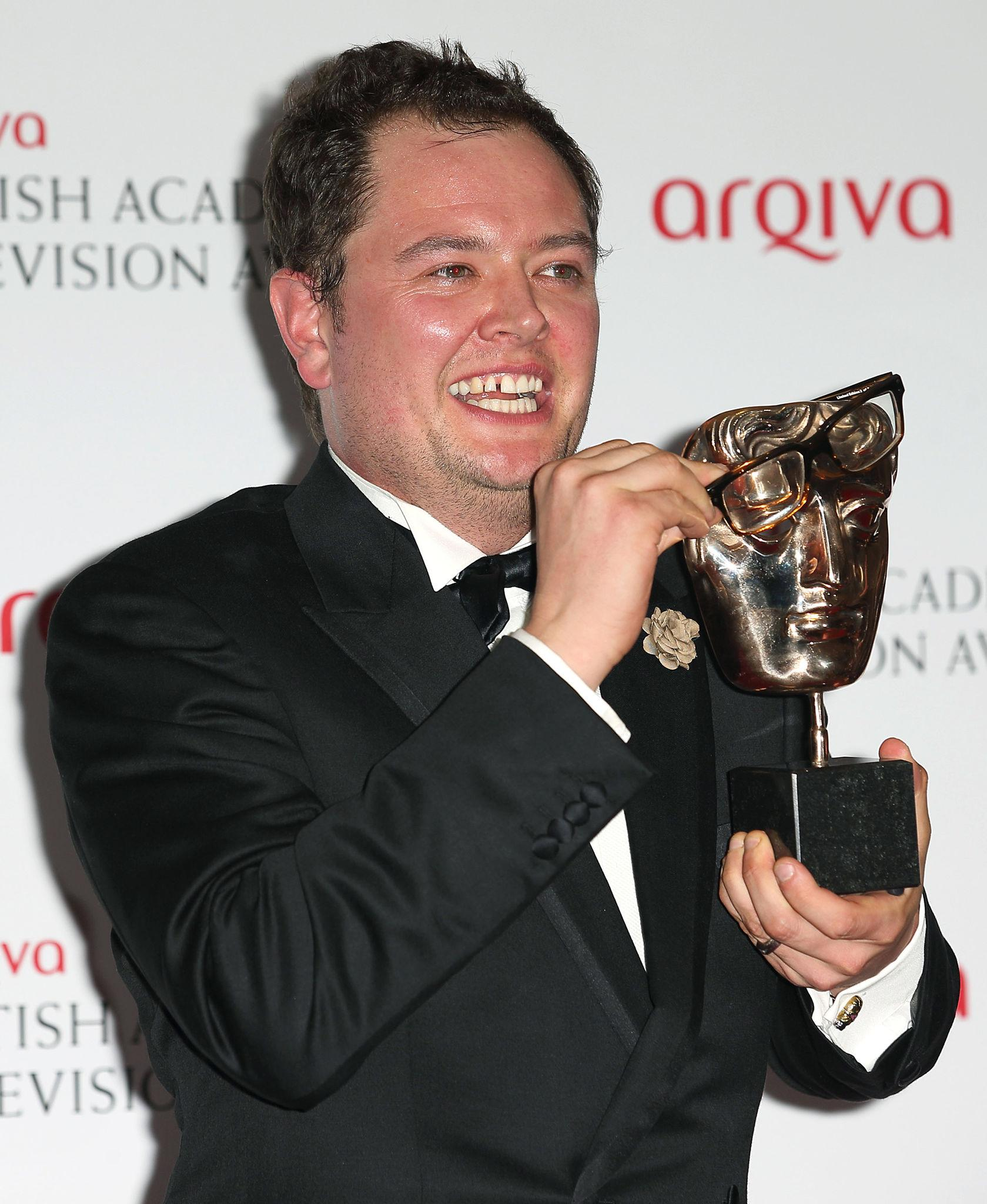
Why Alan Carr Rejected the Strictly Rumours
Speculation surrounding Carr’s future intensified after long-serving Strictly Come Dancing presenters Tess Daly and Claudia Winkleman reportedly stepped away from the BBC dance competition last December.
As names circulated online and in entertainment media, Carr’s name quickly emerged among potential successors. But the comedian shut down the speculation in a revealing interview.
“I didn’t turn it down, I was just clumped with everyone and had to say: ‘No, don’t put me in the mix,’” Carr explained.
Rather than positioning himself as the obvious choice, Carr argued that major entertainment formats should create opportunities for younger talent.
“I love watching Strictly, but I don’t love it enough,” he said. “People are always moaning there aren’t new, fresh faces on TV. Well, wouldn’t it be amazing to give it to a young person who absolutely adores Strictly and dancing?”
The remark reflects an increasingly rare attitude in modern television, where experienced presenters often compete fiercely for flagship roles. Carr instead suggested audiences might be fatigued by seeing the same personalities repeatedly appear across major entertainment shows.
“If I rock up on it, they’ll go: ‘Oh, here he is again.’ Why waste it on me?” he joked.
His self-deprecating humor extended even to ballroom dancing itself.
“I don’t really know the dances,” he admitted. “I’d be like: ‘Oh here they go again, that dance with the legs.’”
The Celebrity Traitors Effect
Carr’s recent career revival cannot be separated from the massive success of Celebrity Traitors, the BBC spin-off that became one of Britain’s biggest television talking points.
Millions tuned in for the dramatic finale, where Carr ultimately outmaneuvered historian David Olusoga and actor Nick Mohammed to claim victory.
The series transformed public perceptions of Carr. While audiences had long known him as a fast-talking chat show host and stand-up comedian, Celebrity Traitors revealed a surprisingly strategic and manipulative side.
At the 2026 Bafta TV Awards, host Greg Davies jokingly summarized the public’s fascination with Carr’s gameplay.
“Celebrity Traitors managed to turn Alan Carr into a manipulative serial killer,” Davies quipped during the ceremony.
One of the season’s most memorable moments involved singer Paloma Faith, whom Carr famously “murdered” in the game despite their real-life friendship. The awkward betrayal became a major talking point among viewers.
By the time the Bafta Television Awards arrived, however, the pair appeared to have fully embraced the joke. Carr and Faith smiled together on the red carpet, prompting social media chatter and playful commentary from awards organizers.
Carr later won the Bafta “memorable moments” award for the scene in which he successfully convinced fellow finalists he was loyal rather than deceptive.
Accepting the award, he ended his speech with a humorous tribute to Faith:
“I dedicate this to Paloma – there’s no one else I would rather murder more than you, I love you.”
The combination of humor, strategy, and unpredictability helped introduce Carr to younger audiences and viewers who may not have followed his earlier television career.
“A Renaissance in Me”
Carr himself appears amused by the renewed attention.
“I know. People are kind of interested in me,” he said. “They’ll say: ‘Oh, Alan Carr’s quite funny?’ I tell them: ‘I’ve been around for 25 years! How dare you.’”
Still, he acknowledged the momentum shift.
“But yes, there seems to be a renaissance in me, which is really nice.”
That resurgence has expanded beyond reality television. Carr remains a fixture in British entertainment through projects such as Amanda And Alan’s Spanish Job, the renovation series he co-hosts alongside Amanda Holden.
The pair also attracted attention at the 2026 Bafta TV Awards, where they were nominated for the popular transformation series.
While Holden embraced the evening’s “dopamine dressing” fashion trend in a glamorous designer outfit, Carr chose a classic black double-breasted tuxedo, reinforcing the polished but playful public image that has long defined him.
Rejecting “National Treasure” Status
Perhaps the most revealing part of Carr’s recent comments was his resistance to being labeled a “national treasure” — a term often reserved for Britain’s most beloved public figures.
“Oh, I don’t want to be,” he said. “I want to be a regional trinket.”
The line perfectly captured Carr’s long-established comedic identity: approachable, irreverent, and suspicious of celebrity self-importance.
“Everyone’s a national treasure now, I’m sick of it,” he added. “We should have only five, and it’s one in, one out.”
When asked who deserved inclusion on his personal list of British icons, Carr named broadcaster and environmentalist Sir David Attenborough, celebrity chef Dame Mary Berry, actor Nigel Havers, and presenters Richard Madeley and Alison Hammond.
The comments underline Carr’s awareness of how British celebrity culture has evolved. In an era dominated by viral moments and social media fame, Carr’s humor often works because it resists polished perfection.
Why Alan Carr Still Matters in British Entertainment
Carr’s current popularity says something broader about the changing entertainment landscape in the UK.
Television audiences increasingly gravitate toward personalities who feel authentic rather than carefully manufactured. Carr’s willingness to mock himself, avoid overexposure, and reject obvious career opportunities has arguably strengthened his appeal.
Unlike many entertainers chasing prestige roles, Carr appears more interested in maintaining his comedic identity than climbing the traditional television hierarchy.
That authenticity may explain why audiences responded so strongly to him on Celebrity Traitors. Beneath the jokes and flamboyant delivery, viewers saw someone capable of surprising emotional honesty and strategic intelligence.
At a time when many television careers fade quickly, Carr’s ability to reinvent himself without abandoning his core personality has become one of his greatest strengths.
What Could Come Next?
Even if Strictly Come Dancing is off the table, Carr’s future in television looks exceptionally strong.
The BBC and other broadcasters continue to invest heavily in personality-driven entertainment formats, and Carr remains uniquely positioned between traditional television and modern reality TV culture.
His chemistry with Amanda Holden has also proven commercially successful, while his performance on Celebrity Traitors demonstrated that audiences still enjoy seeing familiar entertainers placed in unexpected situations.
Industry observers are likely to continue speculating about bigger presenting roles, particularly as veteran television hosts gradually step away from long-running franchises.
Yet Carr’s recent comments suggest he may prioritize creative enjoyment over prestige.
That could ultimately be why his current comeback feels so genuine.
Rather than aggressively chasing relevance, Alan Carr seems content allowing audiences to rediscover him on their own terms.
And in modern television, that may be more valuable than becoming a “national treasure.”


