

Erin Doherty’s Defining Moment: How Adolescence Turned the Actress Into a BAFTA-Era Standout
The 2026 BAFTA Television Awards became a major turning point for British actress Erin Doherty, whose emotionally charged performances and growing industry reputation placed her firmly at the center of one of television’s biggest nights.
Already respected for her work across prestige dramas, Doherty entered the ceremony with dual acting nominations tied to two acclaimed productions — Netflix’s Adolescence and Disney+ drama A Thousand Blows. By the end of the night, her name had become part of a much larger cultural conversation surrounding the explosive success of Adolescence, a series that dominated the awards season and sparked debate far beyond entertainment circles.
While co-star Christine Tremarco ultimately won the Best Supporting Actress award for Adolescence, Doherty’s performances were widely viewed as instrumental to the series’ critical and emotional impact.
The Rise of Adolescence as Television’s Most Discussed Drama
Long before the BAFTAs arrived, Adolescence had already established itself as one of the defining television dramas of the year.
The Netflix limited series entered the 2026 BAFTA Television Awards with a commanding 11 nominations, more than any other program competing at the ceremony. The show later converted that momentum into major victories, including:
- Best Limited Drama
- Best Actor for Stephen Graham
- Best Supporting Actor for Owen Cooper
- Additional recognition across key television categories
According to award coverage surrounding the event, the drama became a global talking point because of its unsettling examination of “the manosphere and rising violence among boys.”
The series’ cultural impact extended beyond critics and award voters. One scene in particular — Jamie snapping at Doherty’s psychologist character — earned a nomination in the BAFTA “Memorable Moment” category, the only award voted on directly by the public.
That nomination demonstrated how deeply the series resonated with viewers, especially younger audiences confronting themes around masculinity, emotional isolation, and online radicalization.
Erin Doherty’s Performance Became Central to the Drama’s Emotional Weight
Within Adolescence, Doherty played the psychologist confronting Jamie Miller, portrayed by Owen Cooper.
Although the series featured powerhouse performances from Stephen Graham, Ashley Walters, Christine Tremarco, and Cooper himself, critics and audiences repeatedly highlighted Doherty’s ability to create tension through restraint rather than spectacle.
Her scenes often relied on silence, facial expression, and psychological pressure rather than dramatic monologues. That approach gave the series a level of realism that many viewers found deeply unsettling.
The confrontation scene between Jamie and Doherty’s character became one of the defining moments of the entire production.
In many ways, Doherty represented the audience’s perspective inside the show: attempting to understand a troubled teenager while slowly realizing the depth of the emotional and societal crisis unfolding underneath.
A Double-Nominated Star at the BAFTAs
The 2026 BAFTA nominations revealed how quickly Doherty’s career has expanded across genres and streaming platforms.
She received:
- A Best Supporting Actress nomination for Adolescence
- A Best Actress nomination for A Thousand Blows
That rare double recognition placed her alongside actress Aimee Lou Wood as one of the few performers nominated in multiple acting categories during the same awards season.
The nominations also signaled a broader shift happening within British television. Streaming platforms such as Netflix and Disney+ increasingly dominated prestige drama categories, while younger actors with stage-trained backgrounds began taking center stage in emotionally complex storytelling.
Doherty’s rise fits directly into that evolution.
The Night Belonged to Adolescence
Despite fierce competition, Adolescence emerged as the evening’s dominant drama.
Coverage from the awards ceremony described the Netflix series as the “big winner” of the night.
Christine Tremarco won the Supporting Actress category, defeating fellow nominee Doherty. Owen Cooper also triumphed in Supporting Actor, while Stephen Graham secured Leading Actor honors.
The ensemble victories reinforced the idea that Adolescence succeeded not because of a single star performance, but because of the collective emotional force of its cast.
For Doherty, the nominations themselves carried significant industry weight. Being recognized twice in one year at the BAFTAs positioned her among Britain’s elite television performers and strengthened her reputation as an actress capable of moving between psychological drama, historical storytelling, and emotionally layered character work.
Fashion, Presence, and Red Carpet Influence
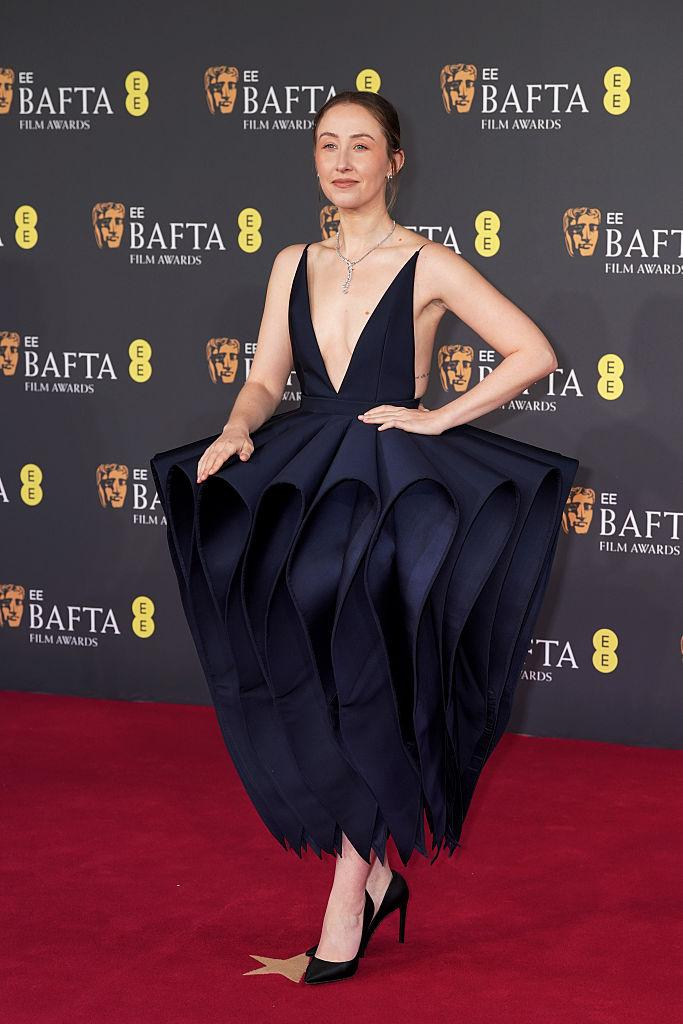
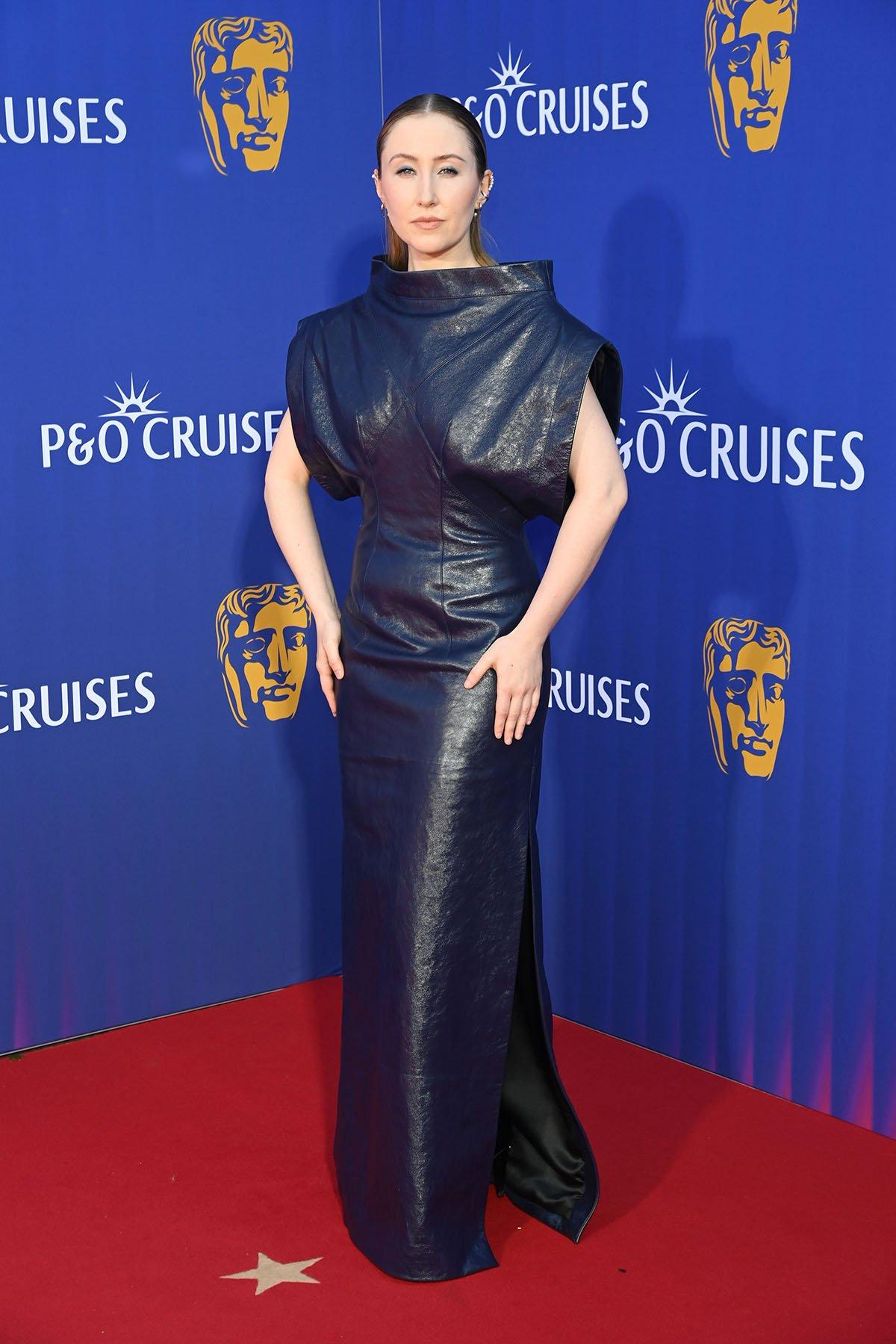
Beyond the awards themselves, Doherty also became one of the evening’s notable red-carpet figures.
At London’s Royal Festival Hall, she appeared in a minimalist black strapless gown with slicked-back hair, a look widely described as elegant and understated.
The simplicity of the styling reflected a larger trend visible throughout the ceremony: established and emerging actresses increasingly favoring sharp, minimalist silhouettes over heavily embellished couture.
Fashion coverage surrounding the BAFTAs placed Doherty alongside names such as:
- Aimee Lou Wood
- Claudia Winkleman
- Amanda Holden
- Jodie Whittaker
- Lucy Punch
Her appearance reinforced her growing crossover appeal beyond acting alone. As streaming-era performers increasingly become fashion and cultural personalities, Doherty appears positioned to become one of the defining British faces of the next television generation.
Why Adolescence Resonated So Strongly
Part of the reason Doherty’s performance gained so much attention lies in the subject matter tackled by Adolescence itself.
The drama explored:
- Youth violence
- Toxic online communities
- Masculinity and identity
- Emotional isolation among boys
- Institutional responses to troubled teenagers
These themes turned the show into more than entertainment. It became part of ongoing public discussions about mental health, digital influence, and generational anxiety.
Award recognition often follows productions that capture broader societal concerns, and Adolescence clearly achieved that.
The fact that the public-voted “Memorable Moment” nomination centered around a scene involving Doherty’s character further demonstrated how audiences emotionally connected with her role in the story.
A Career Entering a New Phase
Before the BAFTAs, Erin Doherty was already respected within British acting circles. After the 2026 awards season, she appears poised for an entirely different level of international visibility.
The combination of:
- dual BAFTA nominations,
- association with one of Netflix’s biggest prestige hits,
- critical acclaim across multiple productions,
- and increased mainstream recognition
has positioned her as one of the most closely watched actresses working in British television today.
Industry observers are likely to watch carefully for her next move — whether that involves larger international streaming productions, film roles, or continued collaboration with prestige drama creators.
Given the momentum surrounding Adolescence, it would not be surprising to see the series become a career-defining milestone not only for Doherty, but for several members of its ensemble cast.
The Broader Significance of the BAFTA Night
The 2026 BAFTA Television Awards reflected major changes taking place across modern television.
Streaming platforms dominated nominations.
Socially conscious dramas outperformed traditional prestige formats.
Ensemble storytelling gained greater recognition.
Younger actors increasingly led award conversations.
Within that landscape, Erin Doherty emerged as a symbol of where British television is heading: emotionally intelligent performances, psychologically complex storytelling, and actors capable of balancing critical acclaim with broad audience appeal.
Even without taking home the Supporting Actress trophy, Doherty’s presence throughout the ceremony confirmed that her career has entered a new chapter — one defined not by promise, but by arrival.


