

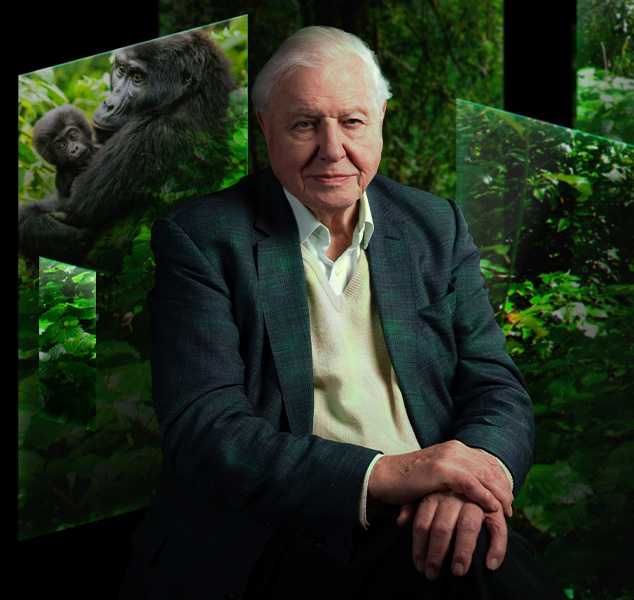
Happy Birthday David Attenborough: A Century of Wonder, Wisdom and Warning
Sir David Attenborough had imagined a quiet 100th birthday. The world, predictably, had other plans.
On the eve of his centenary, the broadcaster, naturalist and environmental advocate shared a message of gratitude after receiving birthday greetings from across generations — from preschool children to care home residents, from families to lifelong viewers who grew up with his voice guiding them through jungles, oceans, deserts and frozen worlds.
“I had rather thought that I would celebrate my 100th birthday quietly, but it seems that many of you have had other ideas,” he said.
“I’ve been completely overwhelmed by birthday greetings from preschool groups to care home residents and countless individuals and families of all ages.
“I simply can’t reply to each of you all separately, but I would like to thank you all most sincerely for your kind messages, and wish those of you who have planned your own local events tomorrow, have a very happy day.”
It was a characteristically modest response from a man whose public life has been anything but small. As David Attenborough turns 100 on 8 May 2026, the milestone is not merely a birthday celebration. It is a cultural moment — a pause to honour one of the most influential communicators of the natural world, and to reflect on the planet he has spent a lifetime urging humanity to see, understand and protect.
A Birthday Marked Across Generations
The centenary has become a national and international celebration of Attenborough’s life and work. A special event at London’s Royal Albert Hall is planned as the climax of a week of programming and public tributes, with BBC One and iPlayer carrying a 90-minute concert hosted by Kirsty Young.
The celebration brings together public figures, naturalists, presenters and artists to reflect on Attenborough’s extraordinary career. Special guests include Sir Michael Palin, Steve Backshall, Liz Bonnin and Chris Packham. The BBC Concert Orchestra is set to perform music linked to some of his most famous television moments, including sequences from Planet Earth II and Frozen Planet II.
For many viewers, these are not simply television memories. They are shared cultural experiences: the chase between snakes and iguanas, the quiet intimacy of a gorilla encounter, the majesty of the ocean, the fragility of ice, the startling beauty of creatures most people would never otherwise see.
Kirsty Young captured the tone of the celebration when she said: “Sir David’s gift to the world has been a life spent exquisitely revealing Earth’s wonders to us all.
“The very least he deserves is a big 100th birthday bash at the Royal Albert Hall. I’m very happy indeed, as the host, to be able to invite everyone to the party.”
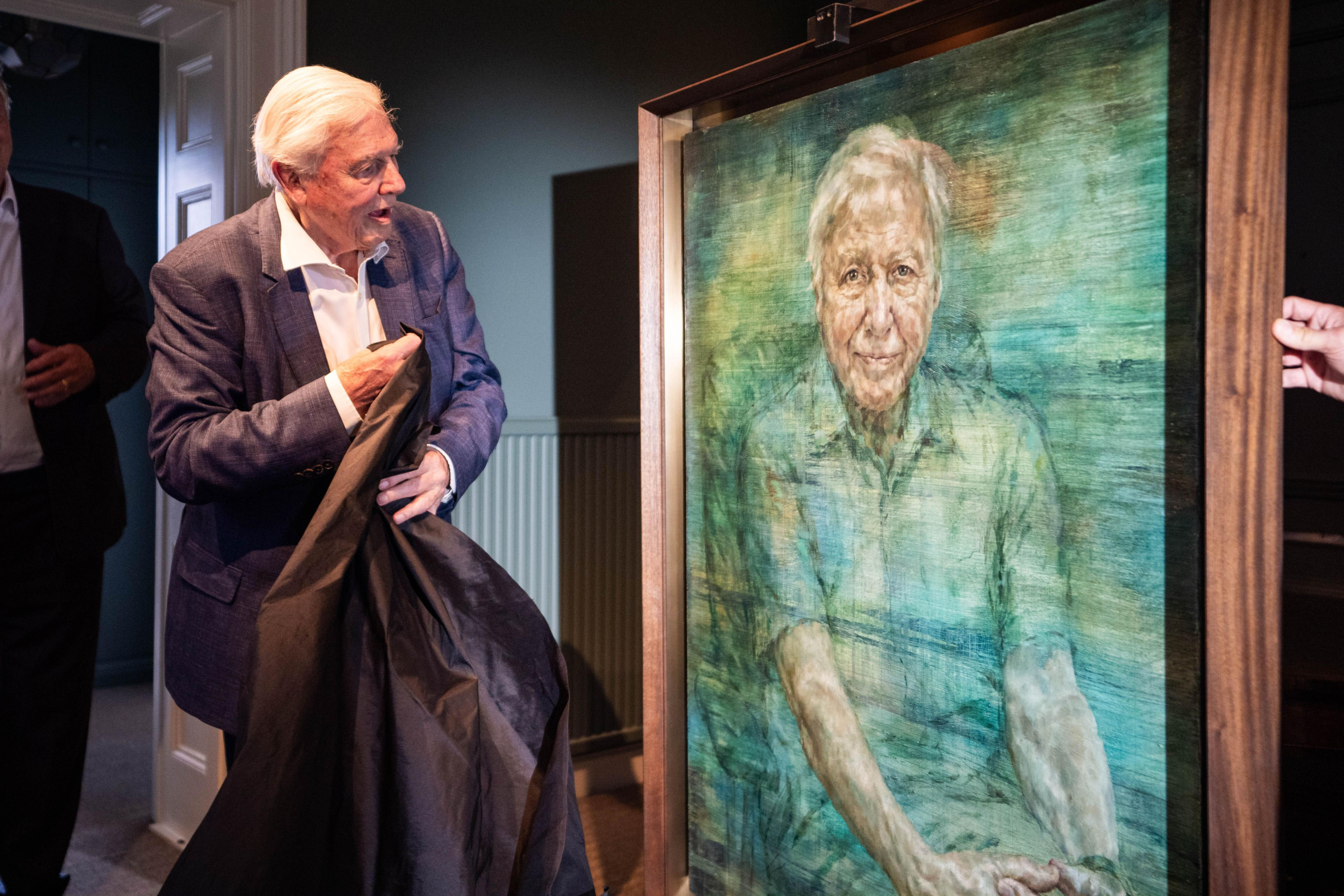
From Fossils to the World Stage
Attenborough’s story began far from the global platforms on which he would later speak. Born in west London on 8 May 1926, he grew up near Leicester with an early fascination for fossils, rocks and the living world.
That childhood curiosity never left him. He once recalled the wonder of splitting open a stone and finding “this amazing coiled shell” that no one had seen for 150 million years. The experience appealed to what he called “the small boy’s instinct of collecting things,” adding, “To be honest, I don’t think I’ve really lost [it].”
That instinct became a life’s work. After studying natural sciences at the University of Cambridge and completing national service, Attenborough entered broadcasting almost by chance. He applied unsuccessfully for a radio job at the BBC, then accepted a television opportunity despite having barely watched television himself.
“I had to confess that I hadn’t actually seen much television,” he wrote in his memoirs. He had watched a television play only once at his wife’s parents’ house and did not own a set himself. Yet that uncertain step led to one of the defining broadcasting careers of the modern age.
The Making of a Natural History Legend
Attenborough joined the BBC in the early 1950s and soon helped reshape factual television. His early work on Zoo Quest took him and viewers beyond studio-based programming and into the field, filming rare animals in their own environments.
The format reflected a new ambition for television: to bring distant ecosystems into living rooms and make the unfamiliar feel immediate. It also established Attenborough’s style — curious, calm, precise and deeply engaged with the subject rather than himself.
In 1965, he became controller of BBC2, where he helped guide the channel into bold new territory. Under his leadership, BBC2 became associated with ambitious, distinctive programming, including the introduction of colour television to British screens and landmark factual projects.
But wildlife and documentary storytelling remained his central passion. In the 1970s, he returned to programme-making with a vision that would transform natural history broadcasting: a 13-part series tracing the evolution of life itself.
That series, Life on Earth, aired in 1979 and made Attenborough a household name around the world. Its ambition was enormous — to tell the story of life from its beginnings through the rise of plants, animals, reptiles, mammals, apes and humanity.
One of its most famous moments came in Rwanda, when Attenborough encountered mountain gorillas. In a passage that remains among television’s most memorable natural history reflections, he said:
“There is more meaning and mutual understanding in exchanging a glance with a gorilla than with any other animal I know.
“We’re so similar. Their sight, their hearing, and their sense of smell are so similar to ours that we see the world in the same way they do. They live in the same sort of social groups and form permanent family relationships. They walk along on the ground as we do, though they are immensely more powerful than we are.
“It seems really very unfair that man should have chosen the gorilla to symbolise everything that is aggressive and violent, when that is the one thing that the gorilla is not — and that we are.”
Why His Voice Matters
Attenborough’s influence rests not only on longevity, but on trust. His voice has become one of the most recognisable in broadcasting, but his authority comes from more than narration. It comes from the way he combines wonder with restraint, emotion with evidence, and beauty with responsibility.
Chris Packham described him as “the greatest living broadcaster” and “the greatest ambassador for life on Earth the planet has and will ever see.” He added: “we love him because we trust him because he’s always told us the truth as we know it. And what a legacy that is!”
That trust has allowed Attenborough to reach audiences across age, politics and geography. His work has introduced billions of viewers to the complexity of ecosystems, the intelligence of animals, the hidden architecture of plants, the mysteries of oceans and the consequences of human activity.
His programmes did not begin as environmental campaigning. In 2003, reflecting on his career, he wrote: “I did not make them because I had premonitions of impending eco-disaster. I did so because I know of no pleasure deeper than that which comes from contemplating the natural world and trying to understand it.”
Yet the deeper he explored the natural world, the harder it became to ignore the damage being done to it.
From Wonder to Warning
Over time, Attenborough’s message has become more urgent. The man who first invited viewers to marvel at life on Earth has increasingly asked them to consider what humanity is doing to that life.
At a lecture in 1991, he said:
“We are the most remarkable species the world has ever seen, certainly the most complex and undoubtedly the most powerful. And that, it seems to me, puts a great responsibility in our hands because we can determine the life and death of a species.”
That sense of responsibility has become one of the defining themes of his later work. From the impact of plastics highlighted after Blue Planet to his warnings on climate change and biodiversity loss, Attenborough has used his platform to connect scientific evidence with public understanding.
At UN climate talks in Poland in December 2018, he warned: “Right now we are facing a man-made disaster of global scale, our greatest threat in thousands of years: climate change. If we don’t take action, the collapse of our civilisations and the extinction of much of the natural world is on the horizon.”
Later, speaking to a younger generation at Cop26 in Glasgow, he offered both warning and hope: “In my lifetime I have witnessed a terrible decline. In yours, you could and should witness a wonderful recovery.”
A Legacy Written in Science, Television and Species Names
Attenborough’s centenary is also being marked by scientific recognition. The Natural History Museum has named a newly discovered species of parasitic wasp after him: Attenboroughnculus tau. The species is native to the Patagonian lakes of Chile, and a specimen was found in the museum’s collection four decades after it was collected.
It is not the first species to carry his name. More than 50 species and genera of plants, animals, microorganisms and ancient life-forms have been named after him. These honours reflect a rare kind of public legacy: one that exists not only in archives and television schedules, but in taxonomy, conservation, education and scientific memory.
Attenborough once said of such honours: “There are quite a lot of species. To have a species named after you, and an attenboroughi species, that’s quite nice. But to have a genus named after you is really something else. And there’s a family of aquatic reptiles that was given my name, which is Attenborosaurus. Attenborosaurus is really something, isn’t it?”
The Celebration Is Also a Challenge
The phrase “Happy birthday David Attenborough” carries unusual weight because it is more than a greeting. For many people, it is a thank-you: for childhood wonder, for family television nights, for scientific curiosity, for a deeper understanding of animals and ecosystems, and for decades of patient explanation.
But it is also a challenge. Attenborough’s life has spanned a century in which humanity’s relationship with nature has changed dramatically. He has seen the rise of mass television, the expansion of scientific knowledge, the destruction of habitats, the acceleration of climate change and the growing awareness that the natural world is not separate from human survival.
In his recent reflections on the ocean, he said:
“Through the course of my life, we have been on a voyage of ocean discovery. And what a journey it has been.
“When I first saw the sea as a young boy, it was thought of as a vast wilderness to be tamed and mastered for the benefit of humanity. Now, as I approach the end of my life, we know the opposite is true.
“It is my great hope that we all come to see the ocean not as a dark and distant place with little relevance to our lives on land, but as the lifeblood of our home. I’m sure that nothing is more important. For if we save the sea, we save our world.”
That is the essence of Attenborough’s centenary: celebration, gratitude and responsibility intertwined.
A Century of Life, A Message for the Future
At 100, Sir David Attenborough stands as one of the rare figures whose work has shaped not just broadcasting, but public consciousness. He made natural history feel cinematic before that was expected. He made science accessible without making it simplistic. He made animals and ecosystems emotionally meaningful without turning them into sentimentality.
His birthday has inspired concerts, documentaries, exhibitions, local events and personal messages because his career belongs, in a sense, to everyone who has watched and listened. He has been present in classrooms, living rooms, museums and public debates. He has narrated the planet not as scenery, but as home.
So the most fitting birthday message may be the one implied by his own life’s work: celebrate the wonder, but do not stop there. Look closely. Learn honestly. Care deeply. Act while there is still time.
Happy birthday, Sir David Attenborough — and thank you for a century of helping the world see itself more clearly.


