Apple Quietly Ends the $599 Mac Mini Era as 256GB Model Disappears
Apple has quietly reshaped the entry point to its desktop Mac lineup. The company has stopped selling the 256GB version of the M4 Mac Mini through its online store worldwide, effectively raising the starting price of the compact desktop from $599 to $799.
- The Mac Mini That Changed Apple’s Desktop Strategy
- The New Starting Point: 512GB for $799
- Tim Cook Says Demand Is Higher Than Expected
- Why AI Workloads Matter to the Mac Mini
- Apple’s Supply Chain Pressures Are Growing
- The End of Apple’s Most Aggressive Desktop Price
- Is 512GB Actually Better for Most Buyers?
- Buyers May Need to Look Elsewhere
- A Sign of Apple’s New Desktop Priorities
The move marks the end of what many buyers viewed as one of Apple’s strongest value propositions in recent years: a compact desktop powered by Apple silicon that offered modern performance at a relatively accessible price. Now, the least expensive M4 Mac Mini available directly from Apple starts with 512GB of storage and 16GB of unified memory.
While Apple has not officially described the change as a price increase, the practical effect is clear. Customers looking to buy a brand-new Mac Mini from Apple now face a higher entry cost, even though the remaining 512GB configuration retains its original pricing.
The decision comes at a time when Apple is dealing with unusually high demand for its desktop Macs, especially among users experimenting with AI and local machine learning workflows.


The Mac Mini That Changed Apple’s Desktop Strategy
When Apple introduced the redesigned M4 Mac Mini in 2024, the device quickly gained attention for offering flagship-level Apple silicon performance in an ultra-compact form factor. The base configuration included:


- Apple M4 chip
- 16GB unified memory
- 256GB SSD storage
- Starting price of $599
That pricing made the Mac Mini one of the most affordable ways to enter the macOS ecosystem. It appealed to students, developers, office users, creators, and anyone who already owned a monitor, keyboard, and mouse.
Apple positioned the machine as a compact powerhouse for productivity, media editing, software development, and increasingly, AI-related workloads.
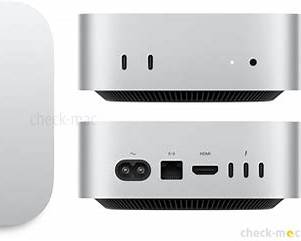
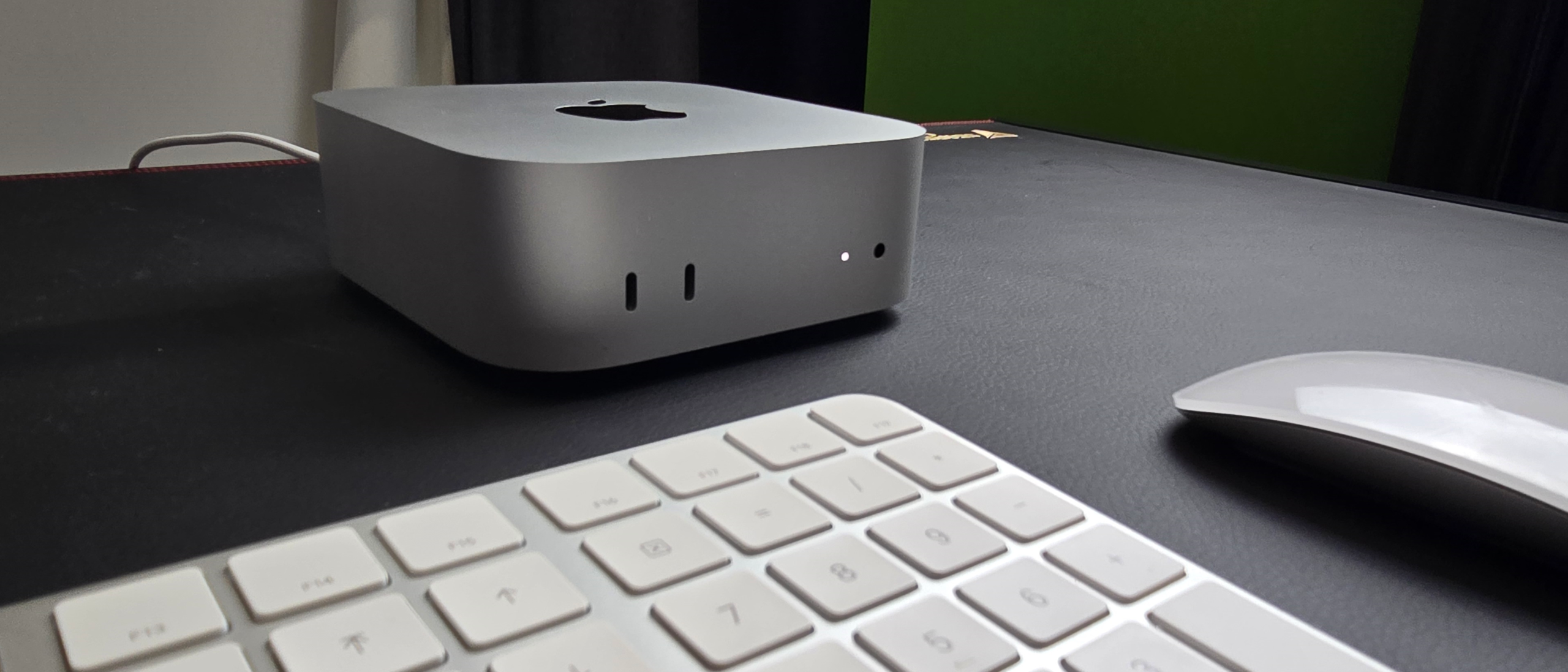
The M4 generation also introduced a smaller chassis, front-facing USB-C ports, Thunderbolt 4 connectivity, support for multiple external displays, and improved thermal efficiency.
Now, however, Apple’s official storefront no longer lists the 256GB model.


The New Starting Point: 512GB for $799
With the 256GB variant removed, Apple’s online store now begins the M4 Mac Mini lineup at:
- 512GB SSD storage
- 16GB unified memory
- $799 starting price
Customers can still configure the machine with:
- 24GB or 32GB RAM
- 1TB or 2TB SSD options
Meanwhile, the higher-end M4 Pro Mac Mini continues to offer:
- Up to 64GB RAM
- Up to 8TB SSD storage
Apple has not announced whether the 256GB model has been permanently discontinued or temporarily removed because of supply issues.
However, the change has already rolled out globally after the configuration previously disappeared in markets including the United States.
Tim Cook Says Demand Is Higher Than Expected
The timing of the removal closely follows Apple’s recent Q2 earnings call, where CEO Tim Cook acknowledged ongoing supply shortages affecting the Mac Mini and Mac Studio.
Cook said demand for the compact desktops has exceeded Apple’s expectations, particularly because of interest in AI and “agentic tools.”
“On the Mac mini and the Mac Studio, both of these are amazing platforms for AI and agentic tools, and the customer recognition of that is happening faster than what we had predicted, and so we saw higher than expected demand.”
Cook also warned that it could take “several months” before Apple restores balance between supply and demand.
Industry analysts increasingly believe compact Apple silicon desktops are becoming popular among developers and AI enthusiasts who want to run local AI models instead of relying entirely on cloud infrastructure.
Why AI Workloads Matter to the Mac Mini
The rise of local AI computing is changing how desktop hardware is evaluated.
Apple’s unified memory architecture allows CPUs, GPUs, and AI accelerators to share memory efficiently. That design makes the Mac Mini surprisingly capable for:
- local large language models
- AI experimentation
- automation tools
- development environments
- media processing workflows
As those workloads become more storage-intensive, many users quickly outgrow 256GB SSD configurations.
Large AI models, datasets, developer tools, virtual machines, video assets, and creative applications can consume hundreds of gigabytes. In that context, a 512GB baseline appears more practical for modern workflows.
That may explain why Apple decided to simplify the lineup around higher-capacity configurations during a period of constrained supply.
Apple’s Supply Chain Pressures Are Growing
The Mac Mini storage change is happening amid broader semiconductor and memory supply challenges across the technology industry.
Apple has acknowledged growing pressure around memory and advanced chip production. At the same time, the company is reportedly exploring ways to diversify its manufacturing partnerships beyond TSMC.
Recent reports suggest Apple has entered early-stage discussions with Intel and Samsung as it seeks additional chip production capacity. Executives have reportedly visited Samsung’s Texas semiconductor facilities as Apple evaluates long-term manufacturing alternatives.
The strategy reflects concerns about:
- AI-driven chip shortages
- high-bandwidth memory constraints
- advanced packaging bottlenecks
- overreliance on a single supplier
So far, TSMC remains Apple’s only chip manufacturing partner for Apple silicon products, but increasing AI demand across the industry is placing unprecedented pressure on supply chains.
The End of Apple’s Most Aggressive Desktop Price
For many buyers, the disappearance of the $599 Mac Mini represents more than just a configuration adjustment.
The original pricing helped Apple compete directly with:
- Windows mini PCs
- entry-level desktops
- Chromebooks for development use
- budget creative workstations
At $599, the Mac Mini felt unusually aggressive by Apple standards. It gave users access to:
- macOS
- Apple Intelligence features
- Apple silicon performance
- desktop flexibility
without paying laptop-level prices.
At $799, the Mac Mini remains competitive, but psychologically it enters a different category. Buyers may now compare it more closely with:
- discounted MacBook Air models
- refurbished Macs
- used Apple silicon systems
- premium Windows mini desktops
That changes the product’s identity from a bargain desktop to a more mainstream premium computer.
Is 512GB Actually Better for Most Buyers?
Despite frustration around the higher starting price, many users may benefit from the storage increase.
A 256GB SSD can become restrictive surprisingly quickly on a modern Mac. Even everyday usage can fill storage with:
- Photos libraries
- Messages attachments
- iPhone backups
- downloaded media
- apps and system files
Professional users face even heavier storage demands through:
- Final Cut Pro projects
- Logic Pro libraries
- Xcode development tools
- virtual machines
- local AI models
For many buyers, 512GB offers a more realistic long-term experience and reduces dependence on external drives.
Still, some customers preferred the cheaper 256GB model because the Mac Mini’s desktop form factor makes external SSDs convenient and affordable. A fast Thunderbolt or USB-C SSD can add large amounts of storage for far less than Apple’s internal upgrade prices.
By eliminating the lower-capacity option, Apple has effectively removed that lower-cost entry strategy.
Buyers May Need to Look Elsewhere
Although Apple no longer sells the 256GB Mac Mini online, remaining inventory may still exist through:
- third-party retailers
- education stores
- refurbished Apple inventory
- used marketplaces
However, shortages have already pushed availability lower in several regions.
Consumers looking for the discontinued model may need to act quickly if they want the original $599 pricing structure.
Others may decide the newer 512GB version provides better long-term value despite the higher upfront cost.
A Sign of Apple’s New Desktop Priorities
The Mac Mini has evolved dramatically since Apple transitioned away from Intel processors.
What once served mainly as a budget desktop now appears increasingly positioned as:
- an AI-capable workstation
- a developer machine
- a compact creative desktop
- a local automation hub
That shift helps explain why Apple may no longer view 256GB storage as sufficient for the audience currently buying these systems.
The removal of the entry-level configuration also signals how AI is beginning to influence mainstream consumer hardware decisions. Storage, memory, and processing power are becoming more important as users move beyond traditional office and web-based tasks.
For Apple, the Mac Mini is no longer simply the cheapest Mac. It is becoming one of the company’s most strategically important desktop products during the rise of local AI computing.
And for buyers, the era of the $599 M4 Mac Mini may already be over.