


World Quantum Day 2026: How a Scientific Celebration Is Driving Real-World Innovation
A Global Moment for a Transformative Science
Every year on April 14, World Quantum Day—or Journée mondiale du quantique—serves as a focal point for one of the most complex yet promising fields in modern science. While quantum physics has long been associated with abstract theory and laboratory research, the 2026 edition of this global observance marks a clear shift: quantum technology is no longer confined to academic curiosity. It is increasingly shaping markets, influencing geopolitics, and redefining the future of computing.
This year’s event has taken on heightened significance due to a convergence of technological breakthroughs and economic momentum. From major corporate announcements to surging investor interest, World Quantum Day 2026 has become more than a symbolic celebration—it is now a catalyst for tangible progress.
Why Quantum Computing Still Matters—and Why It’s So Difficult
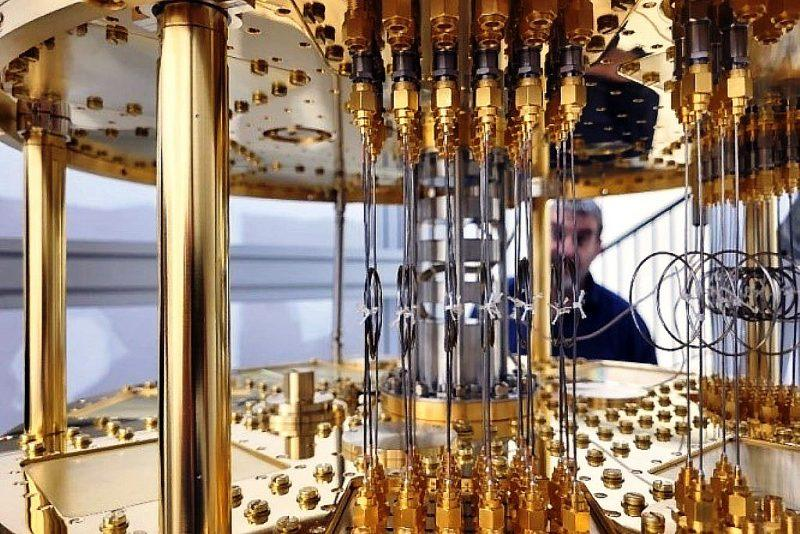
Quantum computing has been described as the next frontier of computation, with the potential to revolutionize industries ranging from healthcare to logistics. Unlike classical computers, which rely on binary bits (0 or 1), quantum computers use qubits, which can exist in multiple states simultaneously due to superposition. This enables unprecedented computational power.
However, the field has faced a persistent and fundamental challenge: instability. Qubits are highly sensitive to environmental factors such as temperature fluctuations and magnetic interference. Even minor disturbances can introduce errors, making reliable large-scale quantum computing difficult to achieve.
Currently, quantum processors experience errors roughly every 1,000 operations. For real-world commercial applications, this must be reduced to less than one error per trillion operations—a gap that has long limited practical adoption.
Nvidia’s Breakthrough: AI Meets Quantum Stability
One of the most notable developments unveiled during World Quantum Day 2026 is the release of Ising, a family of open-source AI models designed to address quantum computing’s most critical limitation: noise and error correction.
This initiative represents a significant step toward stabilizing quantum systems and making them viable for industrial use.
Automating Calibration: From Days to Hours
Traditionally, calibrating a quantum computer is a highly manual and time-consuming process, often requiring days of work by specialized experts. The Ising Calibration model introduces a new approach.
Using a Visual Language Model (VLM), the system can:
- Interpret experimental results
- Adjust processor parameters in real time
- Automate complex calibration workflows
The result is a dramatic reduction in setup time—from several days to just a few hours. According to benchmark comparisons, this model outperforms several leading AI systems in calibration accuracy .
Real-Time Error Correction at Scale
The second component, Ising Decoding, addresses error correction during computation. Given the fragility of qubits, continuous monitoring and correction are essential.
This model uses advanced 3D neural networks to:
- Detect errors as they occur
- Correct them faster than they accumulate
- Improve both speed and accuracy compared to existing tools
In practical terms, decoding performance can be more than twice as fast as current standards, making it feasible to scale quantum systems to millions of qubits .
A Market Reaction That Signals Confidence
The announcement of these advancements did not go unnoticed in financial markets. On World Quantum Day 2026, shares of several quantum-focused companies surged:
- IonQ: +14%
- Rigetti Computing: +12%
- D-Wave Quantum: +11%
This upward movement reflects growing investor confidence in the sector’s long-term potential. The event itself acts as a media and investment amplifier, drawing attention to technological progress and encouraging capital inflows .
The global quantum computing market is projected to exceed $11 billion by 2030, with some estimates suggesting it could reach hundreds of billions by 2040. Such projections underscore why investors are increasingly viewing quantum technology as comparable to the early days of the internet or artificial intelligence.
Beyond Hype: Real Adoption Is Already Underway
Unlike earlier phases of quantum development, recent advancements are being integrated into real-world workflows. Research institutions and industry players—including universities and national laboratories—have already begun deploying AI-driven calibration and decoding tools.
This shift indicates a transition from theoretical exploration to applied engineering. Companies are now able to operate quantum systems without requiring large teams of specialized researchers, significantly lowering the barrier to entry.
At the same time, major technology firms continue to invest heavily in quantum research, often in collaboration with academic institutions. This ecosystem—combining public funding, private investment, and scientific expertise—is accelerating innovation.
The Broader Impact: Economy, Security, and Society
Quantum computing’s potential extends far beyond faster calculations. Its implications are systemic:
- Cryptography and cybersecurity: Quantum machines could break current encryption systems, forcing a global transition to quantum-resistant security.
- Healthcare: Simulating molecular interactions could accelerate drug discovery.
- Logistics and supply chains: Complex optimization problems could be solved in seconds.
- Climate modeling: More accurate simulations could improve environmental forecasting.
At the geopolitical level, quantum technology is becoming a strategic asset. Governments in the United States, Europe, and China are investing heavily to secure leadership in this domain, recognizing its implications for defense, intelligence, and economic competitiveness.
Risks and Realities: A Sector Still in Formation
Despite the optimism, the quantum sector remains in an early stage of development. Several risks persist:
- Technological uncertainty: Key challenges, particularly error correction and scalability, are not fully resolved.
- Lack of profitability: Many companies in the sector are still pre-revenue or dependent on funding.
- Market volatility: Investor enthusiasm can lead to speculative bubbles and sharp corrections.
- Regulatory concerns: The impact on cybersecurity may prompt strict oversight.
These factors highlight the need for a long-term perspective. While the potential is substantial, widespread adoption will likely be gradual.
A Turning Point for Quantum Technology
World Quantum Day 2026 illustrates a broader transformation: quantum computing is moving from theoretical promise to practical reality. The integration of artificial intelligence into quantum systems—particularly for error correction and calibration—marks a critical milestone.
Rather than being a distant vision, quantum technology is now entering a phase of measurable progress, attracting both scientific validation and financial commitment.
The significance of this shift lies not only in the technology itself but in what it represents: a new computational paradigm that could redefine industries, reshape economies, and alter the balance of global technological power.
Conclusion
The “Journée mondiale du quantique” has evolved into more than a symbolic observance. In 2026, it has become a platform for major announcements, a driver of market activity, and a signal of accelerating innovation.
While challenges remain, the convergence of AI, quantum research, and investment momentum suggests that the field is approaching a critical inflection point. For businesses, governments, and researchers alike, the message is clear: quantum computing is no longer a distant possibility—it is an emerging reality that demands attention.


