


“The Rookie: Out of Time” — A Turning Point That Redefines Season 8
Introduction: When Time Runs Out, Stakes Rise
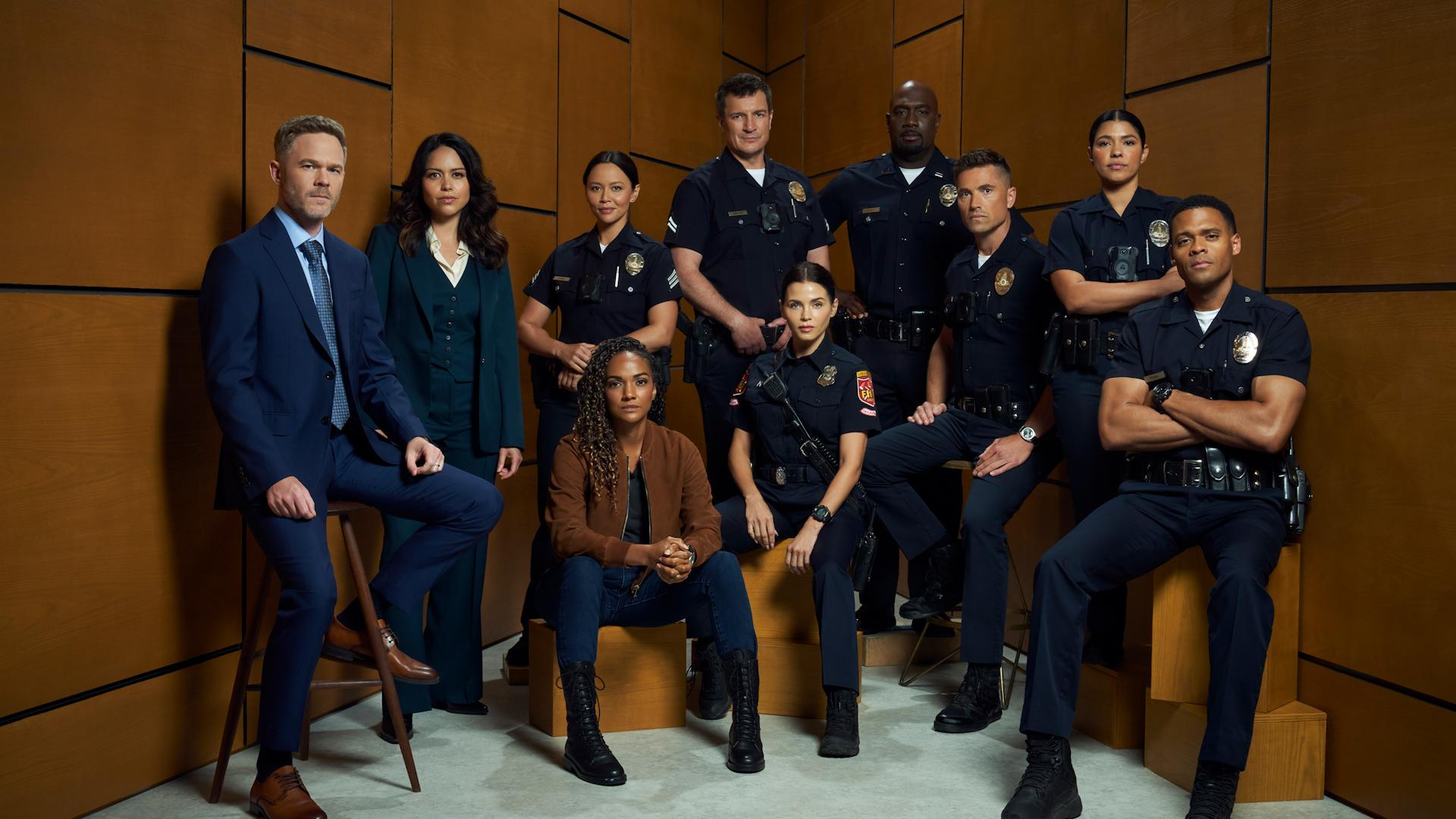
Season 8 of The Rookie has consistently balanced procedural storytelling with emotional character arcs, but Episode 16, titled “Out of Time,” shifts the tone significantly. Rather than functioning as a standalone case, the episode acts as a structural pivot—laying the groundwork for a multi-episode narrative that drives directly into the season finale.
At its core, “Out of Time” explores moral ambiguity, escalating threats, and the psychological strain of policing in a system where justice is rarely straightforward. The result is an episode that feels less like a weekly installment and more like the opening chapter of a high-stakes endgame.
A Narrative Shift: The Beginning of a Three-Act Finale
“One thing becomes immediately clear: this is not a self-contained story.”
Episode 16 operates as Act I of a broader three-part arc, introducing multiple storylines that deliberately avoid resolution. Instead of closure, viewers are given fragments—threads that will converge later in the season.
As noted in early reactions, the episode “couldn’t be taken as a standalone… it’s part of a much larger picture” .
This structural choice signals a deliberate pacing strategy. Rather than episodic closure, the show leans into serialized storytelling, increasing tension and viewer investment as the finale approaches.
John Nolan’s Moral Test: Protecting the Enemy
At the center of “Out of Time” is John Nolan, portrayed by Nathan Fillion. Nolan is forced into an ethically complex situation: protecting a man he neither trusts nor respects.
That man is Liam Glasser—a manipulative and dangerous figure with a long list of enemies. Nolan’s assignment is not just tactical; it is philosophical.
- Can justice exist when the system requires protecting those who exploit it?
- What does duty mean when it conflicts with personal morality?
This tension defines the episode. Nolan’s eventual act—taking a bullet to protect Glasser—underscores the paradox of law enforcement: safeguarding even those who undermine the law itself .
The Villain Landscape: Glasser and Monica Tighten the Net
Liam Glasser: The Calculated Threat
Glasser emerges as one of the season’s most formidable antagonists. His strategy is not brute force but manipulation.
- He orchestrates scenarios that force the police to protect him
- He exploits legal loopholes and public perception
- He weaponizes personal relationships, particularly involving his ex-wife and child
Critically, Glasser is not reactive—he is proactive. He constructs narratives where he appears as the victim while destabilizing everyone around him. His ability to “manipulate everything to make his ex look crazy and himself like the victim” intensifies the psychological stakes .
Monica: The Unpredictable Operator
Running parallel is Monica, a character defined by shifting loyalties and strategic opportunism.
- She “plays both sides,” creating instability across multiple fronts
- Her decisions escalate risk not only for herself but for law enforcement
- Her actions hint at betrayal that could endanger both the FBI and LAPD
This dual-villain structure adds complexity. Glasser represents calculated control; Monica embodies chaotic ambition. Together, they create a layered threat environment that extends beyond a single case.
Supporting Arcs: Character Dynamics Under Pressure
Lucy Chen and Celina Juarez: Following the Lead
Lucy Chen and Celina Juarez contribute to the investigative backbone of the episode, pursuing a promising lead tied to the larger narrative.
Their role reinforces the ensemble nature of the show, ensuring that the storyline expands horizontally rather than focusing solely on Nolan.
Angela Lopez and Wesley Evers: Professional Conflict Returns
Angela Lopez faces internal conflict regarding her husband Wesley Evers and his new professional direction.
This tension echoes earlier seasons, reintroducing a dynamic where personal relationships intersect with legal and ethical boundaries. It also adds emotional weight to an already complex narrative.
Nyla Harper: A Voice of Realism
Nyla Harper delivers one of the episode’s most grounded perspectives. Her interactions highlight systemic realities—particularly how legal systems can be manipulated by individuals like Glasser.
Her candid assessment of how the system may treat victims versus perpetrators adds a layer of social commentary that extends beyond the immediate plot .
Twists, Chaos, and Procedural Complexity
“Out of Time” thrives on unpredictability. The central case unfolds through multiple misdirections:
- A failed assassination attempt on Glasser introduces immediate tension
- Suspicions shift between his ex-wife, orchestrated self-harm, and external attackers
- The eventual revelation ties back to one of Glasser’s victims, reinforcing the ripple effects of his crimes
These narrative turns are not arbitrary. They reflect the chaotic nature of real-world policing, where clarity is often delayed and truth emerges through layers of contradiction.
Emotional Undercurrents: Romance and Humanity
Amid the tension, the episode maintains the show’s signature balance by integrating lighter, character-driven moments.
The developing relationship between Tim Bradford and Lucy Chen introduces a softer counterpoint. The anticipation of a proposal adds emotional continuity, reminding viewers that life persists beyond the badge.
These moments are not filler—they are structural. They prevent narrative fatigue and reinforce audience attachment to the characters.
Building Toward the Finale: What Comes Next
Episode 16 sets the stage for the remaining chapters of Season 8:
- Episode 17 (“Dead Ringer”) continues the escalation, introducing new emotional stakes
- Episode 18 (“The Bandit”) promises a high-intensity search for a major criminal target
Collectively, these episodes form a cohesive arc that transitions the series from episodic storytelling into serialized drama.
Importantly, the show has already secured a future, with Season 9 confirmed. This allows the writers to build tension without the constraint of immediate closure.
Why “Out of Time” Matters
This episode represents more than just another installment—it is a recalibration of the show’s narrative direction.
Key impacts include:
- Structural evolution: A shift toward multi-episode storytelling
- Character depth: Increased focus on ethical dilemmas and psychological strain
- Narrative intensity: Higher stakes driven by layered antagonists
- Thematic expansion: Exploration of justice, manipulation, and systemic flaws
In effect, “Out of Time” transforms Season 8 from a sequence of cases into a unified narrative with a clear trajectory.
Conclusion: A Strategic Turning Point
“The Rookie: Out of Time” succeeds because it understands its role within the broader season. It does not attempt to resolve—it prepares, escalates, and complicates.
By placing John Nolan in a morally compromised position, amplifying the threat of antagonists like Glasser and Monica, and weaving together multiple character arcs, the episode establishes a foundation for a compelling finale.
The result is a narrative that feels urgent, interconnected, and deliberately unresolved—exactly what a pre-finale chapter should deliver.


