
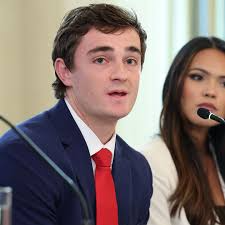
Nick Shirley, the “Stop Nick Shirley Act,” and California’s New Fight Over Fraud Videos
A fresh political fight in California has turned a social-media investigator into the center of a broader argument about journalism, privacy, immigration politics, and the limits of public exposure. At the heart of the dispute is a proposal described by critics as the “Stop Nick Shirley Act,” a label attached to a California bill that opponents say could punish the publication of videos used to expose fraud, while supporters frame it as a response to doxxing and safety concerns.
That clash has accelerated quickly. By April 14, 2026, the issue had moved from online argument to mainstream political attention, with Nick Shirley denouncing the measure on video, Elon Musk amplifying the controversy on X, Carl DeMaio attacking the proposal in stark constitutional terms, and local television coverage describing Assembly Bill 26-24 as having advanced in the California State Assembly. At the same time, the bill has been tied in public discussion to Assemblymember Mia Bonta, who is identified in the provided material as its author and as the wife of California Attorney General Rob Bonta.
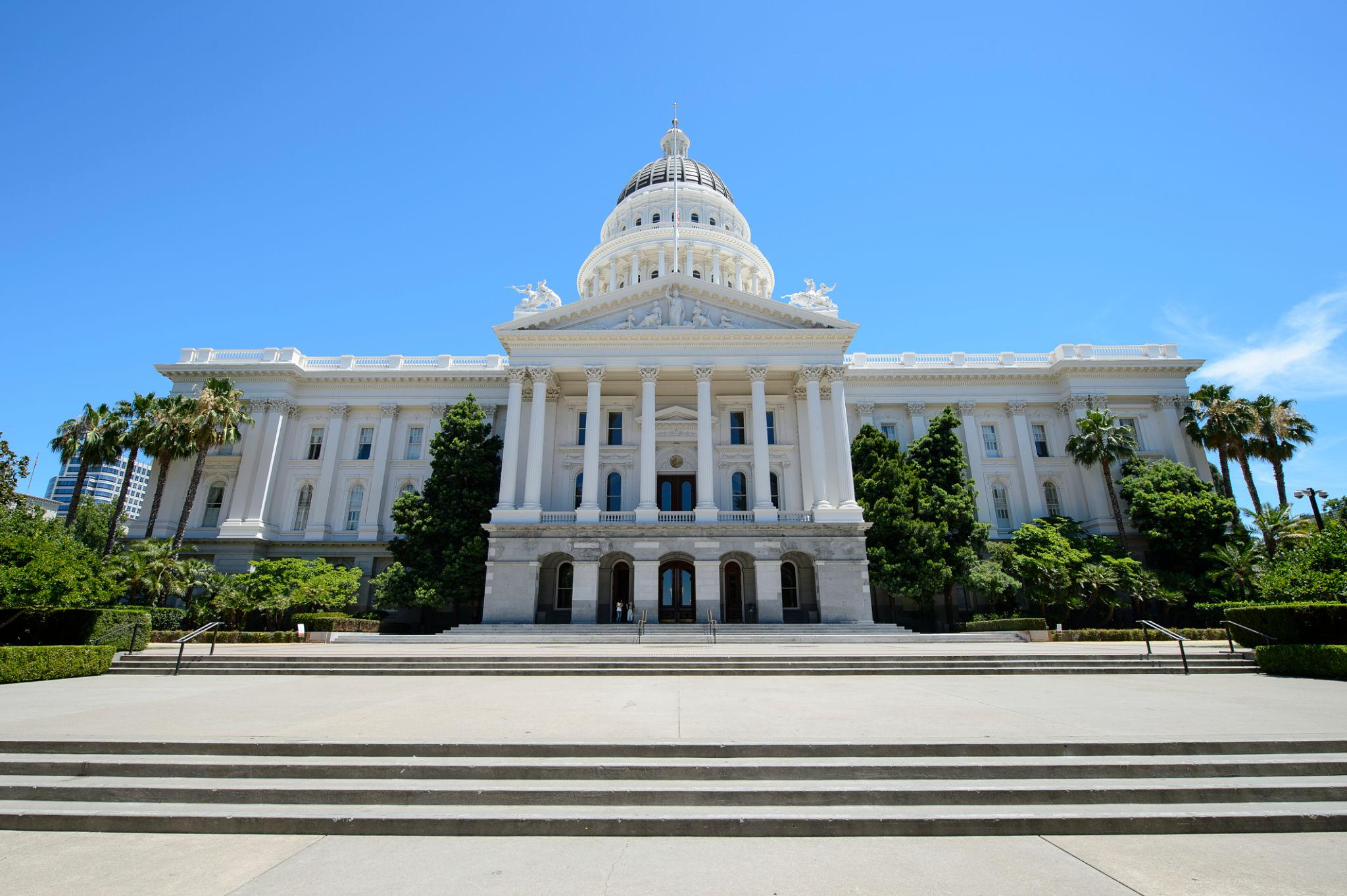
How the controversy escalated
The conflict did not begin as a narrow legislative dispute. It emerged from Nick Shirley’s rise as a political content creator whose work has focused on alleged fraud, especially in connection with daycare and social-service systems. In the material provided, Shirley is described as a Utah-born content creator whose investigations into Somali daycare fraud in Minnesota helped make him prominent. He later turned that attention toward California, where he claimed to have found new irregularities tied to the state’s healthcare and childcare systems.
That shift matters because the California bill is being debated not in the abstract, but in direct relation to Shirley’s methods and reach. Critics of the proposal argue that it is a response to citizen journalists using video, confrontation, and viral distribution to force public attention onto suspected abuse of taxpayer-funded systems. The nickname “Stop Nick Shirley Act” reflects that belief: that the measure is not just policy, but political backlash against a specific type of investigator.
Why AB 2624 became a flashpoint
In the source material, Shirley alleges that California is trying to pass a bill that would “criminalize investigative journalism with misdemeanors, $10,000 fines, imprisonment, and content takedown.” He says the proposed law is AB 2624 and argues that it was created after he exposed “mass fraud by immigrant groups in America.” He further claims the bill would shield “government-funded entities like the Somali ‘Learing’ Daycare centers” from exposure if they operated in California. Those allegations were then amplified online, including by Musk, who wrote, “California legislators are trying to make investigating fraud illegal,” while resharing Shirley’s claims.
The framing from Shirley and his allies is blunt: this is not a privacy bill, they argue, but an anti-exposure bill. In that reading, the state is not addressing the fraud allegations themselves, but trying to restrict the tools used to publicize them.
Yet the conflict is more complicated than the slogan. The material you provided also states that the bill’s author says the legislation seeks to prevent doxxing. That distinction is central. If the legislative intent is to stop targeted exposure of individuals or organizations in ways that create safety risks, then the political fight becomes a classic collision between privacy rights and aggressive watchdog tactics. If, on the other hand, the bill functionally suppresses video evidence and threatens penalties for publication, critics will continue to frame it as a First Amendment battle.
The language of punishment is driving the backlash
One reason the issue has spread so quickly is that the criticisms are not measured. They are designed to land hard.
Shirley says the bill could lead to misdemeanors, fines, imprisonment, and forced takedowns. Carl DeMaio goes even further in the material provided, calling AB 2624 a bill “designed to silence citizen journalists exposing fraud and abuse of taxpayer dollars.” He says California Democrats are “trying to intimidate citizen watchdog journalists and protect waste and fraud happening in far-Left-wing NGOs.” He also argues that the proposal could allow organizations to demand removal of videos, even if recorded in public, while imposing heavy penalties on those who publish them.
His most pointed line captures why the controversy has become larger than one creator or one bill: “If this bill becomes law, the message is clear to every journalist in California: expose corruption and you will be punished.” That is the argument opponents want the public to absorb. Not that one controversial creator is being targeted, but that a precedent is being built for punishing visual documentation itself.
The Musk factor turned a state dispute into a national one
Elon Musk’s intervention mattered because it converted a regional legislative story into a national ideological one. His post did not merely signal interest in the dispute. It endorsed the most aggressive interpretation of it: that California lawmakers are trying to make fraud investigations illegal. Once that message entered the algorithmic bloodstream, the issue stopped being a California committee matter and became another symbolic battle in the culture war over censorship, journalism, immigration, and public institutions.
That is one reason this story now travels well beyond Sacramento. It sits at the intersection of several highly combustible themes:
Investigative content as activism.
Immigrant services and public funding.
Online video as political enforcement.
Distrust of state institutions.
The role of influencers in shaping public accountability.
In practical terms, Musk’s involvement gave Shirley’s claims more visibility, more ideological reinforcement, and a larger audience predisposed to see regulation of exposure as suppression.
Shirley’s California allegations gave the debate a concrete target
Political controversies gain traction when they attach themselves to vivid examples. Shirley’s California claims supplied that. In one video described in the source material, he visits a location he identifies as Healthy Life Adult Daycare and questions how the facility reportedly billed $19.8 million while appearing inactive when he arrived. In the clip, he says: “Now we are here outside of Healthy Life Adult Daycare. This place, over the past few years, has billed $19.8 million alone. Now let’s go see if I can enroll my grandma, because she needs some daycare.”
Whether audiences see that as legitimate investigation, political theater, or some combination of both, it explains why the bill has provoked such a sharp reaction. Shirley is not presenting spreadsheets in a hearing room. He is using location-based video, confrontation, and a direct-to-audience style that compresses accusation, performance, and public pressure into one product.
That method is precisely what supporters of restrictions may find dangerous and what defenders of citizen journalism see as newly indispensable.
The University of Utah appearance showed Shirley’s political positioning
Another important part of the story is that Shirley is no longer operating solely as a freelance online investigator. He is also becoming a figure within a broader conservative political ecosystem.
At the University of Utah on April 11, 2026, he spoke at an event hosted by the Utah Federation of College Republicans and the Leadership Institute, alongside elected officials and party organizers. There, he presented himself as someone coming off “one of the most important 48 hours of his life,” saying he had met with Elon Musk, Donald Trump and JD Vance just hours earlier. He described his work exposing fraud in California and Minnesota, then urged students to act locally: “Especially if you’re in school, you can make a difference where your feet are at.”
That appearance matters for two reasons. First, it shows Shirley’s investigations being folded into a broader conservative mobilization narrative. Second, it helps explain why the California bill is being discussed not just as media regulation, but as a front in a wider ideological struggle.
Mia Bonta’s role sharpened the political edge
The legislation has also attracted attention because of who critics say is behind it. In the material provided, Shirley identifies Mia Bonta as the legislator who proposed the bill and stresses that she is “the wife of Attorney General Rob Bonta.” He then escalates the accusation further: “The Attorney General of California’s wife is trying to silence me and other journalists who are exposing fraud. Are your donors mad they are being exposed?”
That formulation is doing political work. It turns a legislative dispute into an establishment conflict. The implication is not simply that lawmakers disagree with Shirley’s methods, but that political power is being deployed to protect connected interests from scrutiny.
No proof of that motive is established in the material provided, and that distinction matters. But as rhetoric, it is effective. It gives opponents a clean story: investigator exposes possible fraud, state insiders respond with a punitive bill, and the public is asked to decide whether privacy language is masking political self-protection.
Even the bill number has become part of the confusion
One notable complication is that the public-facing discussion appears messy enough to create confusion around the exact bill designation itself. The material you provided repeatedly identifies the measure as AB 2624, while local television copy refers to “Assembly Bill 26-24.” An official California legislative search result available publicly does not clearly line up with the same subject matter under that bill number, which suggests the online debate may be moving faster than the public record is being cleanly described.
That does not erase the controversy. It does, however, underscore an important point: in fast-moving political battles shaped by clips, reposts, and partisan branding, the narrative often hardens before the legislative details are widely understood.
Why this fight resonates beyond California
The deeper significance of the “Stop Nick Shirley Act” label is that it captures an emerging conflict over who gets to perform accountability in public.
For decades, watchdog reporting was associated with newsrooms, document review, editorial process, and institutional backing. Shirley represents a different model: mobile, confrontational, personality-driven, algorithmically distributed, and often inseparable from ideological identity. His defenders see that model as necessary because they believe traditional institutions miss, soften, or avoid stories involving fraud, immigration, or misuse of public funds. His critics are more likely to see it as reckless exposure that can veer toward harassment, misidentification, or inflammatory framing.
California’s debate therefore touches several unresolved questions:
Can governments restrict the publication or forced removal of certain videos without chilling legitimate public-interest reporting?
When does exposing suspected wrongdoing become doxxing?
Should taxpayer-funded organizations receive stronger privacy protections if employees, clients, or affiliated communities may be at risk?
What legal framework applies when citizen journalism operates through monetized platforms and political branding rather than conventional newsroom standards?
Those are not fringe questions anymore. They are becoming structural questions for the internet-era public sphere.
What happens next
Based on the material you provided, the immediate future of the issue will likely unfold across three fronts.
The first is legislative: whether the bill advances further, is amended, or becomes a wider California free-speech fight.
The second is media: whether more outlets, commentators, and online communities continue to frame it as a transparency issue rather than a privacy bill.
The third is strategic: whether Shirley follows through on his suggestion that he may “go back to California” with a “new exposé coming soon.”
If he does, that could intensify the dispute immediately. A new viral investigation released while the bill is being debated would almost certainly be treated by supporters as proof of why exposure matters and by critics as proof of why regulation is necessary.
Conclusion
The fight over the so-called “Stop Nick Shirley Act” is not just about one creator and not just about one California bill. It is about the unstable line between privacy and transparency in an age when investigative work can come from a YouTube channel instead of a newsroom, when a viral clip can move faster than a legislative analysis, and when lawmakers, influencers, and billionaires all compete to define what public accountability looks like.
Nick Shirley and his allies have framed the measure as an attempt to “criminalize” fraud exposure. The bill’s defenders, as described in the provided material, say it is aimed at preventing doxxing. Between those two claims lies the actual fight: who gets exposed, who gets protected, and who gets to decide when a camera is serving the public interest rather than crossing a line.
That is why this story has broken out of state politics and into the national conversation. It speaks to a deeper anxiety running through American public life: whether new forms of citizen journalism will be protected as accountability tools or constrained as threats.


