


Star Wars Day: How “May the 4th” Became a Global Cultural Phenomenon
From a Clever Pun to a Worldwide Celebration
Every year on May 4, millions of fans across the globe unite under a simple yet powerful phrase: “May the 4th be with you.” What began as a clever linguistic twist on the iconic line “May the Force be with you” has evolved into a fully-fledged global celebration of one of the most influential franchises in modern entertainment.
Star Wars Day, now firmly embedded in global pop culture, represents more than just fandom—it is a reflection of how storytelling, community, and commerce can converge into a cultural event of remarkable scale.
Origins: A Political Joke That Sparked a Movement
The roots of Star Wars Day stretch back further than many might expect. While the phrase feels inseparable from the films, its earliest recorded public use came in 1979, when the UK Conservative Party used “May the 4th be with you” in a newspaper advertisement congratulating Margaret Thatcher on becoming prime minister.
For years, the phrase remained a niche curiosity. It wasn’t until the early 2000s, fueled by the rise of online communities and social media, that fans began widely adopting the expression as an informal holiday. What started as scattered fan enthusiasm gradually coalesced into something more organized and visible.
The Turning Point: Organized Celebrations Begin
A defining milestone came on May 4, 2011, when the first known organized Star Wars Day celebration was held at the Toronto Underground Cinema in Ontario, Canada.
For an $8 admission fee, fans were treated to a fully immersive experience that set the blueprint for future celebrations. The event featured:
- A Star Wars trivia game show
- A cosplay costume contest
- Tribute and parody films sourced from across the internet
- A screening of a vintage 35mm print of the original film
- A special appearance by the 501st Canadian Garrison of Stormtroopers
The success of this event led to a second annual celebration, signaling that Star Wars Day had transitioned from an informal fan tradition into an organized cultural event.
Disney’s Role: From Grassroots to Global Brand
The evolution of Star Wars Day accelerated dramatically following Disney’s acquisition of Lucasfilm in 2012. By 2013, the celebration had transformed into a major annual event with official branding, large-scale promotions, and experiences across Disney parks and platforms.
Today, Star Wars Day is not only a fan-driven celebration but also a cornerstone of Disney’s global marketing strategy. The company leverages the date to launch new products, announce upcoming projects, and engage audiences through interactive campaigns.
For example, in 2026, Disney Africa introduced “Mando Mondays,” encouraging fans to follow Star Wars-themed content, competitions, and product reveals throughout May.
A Global Celebration: From Toronto to Seoul
What was once a localized fan gathering has grown into a worldwide phenomenon. On May 4, 2026, celebrations were visible across continents, including large-scale public events such as parades featuring costumed characters.
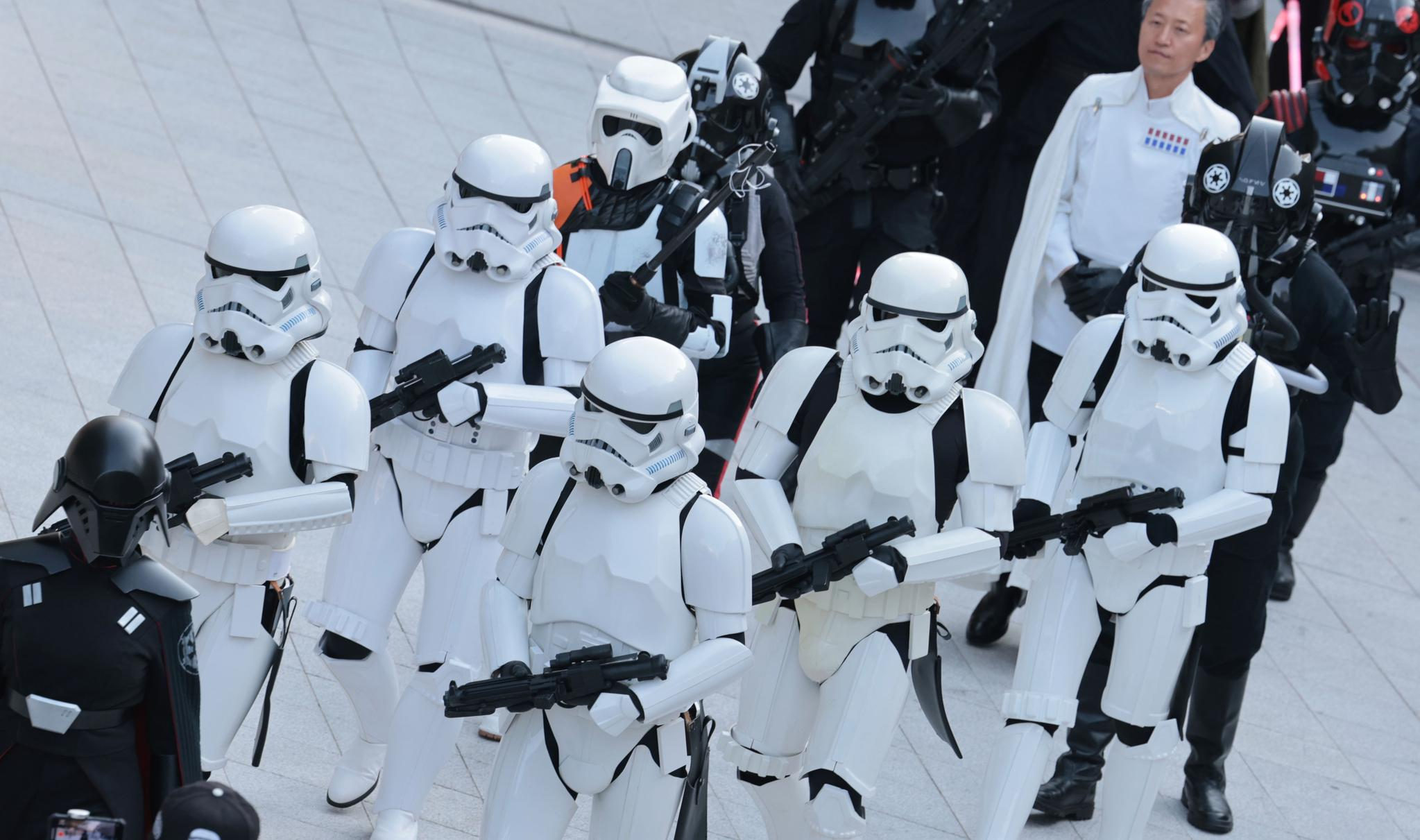
In Seoul, South Korea, members of the 501st Legion Korean Garrison dressed as Star Wars characters and marched in celebration—demonstrating the international reach and enduring appeal of the franchise.
These events highlight how Star Wars Day transcends geography, uniting fans from diverse cultures through a shared narrative universe.
How Fans Celebrate Today
Star Wars Day has developed a rich ecosystem of traditions that combine entertainment, creativity, and community engagement.
Movie Marathons and Streaming Culture
Fans revisit the entire Star Wars saga, from the original trilogy to modern spin-offs like “Rogue One” and “Solo.” Streaming platforms such as Disney+ make it easier than ever to access films and series including “The Mandalorian,” “Ahsoka,” and “Andor.”
Cosplay and Community Events
Costume gatherings remain central to the celebration. Organizations like the 501st Legion play a prominent role, often participating in public events and charitable initiatives such as hospital visits.
Merchandise and Collectibles
Retail activity peaks around May 4, with exclusive product releases ranging from apparel to collectibles. In 2026, collaborations with brands like Cakeworthy and RSVLTS introduced wearable Star Wars designs featuring iconic characters such as Chewbacca, Yoda, and Han Solo.
Meanwhile, toy lines and collectibles tied to upcoming releases—such as Grogu-themed figures and LEGO sets—continue to drive consumer engagement.
Food, Gaming, and Creative Activities
Fans also celebrate through themed cooking, crafts, and interactive experiences, blending entertainment with family-friendly activities that extend the reach of the holiday beyond traditional fandom spaces.
2026 Spotlight: A Franchise Still Expanding
Star Wars Day 2026 arrives at a moment of renewed momentum for the franchise. The upcoming theatrical release of “The Mandalorian and Grogu” on May 22 marks the first Star Wars film since 2019’s “The Rise of Skywalker.”
Starring Pedro Pascal and Sigourney Weaver, the film continues the story of Din Djarin and Grogu as they navigate a post-Empire galaxy, reflecting the franchise’s ongoing narrative expansion.
Looking ahead, additional projects—including “Star Wars: Starfighter,” expected in 2027—signal that the saga remains far from complete.
Cultural and Economic Impact
Star Wars Day is not merely symbolic—it carries tangible cultural and economic weight. In 2019, California lawmakers officially recognized May 4 as Star Wars Day, citing its importance to tourism and its connection to Disney’s themed attractions.
The day also drives significant commercial activity, from merchandise sales to media consumption, reinforcing the franchise’s position as a powerhouse in the entertainment industry.
Yet, despite its commercialization, the celebration retains its grassroots spirit. It remains rooted in fan creativity, shared nostalgia, and a collective appreciation for storytelling.
Conclusion: A Celebration That Bridges Generations
Nearly five decades after its debut in 1977, Star Wars continues to captivate audiences worldwide. Star Wars Day stands as a testament to the franchise’s enduring relevance—an annual moment when fans revisit beloved stories, connect with one another, and celebrate a universe that has shaped modern pop culture.
What began as a simple pun has evolved into a global tradition—one that shows no signs of fading as new stories, characters, and generations join the galaxy far, far away.


