

Lesotho: A High-Altitude Nation Shaping Regional Futures
A Mountain Kingdom at the Center of Southern Africa
Lesotho is often described as a country defined by elevation—an entirely landlocked nation surrounded by South Africa and dominated by rugged highlands. Yet beyond its dramatic geography lies a country increasingly central to regional infrastructure, migration policy, and economic cooperation.
Recent developments show that Lesotho is not merely adapting to regional pressures but actively shaping cross-border systems—particularly in water management, mobility, and infrastructure. From ambitious engineering projects beneath its mountains to policy shifts affecting thousands of people, Lesotho is emerging as a strategic player in Southern Africa’s future.
Geography Meets Opportunity: Why Lesotho Matters
Lesotho’s terrain is both its challenge and its advantage. Roughly three-quarters of its eastern region is mountainous, with elevations often exceeding 2,000 meters. This topography has historically limited connectivity and economic diversification. However, it has also endowed the country with abundant water resources—arguably its most valuable natural asset.
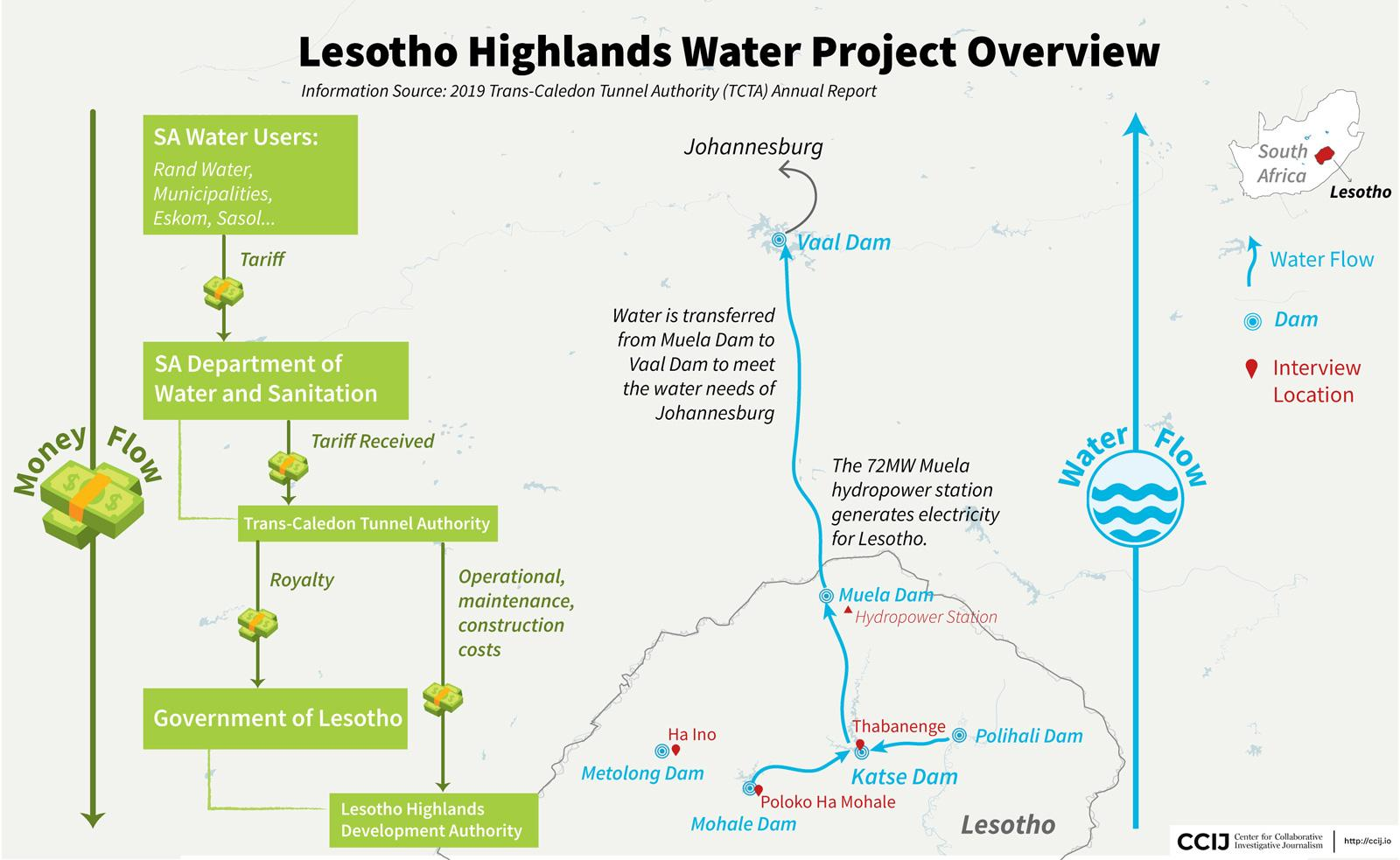
This resource has positioned Lesotho at the heart of one of Africa’s most significant cross-border initiatives: the Lesotho Highlands Water Project (LHWP).
Engineering Ambition Beneath the Highlands
At the core of Lesotho’s transformation is a major infrastructure undertaking deep beneath its mountainous terrain. In the Mokhotlong district, advanced tunnel boring machines are carving a 34-kilometer passage through solid rock as part of Phase II of the LHWP.
The project involves complex geological conditions, requiring high-precision engineering. Two massive machines—each weighing about 1,500 tonnes—are working from opposite ends, with engineers aiming for millimeter-level accuracy when they meet.
This tunnel will significantly increase Lesotho’s capacity to transfer water to South Africa, boosting annual volumes from 780 million cubic meters to 1.27 billion cubic meters.
Economic and Social Spillover
Beyond its technical scale, the project is reshaping local communities:
- Over 2,000 jobs have already been created
- Training programs target 3,500 skilled workers
- Infrastructure improvements include roads, clinics, and community facilities
For many residents, the project represents more than employment—it offers long-term skills and economic stability.
The Senqu Bridge: Connecting a Challenging Landscape
Complementing underground engineering is a major surface infrastructure project: the Senqu Bridge. Valued at approximately $146.7 million, the bridge spans 825 meters and rises 90 meters above ground, making it one of the most significant structures in the region.
Its strategic importance is clear:
- It will replace routes that will be submerged by the future Polihali reservoir
- It ensures continuity of the national road network
- It improves access to essential services in remote areas
The bridge is not just a transport link—it is part of a broader effort to integrate Lesotho more effectively into regional economic systems.
Rethinking Borders: A New Migration Model
While infrastructure projects reshape the physical landscape, policy reforms are redefining how people move across borders.
In April 2026, Lesotho and South Africa announced a significant shift: citizens will soon be able to cross the border using only national identity documents instead of passports.
This change is part of a broader migration model aimed at simplifying cross-border movement and reducing administrative bottlenecks.
Key Elements of the Reform
- ID-based travel: Citizens can use national IDs instead of passports
- Electronic gates: Automated systems will streamline border crossings
- Single processing point: Joint operations by both countries at one location
Children under 16 will still require passports, and traditional travel documents remain necessary for international travel beyond South Africa.
Amnesty for Overstayers
Another critical component is an amnesty program for Basotho citizens previously banned from South Africa due to overstaying.
- Affected individuals must register with Lesotho’s immigration authorities
- Only non-criminal cases are eligible
- Verification will be conducted jointly with South African authorities
This policy aims to reset migration records and reduce irregular movement.
Labor, Education, and Mobility: Expanding Cooperation
Migration reforms extend beyond border control. Discussions between the two countries have also addressed labor mobility and education.
Labor Market Integration
Authorities are exploring:
- Work quotas for Basotho in South Africa
- Defined durations for employment contracts
- Recognition of specialized skills, such as wool shearing
This signals a more structured approach to cross-border labor flows.
Student Mobility Challenges
For students, one persistent issue has been the requirement to obtain South African medical insurance when studying across the border. Both countries are now considering recognition of Lesotho-based schemes, which could reduce costs and improve accessibility.
Extended Stay Options
Under a proposed electronic travel authorization system:
- Visitors could extend stays from 90 days to 180 days
- Extensions would require valid justification
This aims to reduce overstaying while providing flexibility.
Environmental and Technological Considerations
Large-scale infrastructure in a fragile ecosystem demands careful management. The LHWP incorporates several environmental safeguards:
- Wastewater treatment systems
- Third-party environmental monitoring
- Soil restoration techniques such as hydroseeding
Technologically, the project demonstrates the growing role of advanced engineering in Africa, including:
- Forward-probing drill systems
- Two-component grouting for tunnel stability
- Automated monitoring systems
These innovations are setting new benchmarks for infrastructure development in challenging environments.
Regional Implications: Water, Trade, and Integration
Lesotho’s current trajectory has implications far beyond its borders.
Water Security
The LHWP is critical for addressing water shortages in multiple South African provinces. As climate variability intensifies, such cross-border systems will become increasingly important.
Economic Integration
Projects like the Senqu Bridge and streamlined border policies are reducing friction in trade and mobility, potentially boosting:
- Cross-border commerce
- Labor mobility
- Investment flows
Strategic Positioning
Lesotho’s role as a water supplier and infrastructure partner strengthens its geopolitical relevance within Southern Africa.
What Comes Next?
Not all announced reforms will take effect immediately. Many initiatives—particularly those involving migration systems and labor agreements—require further negotiations and approvals, including discussions at upcoming bilateral commission meetings.
However, the direction is clear: Lesotho is moving toward deeper integration with its regional partner while leveraging its natural and geographic advantages.
Conclusion: A Small Nation with Expanding Influence
Lesotho’s story is evolving. Once defined primarily by its isolation and terrain, it is now increasingly recognized for its strategic assets—water, location, and regional partnerships.
Infrastructure projects are unlocking economic potential. Migration reforms are modernizing mobility. And cross-border cooperation is redefining its role in Southern Africa.
The country’s future will depend on how effectively it balances development with sustainability and how it continues to align national priorities with regional needs. If current trends hold, Lesotho may well transition from a geographically constrained state into a pivotal connector within the region.


