
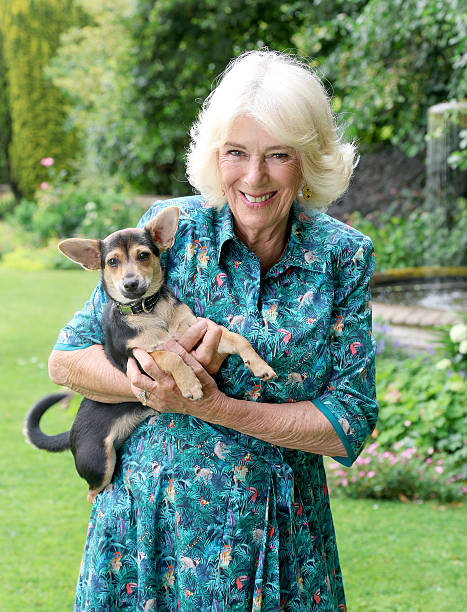
Queen Camilla: A Narrative of Diplomacy, Duty, and Modern Royal Influence
A Queen Consort in a Changing World
Queen Camilla has steadily emerged as one of the most visible and influential figures within the modern British monarchy. Once a controversial public figure, she now occupies a central role alongside King Charles III, shaping royal engagements that extend far beyond ceremonial appearances. Her recent participation in a high-profile state visit to the United States offers a vivid illustration of how her role has evolved—blending diplomacy, cultural outreach, and advocacy into a cohesive royal presence.
The four-day visit across Washington, New York, and Virginia demonstrated not only the monarchy’s enduring symbolic power but also Queen Camilla’s growing influence in areas such as literacy, cultural diplomacy, and international relations.
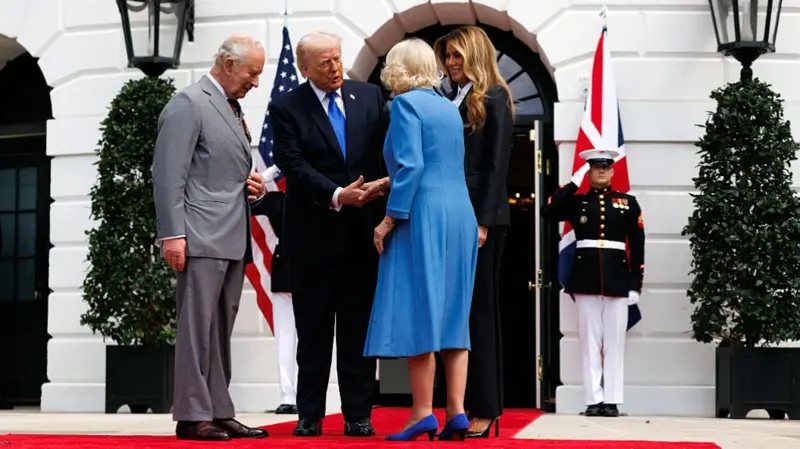
A Moment of Reflection: Honoring History in New York
One of the most poignant moments of the visit came at the 9/11 Memorial in New York, where Queen Camilla joined King Charles III in paying tribute to nearly 3,000 victims of the September 11 attacks.
The royal couple laid a bouquet of white roses beside the reflecting pools, accompanied by a handwritten message:
“We honour the memory of those who so tragically lost their lives on 11th September 2001.
We stand in enduring solidarity with the American people in the face of their profound loss. Charles R Camilla.”
This gesture was more than symbolic. It underscored the monarchy’s role in international remembrance and solidarity, reinforcing historical ties between the United Kingdom and the United States during a moment of shared reflection.
The Queen’s presence—dressed in a black ensemble befitting the solemn occasion—contributed to the gravity of the tribute, while her interactions with victims’ families and first responders highlighted the human dimension of royal diplomacy.
Championing Literacy: Camilla’s Cultural Legacy
While King Charles focused on political and environmental engagements, Queen Camilla’s itinerary revealed a consistent commitment to cultural and educational causes—particularly literacy.
At the New York Public Library, she celebrated the 100th anniversary of Winnie-the-Pooh by reading excerpts to schoolchildren. Her remarks emphasized the transformative power of literature:
“The first Americans I knew and loved were the characters I met in my treasured children’s novels: Little Women, What Katy Did, Charlotte’s Web.”
This event was not merely ceremonial. It aligned with her long-standing advocacy through initiatives such as The Queen’s Reading Room, which promotes reading as a tool for improving mental health, cognitive development, and social well-being.
Her symbolic gesture of bringing a replacement “Roo” toy—missing from the original Winnie-the-Pooh collection since the 1930s—demonstrated a nuanced understanding of cultural heritage and storytelling.
Diplomatic Symbolism Through Style
Queen Camilla’s influence extended even to the subtle language of royal fashion. During the visit, her choice of jewelry conveyed messages of unity and historical continuity.
At the conclusion of the trip, she wore a brooch gifted by President Donald Trump and First Lady Melania Trump—a gold, ruby, and diamond piece symbolizing the enduring alliance between the United Kingdom and the United States.
Earlier, at the 9/11 Memorial, she wore a Britannia brooch—featuring diamonds, rubies, and sapphires—representing British identity and heritage.
Such choices reflect a broader royal tradition: using visual symbolism to reinforce diplomatic narratives without words.
A Role in Strengthening Transatlantic Relations
Beyond cultural engagements, Queen Camilla’s presence supported broader diplomatic objectives. The state visit itself unfolded against a backdrop of geopolitical tensions, particularly regarding the Iran conflict and trade disagreements.
King Charles used his address to the U.S. Congress to emphasize unity:
“Whatever our differences, whatever disagreements we may have, we stand united in our commitment to uphold democracy.”
Within this context, Queen Camilla’s engagements complemented the King’s diplomatic messaging by fostering goodwill at the grassroots level—through education, culture, and community interaction.
Their visit included meetings with business leaders, participation in cultural events, and appearances at public gatherings, all contributing to a broader effort to reinforce the “special relationship” between the two nations.
Honoring Service and Sacrifice
Another defining moment came at Arlington National Cemetery, where Queen Camilla joined King Charles in a solemn wreath-laying ceremony at the Tomb of the Unknown Soldier.
As cannons fired a 21-gun salute, the Queen placed a bouquet of red, white, and purple flowers beside the King’s wreath of red poppies—a symbol of remembrance across the Commonwealth.
The ceremony reflected shared military history and sacrifice between the United States and the United Kingdom, reinforcing a narrative of unity rooted in decades of alliance.
Connecting with Communities: From Libraries to Block Parties
The visit concluded with a markedly different tone in Front Royal, Virginia, where Queen Camilla participated in a community block party celebrating the 250th anniversary of American independence.
Here, she engaged directly with residents, visited youth groups, and even purchased cookies from Girl Scouts—an informal yet meaningful interaction that highlighted her ability to connect with everyday communities.
This shift—from formal ceremonies to grassroots engagement—demonstrated the adaptability of the modern monarchy and Queen Camilla’s role within it.
The Evolving Identity of Queen Camilla
Queen Camilla’s journey to her current position has been complex, shaped by decades of public scrutiny and evolving perceptions. Today, however, her role is increasingly defined by:
- Advocacy for literacy and education
- Cultural diplomacy and heritage preservation
- Support for international relations
- Engagement with local communities
Her approach blends traditional royal responsibilities with contemporary relevance, reflecting a monarchy that is both rooted in history and responsive to modern expectations.
Conclusion: A Modern Royal Figure of Substance
The recent U.S. state visit offers a compelling case study of Queen Camilla’s role in the 21st-century monarchy. Through moments of solemn remembrance, cultural celebration, and community engagement, she has helped redefine what it means to be a queen consort in a globalized world.
Her contributions—often understated but strategically significant—demonstrate that modern royalty is no longer confined to pageantry. Instead, it operates as a form of soft power, shaping international relationships and cultural narratives.
As the British monarchy continues to evolve under King Charles III, Queen Camilla stands as a central figure—bridging tradition and transformation with a distinctly modern touch.


