From Rising Star to Red Carpet Headliner
On May 4, 2026, Hudson Williams stepped onto the Met Gala red carpet for the first time—and did so with a presence that immediately signaled his arrival as a major force in both entertainment and fashion. The 25-year-old Heated Rivalry star didn’t just attend the event; he crafted a narrative, merging cinema, heritage, and high fashion into one of the evening’s most discussed looks.
New York City’s most prestigious fashion night, held at the Metropolitan Museum of Art, provided the perfect backdrop. With the theme “Costume Art” and dress code “Fashion is Art,” the 2026 Met Gala encouraged attendees to explore the relationship between clothing and the human body. Williams embraced that directive fully—arguably more literally than many of his peers.
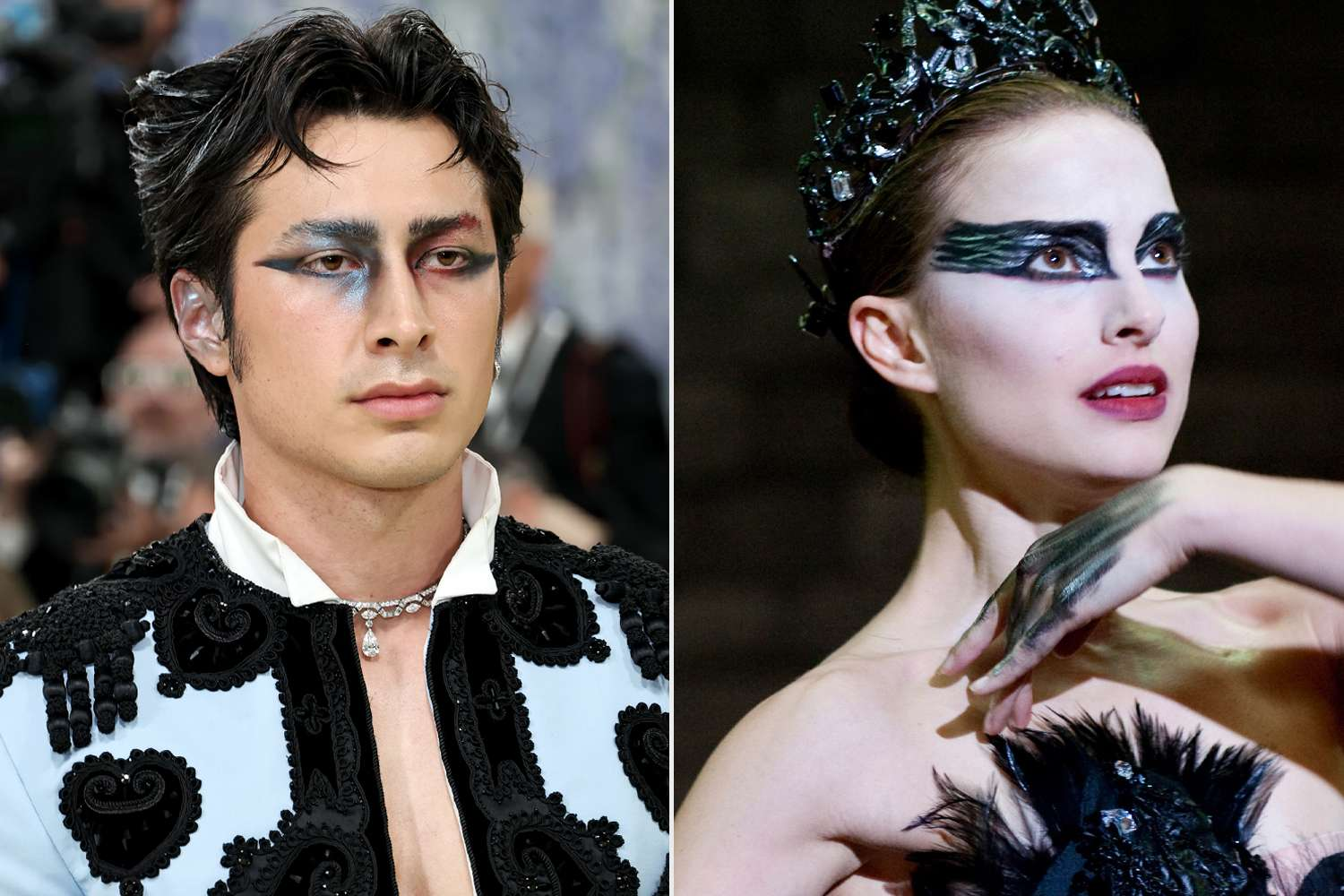
A Matador Reimagined: Fashion Meets History
At the center of Williams’ debut was a custom Balenciaga ensemble designed by Pierpaolo Piccioli. The powder blue two-piece suit drew heavily from the legacy of Cristóbal Balenciaga, particularly a 1947 bolero jacket, while also referencing the traditional attire of Spanish matadors.
The outfit was rich in symbolism and craftsmanship:
- Black crystal embroidery added a layer of ornate detail
- Tassels and structured tailoring evoked classic bullfighting costumes
- Folded trousers and a sweeping black side train mirrored the matador’s cape
- A shirtless presentation transformed the body into part of the artistic canvas
This decision to forgo a shirt was not merely aesthetic—it aligned directly with the gala’s emphasis on the “dressed body” as an art form.
The result was a striking balance between historical homage and contemporary boldness, positioning Williams as both a student of fashion history and a disruptor of its conventions.
The “Black Swan” Transformation
If the outfit established the narrative, the makeup completed it.
Williams’ dramatic eye look—featuring chrome gray, red, and blue tones with exaggerated black wings—was inspired by Darren Aronofsky’s 2010 psychological thriller Black Swan.
Speaking about the concept, the actor emphasized transformation: a progression from innocence to intensity. His groomer Aika Flores described the vision as tracing “the evolution of the white swan shedding its softness to emerge sharper, more elusive, and entirely reborn.”
This cinematic influence added depth to the ensemble. It wasn’t just fashion—it was storytelling through visual cues:
- White Swan → Black Swan symbolized duality and transformation
- Soft elegance → dark intensity mirrored the actor’s rising career trajectory
- Cinema references reinforced the connection between film and fashion
In his own words, Williams noted that he wanted “to reference cinema, with a white swan becoming a black swan.”
A Breakout Moment for a Streaming-Era Star
Williams’ Met Gala debut comes at a pivotal moment in his career. As the breakout star of HBO Max’s Heated Rivalry, he represents a new generation of actors whose fame is driven by streaming platforms rather than traditional Hollywood pathways.
Key career highlights underscore his rapid ascent:
- Breakthrough role in Heated Rivalry (2025)
- Series reaching over 10.6 million viewers
- Named a Balenciaga ambassador in 2026
His presence at the Met Gala signals a broader cultural shift—one where streaming stars are no longer outsiders but central figures in global fashion conversations.
As one fashion commentator observed:
“This evening, Heated Rivalry star Hudson Williams marked his very first time attending the 2026 Met Gala… And the internet’s boyfriend was sure not to disappoint.”
A Dual Debut: Shared Spotlight with Connor Storrie
Williams wasn’t alone in making waves. His Heated Rivalry co-star Connor Storrie also made his Met Gala debut the same evening, opting for a contrasting yet equally bold look.
While Williams leaned into theatrical transformation, Storrie embraced a more classic silhouette—highlighting the duo’s dynamic both on and off screen.
Their simultaneous appearances reinforced their cultural relevance, with both actors representing a new wave of talent redefining celebrity influence across fashion and entertainment.
The Broader Context: “Costume Art” and Cultural Expression
The 2026 Met Gala theme, “Costume Art,” aimed to explore how clothing interacts with the human body across artistic history. According to the Metropolitan Museum of Art, the exhibition examines “depictions of the dressed body” and its relationship to visual art.
Williams’ interpretation stood out because it fully embraced this philosophy:
- The body as canvas (through shirtless styling)
- The fusion of disciplines (fashion, cinema, performance)
- The narrative-driven approach (transformation arc)
In a night filled with high-profile attendees—including co-chairs Beyoncé, Nicole Kidman, Venus Williams, and Anna Wintour—his look managed to carve out a distinct identity.
Why This Moment Matters
Williams’ Met Gala debut goes beyond aesthetics—it reflects evolving definitions of celebrity, artistry, and fashion storytelling.
1. Red Carpet as Narrative Medium
His look demonstrates how fashion can function as storytelling, blending historical references with personal expression.
2. Rise of Streaming-Era Influence
Actors from streaming platforms now command the same cultural capital as traditional film stars.
3. Blurring Boundaries Between Art Forms
By integrating cinema, performance, and design, Williams exemplifies a multidisciplinary approach to fashion.
4. Redefining Masculinity in Fashion
The shirtless matador concept challenges conventional menswear norms, emphasizing vulnerability and artistic expression.
Conclusion: A Debut That Signals a New Era
Hudson Williams didn’t simply attend the 2026 Met Gala—he used it as a platform to articulate identity, artistry, and ambition. His Balenciaga ensemble, paired with Black Swan-inspired makeup, created a layered narrative that resonated far beyond the red carpet.
For a first appearance, it was remarkably assured. More importantly, it positioned him not just as a rising actor, but as a cultural figure capable of shaping conversations at the intersection of fashion and art.
As the Met Gala continues to evolve, moments like this suggest that its future belongs to those willing to treat fashion not just as clothing—but as storytelling in motion.